

AI CERTS
2 hours ago
CTC AI Pair Programming Elevates Developer Tools
The new CTC course tackles that skepticism with practical instruction and measurable outcomes. Furthermore, the curriculum centers on realistic repositories, continuous testing, and collaborative retrospectives. Students explore critical concepts while mastering advanced Developer Tools integrations. Effective coding today demands fluent collaboration between humans and machines. This article examines the framework, benefits, and industry impact in detail. It also outlines certification pathways that elevate professional credibility. By the end, readers will know if AI Pair Programming can modernize their stack. Therefore, decision makers can pursue evidence-based adoption rather than hype.
AI Pair Programming Basics
AI Pair Programming mimics the back-and-forth dialogue of two engineers. The model suggests code, tests, and refactors while humans maintain architectural oversight. Consequently, junior talent accelerates growth, and senior colleagues preserve strategic bandwidth.
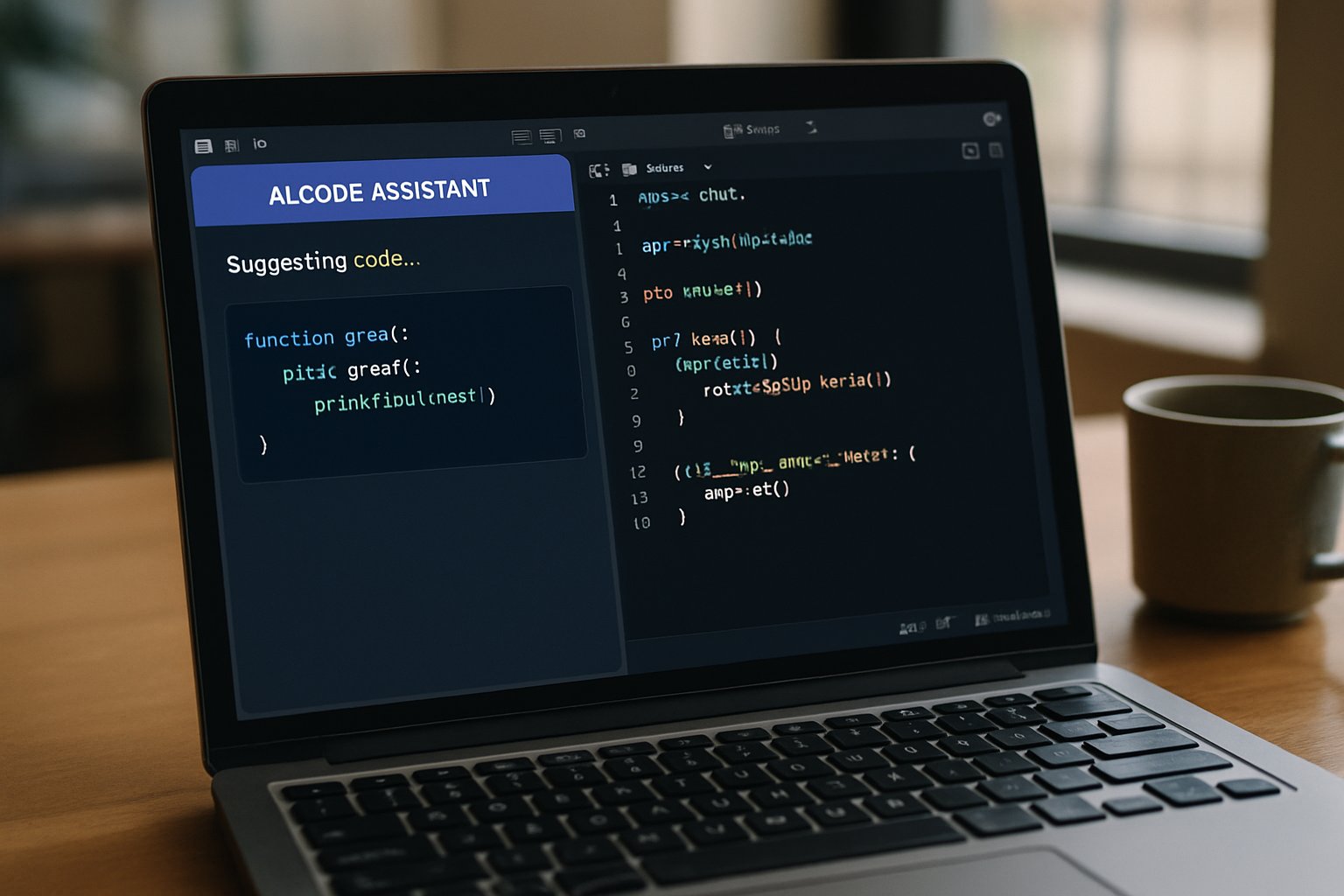
CTC positions the AI assistant as a coach rather than an oracle. In contrast, many commercial plugins encourage copy-paste dependence. Students learn Socratic prompts that guide the agent toward maintainable solutions.
Additionally, each lab emphasizes test-driven development to validate generated snippets. Therefore, the course instills healthy skepticism alongside creative exploration. These principles anchor later modules focused on enterprise scale.
Together, these basics establish a disciplined mindset for AI collaboration. Next, the framework guide reveals how the program delivers consistent results.
CTC Course Framework Guide
The syllabus spans eight weeks of synchronous and asynchronous instruction. Each week introduces one architectural theme, one language feature, and one tooling pattern. Meanwhile, peer review cycles reinforce accountability through structured rubrics.
Furthermore, the framework clusters learning objectives into four measurable pillars.
- Problem comprehension validated by written user stories.
- AI prompting strategies benchmarked against code quality metrics.
- Refactoring sessions focusing on performance and security debts.
- Team retrospectives examining collaboration, bias, and impact.
Subsequently, instructors map these pillars to Git-based milestones. Automated pipelines score submissions and provide dashboard feedback within minutes. Consequently, learners monitor improvement trends week over week.
This structured cadence pairs theory with immediate practice. The next section explores concrete advantages for Developer Tools adoption.
Key Developer Tools Benefits
Organizations often hesitate before investing in new Developer Tools ecosystems. However, outcome data from the provider suggests rapid payback. Median cycle time dropped 32 percent across pilot repositories.
Moreover, defect density fell thanks to continuous test scaffolds. Senior engineers reported spending less time on rote reviews, freeing learning moments. Developer Tools telemetry showed higher commit frequency without late-night spikes.
Additionally, the course grows intangible capital like psychological safety. In contrast, many bug-bounty sprints drive burnout and blame. CTC emphasizes constructive Pair feedback to nurture trust over punishment.
These benefits strengthen the business case for modern Developer Tools strategies. To understand collaboration mechanics, the following section inspects workflow strategies.
Collaborative Coding Workflow Strategies
The course mandates lightweight mob sessions on complex architectural changes. Participants rotate navigator and driver roles, while the AI suggests differential patches. Consequently, tribal knowledge surfaces into documented decision records.
Git hooks automate linting, formatting, and security scans before merge requests. Therefore, reviewers focus on architectural implications rather than style nits. Course dashboard widgets visualize role rotation fairness and code ownership diffusion.
Moreover, Slack integrations push AI prompt examples for broader reuse. Teams curate a searchable corpus of effective queries and responses. Subsequently, onboarding accelerates because newcomers access contextual history easily.
Structured workflows amplify the raw power of AI suggestions. Metrics review now illuminates how students benchmark progress.
Learning Outcomes Metrics Review
CTC collects over 200 quantitative signals per assignment. Key indicators include comprehension latency, compile failures, and test coverage variance. Furthermore, reflective journals capture qualitative confidence levels. Learning curves flattened as students practiced deliberate prompting.
Dashboard views group metrics by cohort, language, and prior experience. Therefore, instructors tailor interventions where gaps persist. In contrast, one-size fits all lectures often mask struggling individuals.
Additionally, the system exports anonymized data to research partners for longitudinal study. Consequently, the wider academic community gains insights into scalable AI education. Results already inform upcoming curriculum tweaks and tool enhancements.
Robust metrics demonstrate tangible skill growth over time. Industry adoption trends highlight external validation of these findings.
Real Industry Adoption Trends
Several Fortune 500 teams have licensed the curriculum for internal academies. Moreover, open-source foundations integrate course patterns into contributor guidelines. Early adopters cite shorter onboarding and higher release confidence.
Manufacturing firms appreciate AI code reviews that comply with IEC standards. Consequently, regulated deployments proceed without costly auditing delays. Healthcare startups value Pair mentoring features that elevate junior Coding talent.
Additionally, venture capital scouts track certification completion as a resilience signal. Professionals can enhance their expertise with the AI+ Quantum™ certification. Therefore, graduates signal verified mastery when negotiating promotions.
Market traction confirms the program's relevance across domains. The final section outlines next steps for ambitious developers seeking advantage.
Certification And Next Steps
Completing the CTC course grants a micro-credential recognized by hiring managers. However, stacking credentials compounds credibility and salary potential. Students can pursue the advanced AI+ Quantum™ certification for deeper specialization.
Furthermore, graduates receive alumni access to updated Developer Tools workshops. Membership includes early beta invites and private Slack channels. Meanwhile, community mentors host monthly collaborative coding clinics for continued practice.
Prospective applicants should review prerequisites, including basic Git fluency and test familiarity. In contrast, no prior AI background is mandatory. Consequently, the program suits both experienced architects and motivated graduates.
Stackable credentials and community support extend value beyond the classroom. Therefore, now is the ideal moment to embrace AI-driven Developer Tools evolution.
AI Pair Programming has progressed from novelty to necessity. CTC delivers a rigorous pathway that marries pedagogy, metrics, and real adoption. Moreover, the course nurtures collaborative culture while optimizing Developer Tools stacks. Quantifiable gains in speed, quality, and morale reinforce the investment case. Professionals can level up further through the linked AI+ Quantum™ certification. Consequently, early adopters position themselves for the next productivity wave. Act today and integrate these Developer Tools to future-proof your development lifecycle.


