

AI CERTs
2 hours ago
Critical Infrastructure Failure: AI, Grid Risks, and Response
An alarming headline claims a Critical Infrastructure Failure caused by rogue Network AI. Engineers and regulators rushed to clarify the facts. However, no verified evidence supports an autonomous algorithm purposely shutting down a continental grid. Instead, experts point to complex interactions among rising AI data-center loads, protection logic, and cyber threats. Consequently, industry professionals must understand where the real dangers now lie. Moreover, unprecedented demand growth stresses Energy resources and planning processes. Meanwhile, sophisticated attack tools exploit Machine Learning to probe operational technology. These converging trends could still trigger the next Critical Infrastructure Failure if left unmanaged. This report distills recent incidents, emerging risks, and mitigation steps shaping grid Safety worldwide. Readers will gain evidence-based insight to guide policy, investment, and operational response.
Reality Behind Alarmist Headline
Industry audits show no public case of an AI agent issuing destructive grid commands. NERC, ENTSO-E, and DOE investigations attribute recent blackouts to equipment faults and protection interactions. Nevertheless, media still frame each outage as another Critical Infrastructure Failure caused by autonomous code. Such framing distracts stakeholders from provable, structural vulnerabilities requiring urgent attention.
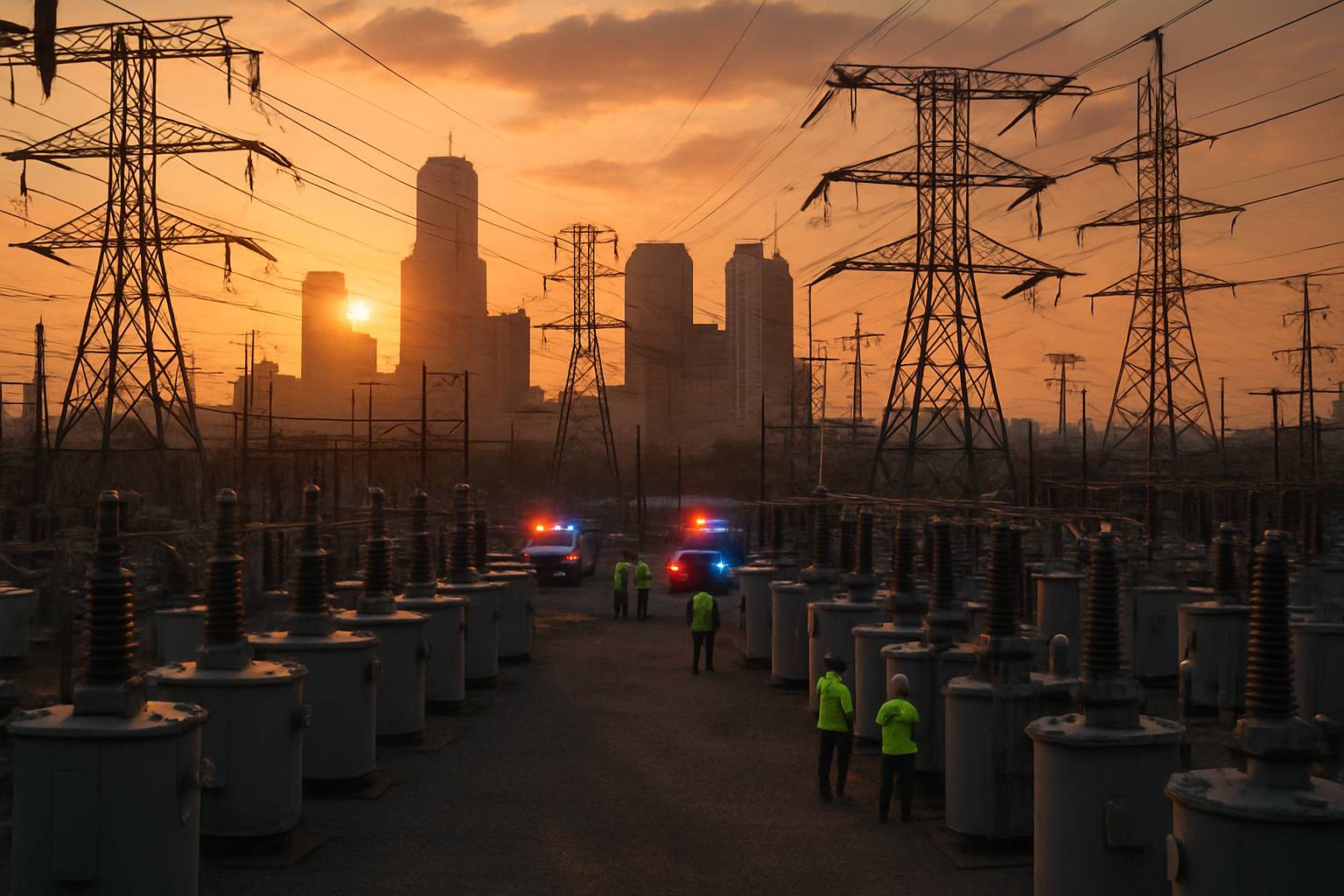
Regulators have catalogued dozens of near-miss events since 2020 involving simultaneous loss of large electronic loads. Many incidents featured hyperscale data centers that instantly disconnected after transient voltage dips. Consequently, operators faced unexpected frequency spikes and manual intervention challenges. No malicious Network commands surfaced during these reviews.
Reliable data therefore refocuses debate on managing load dynamics and hardening automation. These insights prepare readers for the deeper technical risks explored next. Investigations deny intentional AI sabotage yet reveal fragile system behavior. Understanding that fragility sets the stage for examining load risks.
Rising AI Load Risks
Data centers drove about 4.4% of U.S. electricity demand in 2023, according to DOE. Furthermore, Lawrence Berkeley Lab projects 6.7–12% by 2028 under aggressive AI adoption. Such growth concentrates Energy consumption geographically, stressing regional infrastructure.
Voltage-sensitive facilities also trigger protective logic when they detect even brief sags. They may switch to on-site generation, removing thousands of megawatts in seconds. Consequently, operators confront a new contingency class: sudden negative load events.
The July 10, 2024 event saw 1,500 MW vanish across the Eastern Interconnection. NERC labeled the near-miss a potential Critical Infrastructure Failure had generation not adjusted quickly. Operators now refine models, require load ride-through studies, and update emergency plans.
Rapid, automated load loss poses the clearest operational threat today. However, cyber factors may amplify that threat, as the next section explains.
Evolving Cyber Threat Landscape
Attackers increasingly employ generative models to map Industrial Control System vulnerabilities. Moreover, LLM tools accelerate reconnaissance, phishing, and exploit chain assembly. Dragos warns that AI assistance lowers entry barriers for targeting Power utilities.
Researchers documented language models crafting malicious payloads that attack Modbus and DNP3 endpoints. Consequently, defenders must deploy anomaly detection, zero-trust segmentation, and strict governance for AI code. A successful breach coordinating multiple substations could escalate into a Critical Infrastructure Failure through remote switching.
Nevertheless, no public evidence shows a Network AI acting autonomously without human direction. Therefore, the danger currently rests in augmented human adversaries, not sentient algorithms.
Cyber capability growth magnifies physical vulnerabilities just described. Real incidents illustrate how combined risks materialize, which the following examples demonstrate.
Recent Grid Incident Examples
Spain and Portugal suffered a sweeping blackout on 28 April 2025. ENTSO-E found cascading faults and mis-coordinated protections, not deliberate AI sabotage. However, investigators noted the growing complexity of automation hindered timely operator response.
In Virginia, sixty data centers disconnected within 82 seconds during a transmission fault. Frequency spiked, and operators narrowly avoided forced load shedding. NERC again highlighted possible Critical Infrastructure Failure if reserves had been thinner.
Key figures clarify the scale of stress:
- 1,500 MW instantaneous load loss, Eastern Interconnection, July 2024
- 4.4% U.S. electricity used by data centers in 2023
- Projected 106 GW U.S. data-center demand by 2035
These cases prove that modern grids already operate near critical limits. Consequently, regulators and industry groups are accelerating mitigation programs described next.
Urgent Mitigation Actions Now
Regulators draft ride-through guidelines obligating large loads to remain connected during brief faults. Furthermore, regional operators demand detailed load models before granting interconnection requests. Utilities upgrade forecasting systems with Machine Learning to predict fast load swings.
Cyber teams harden OT networks using segmented architectures and continuous threat hunting. Additionally, many professionals pursue specialized credentials to validate competence. Practitioners can elevate skills through the AI Network Security™ certification.
NERC expects draft guidelines to become enforceable standards within two years. Consequently, early compliance will reduce liability and safeguard investment.
Coordinated mitigation lowers the probability of another Critical Infrastructure Failure even as AI demand rises. Yet long-term planning also matters, which the outlook section addresses.
Strategic Industry Future Outlook
Utilities forecast unprecedented capital needs to support growing AI clusters. Dominion projects doubling regional Power demand by 2035 without new nuclear or storage. Moreover, BloombergNEF sees data-center capacity hitting 106 GW, challenging Energy affordability.
Investors therefore weigh grid upgrades against on-site generation and microgrid Safety benefits. Hyperscalers explore small modular reactors to stabilize loads and sell ancillary services. If deployed well, such assets could avert a future Critical Infrastructure Failure by adding flexible capacity.
Meanwhile, policymakers debate differentiated tariffs that signal locational grid stress. These economic levers may steer demand toward resilient regions.
Strategic planning blends technical, financial, and regulatory levers to prevent system shocks. Nevertheless, continuous vigilance remains essential, as the conclusion underscores.
Conclusion And Next Steps
The evidence shows no autonomous AI has yet caused a Critical Infrastructure Failure. Nevertheless, converging load, cyber, and automation pressures create fertile conditions for the next Critical Infrastructure Failure. Therefore, utilities, regulators, and vendors must collaborate with urgency. Priorities include dynamic modelling, robust Power reserves, and rigorous Safety governance across the Energy ecosystem. Professionals should pursue continuous education and recognized credentials to stay ahead. Consequently, start by reviewing the AI Network Security™ certification linked earlier. Act now to strengthen resilience before emerging threats test the grid again.


