

AI CERTS
3 weeks ago
Credential Theft Crisis Threatens AI-Driven Enterprises
Meanwhile, independent incident responders echo similar alarms. Palo Alto Networks’ Unit 42 continues to link high-impact breaches to identity misuse. Government agencies, including CISA, promote zero-trust frameworks that prioritize authentication and strong cryptographic controls. Nevertheless, only 30% of surveyed firms fund dedicated AI security programs. In contrast, threat actors weaponize deepfakes and stolen tokens with increasing sophistication. Therefore, understanding the numbers, context, and mitigation options has never been more critical.
Identity Surface Expands
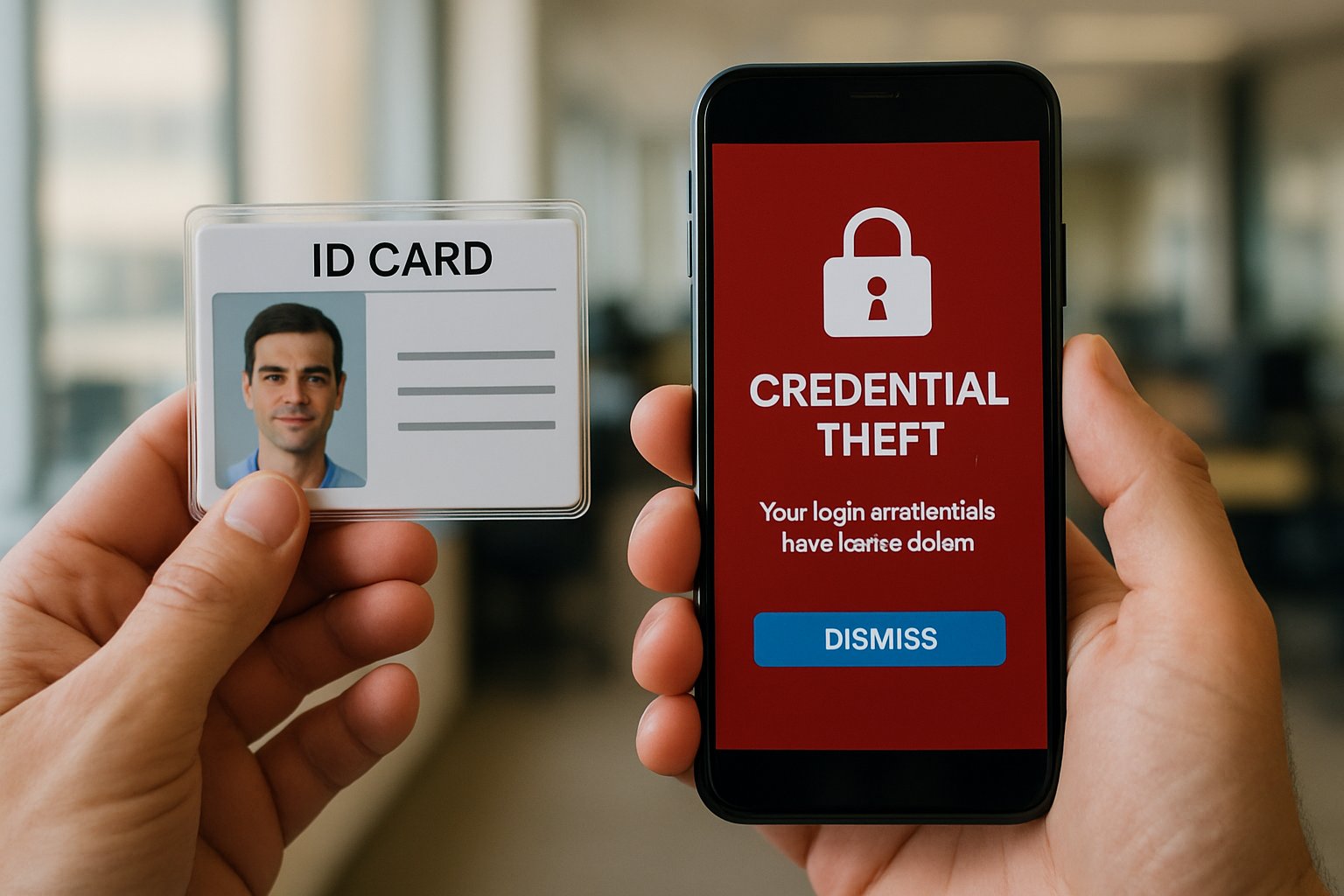
Attackers follow the path of least resistance. Identity has become that path because credentials unlock every workload. Moreover, this escalating Credential Theft Crisis is turning ordinary login portals into high-value entry points. Furthermore, the Thales study shows 67% of compromised organizations experienced credential theft against Cloud management consoles. Additionally, 61% cite AI as their top data security concern. Sebastien Cano, Senior VP at Thales, offers a stark warning.
“When identity Governance, access policies, or Encryption are weak, AI can amplify those weaknesses far faster than any human.” His assessment underscores a widening Vulnerability that spans both human and machine identities. Consequently, the perimeter is no longer routers and firewalls; it is every username, service account, and API key.
These numbers confirm identity is the battleground. However, AI adds automation that scales each breach attempt.
The next section explores how intelligent systems turbo-charge adversaries.
AI Magnifies Attackers
Automation changes intrusion economics. Deepfake phishing, synthetic voices, and autonomous malware shrink attacker costs while expanding reach. In the survey, 60% of respondents faced deepfake-driven incidents, and 48% suffered reputational harm. Moreover, only a third maintain comprehensive monitoring of machine identities. Consequently, malicious models can cycle through millions of credential guesses without tripping rate limits. This dynamic propels the Credential Theft Crisis into an era of relentless speed. In contrast, defenders still rely on manual Governance reviews performed quarterly. Therefore, response lag grows.
Meanwhile, AI assistants granted broad Cloud privileges can be hijacked through prompt injections. Nevertheless, many teams skip Encryption of generated content sitting in object stores, creating another exploitable Vulnerability. Furthermore, limited audit tooling means indicators of compromise remain undiscovered for weeks.
Attack velocity now rivals machine speed. However, understanding the data landscape is equally critical.
The following section examines persistent visibility gaps.
Data Blind Spots Persist
Security basics begin with knowing where information resides. Yet only 34% of respondents can locate all corporate data stores. Moreover, just 39% can classify every asset by sensitivity. Consequently, 47% of sensitive Cloud data sits unencrypted, widening the attack surface. These gaps render least-privilege Governance impossible.
Additionally, limited token tracking leaves API credentials mismanaged for months. Therefore, the Credential Theft Crisis grows whenever forgotten keys linger inside repositories. Furthermore, Slack channels and shared drives often hold plaintext secrets because Encryption was never enforced. Meanwhile, developers rush AI pilots, adding fresh Vulnerability through hastily granted roles.
- 34% know all data locations
- 39% maintain full classification
- 47% of sensitive Cloud data lacks Encryption
- 67% report credential attacks on management consoles
Visibility shortfalls feed attacker reconnaissance. However, market and policy forces may shift incentives.
The upcoming section reviews external pressures shaping security budgets.
Market And Policy Moves
External forces may accelerate change. MarketsandMarkets forecasts the digital identity segment reaching USD 132 billion by 2031. Moreover, governments intensify zero-trust mandates. CISA recently published Identity Governance best practices, underscoring passwordless adoption and phishing-resistant MFA. Meanwhile, only 30% of surveyed organizations budget specifically for AI security. Consequently, boards face mounting pressure from auditors and insurers to quantify Vulnerability exposure.
Vendors also orient portfolios toward the Credential Theft Crisis. Thales bundles hosted HSMs, tokenization, and its OneWelcome platform to sell end-to-end identity solutions. In contrast, rivals like Microsoft, CrowdStrike, and Ping Identity push integrated dashboards. Additionally, regulators weigh fines for mishandling deepfake incidents, adding new financial incentives.
Spending momentum and regulatory teeth can shift organizational priorities. However, these market signals validate the Credential Theft Crisis described by Thales.
The subsequent section outlines practical mitigation steps.
Mitigation Best Practices
Pragmatic controls can blunt attacker momentum. Firstly, map all identities, including service accounts, bots, and APIs. Secondly, enforce phishing-resistant MFA everywhere. Moreover, integrate continuous risk scoring into control workflows. Additionally, classify data, apply format-preserving masking, and restrict machine-learning workloads to approved enclaves. Consequently, credential boundaries narrow and breach blast radius shrinks.
- Adopt Data Security Posture Management for hosted assets
- Rotate secrets automatically and revoke dormant tokens
- Enable hardware-backed key storage to erase Vulnerability from software keystores
- Log and monitor AI agent actions with tamper-evident ledgers
Implementing these measures directly addresses the Credential Theft Crisis by reducing usable loot for attackers. Nevertheless, skills shortages often delay deployment.
Technical safeguards lay the foundation for resilience. However, people and process elements remain pivotal.
The next section discusses workforce upskilling strategies.
Balanced Viewpoints Needed
No dataset is perfect. Vendor-commissioned research can emphasize issues aligned with product lines. Nevertheless, the Thales survey employed more than 3,100 diverse respondents across 20 nations. Additionally, independent sources, including Unit 42 and CISA, corroborate rising identity risk. In contrast, critics note that identity is only one piece of broader risk, alongside supply chain flaws and API misconfigurations. Therefore, decision makers should weigh the Credential Theft Crisis within a holistic threat model, not as an isolated debate. Moreover, ignoring the Credential Theft Crisis could distort investment decisions.
Balanced evaluation prevents overinvestment in one control family. However, developing skilled staff unlocks sustained gains.
The final section explains upskilling paths and credentials.
Upskilling Security Teams
Human expertise converts policies into daily practice. Yet only 47% of organizations conduct regular identity training. Moreover, fast-moving AI toolchains demand fresh skills in prompt security and model oversight. Consequently, leaders are turning to targeted credentials. Professionals can enhance their expertise with the AI Robotics Specialist™ certification. Additionally, employer sponsorship of such programs shrinks internal risk windows by improving secure development habits. Implemented training complements technical controls and tackles the Credential Theft Crisis from a cultural angle.
Skilled practitioners close configuration gaps quickly. Therefore, investing in education yields compounding security returns.
The conclusion distills the report’s message and recommends immediate actions.
Thales’ 2026 Data Threat Report positions identity as today’s weakest link. Moreover, evidence from surveys, incident responders, and regulators converges on the same message. Consequently, organizations must inventory data, restrict permissions, encrypt sensitive workloads, and train staff continuously. Balanced investment across technology, people, and process tackles multiple risks while directly confronting the Credential Theft Crisis. Therefore, executives should launch 90-day action plans, monitor progress, and sponsor advanced certifications. Explore additional training paths to reinforce defense depth and maintain momentum.


