

AI CERTs
2 hours ago
Conversational Commerce Orchestration Layers Reshape Retail
Retail conversations are shifting from single chatbots toward transactional AI agents. Consequently, Conversational Commerce Orchestration Layers promise to coordinate those agents at scale. These middleware stacks route context, enforce policy, and connect inventory, payments, and fulfillment systems. Moreover, major vendors launched orchestration products and open protocols during 2025 and 2026. Investors and analysts now project billions in incremental revenue from agentic commerce. In contrast, retailers still wrestle with fragmented data and consumer trust. This article unpacks technology drivers, standards, benefits, and practical next steps. Additionally, it highlights statistics, expert quotes, and certification resources for leaders planning adoption. Read on to understand how orchestration layers redefine chatbot shopping experiences and wider retail automation. Strategic insights follow below.
Conversational Commerce Orchestration Layers
Definition: An orchestration layer is a brokerage tier between AI agents and commerce backends. However, the layer also manages memory, permissions, and human handoff. It logs every action for compliance and analytics. Therefore, retailers gain visibility and control over autonomous flows.
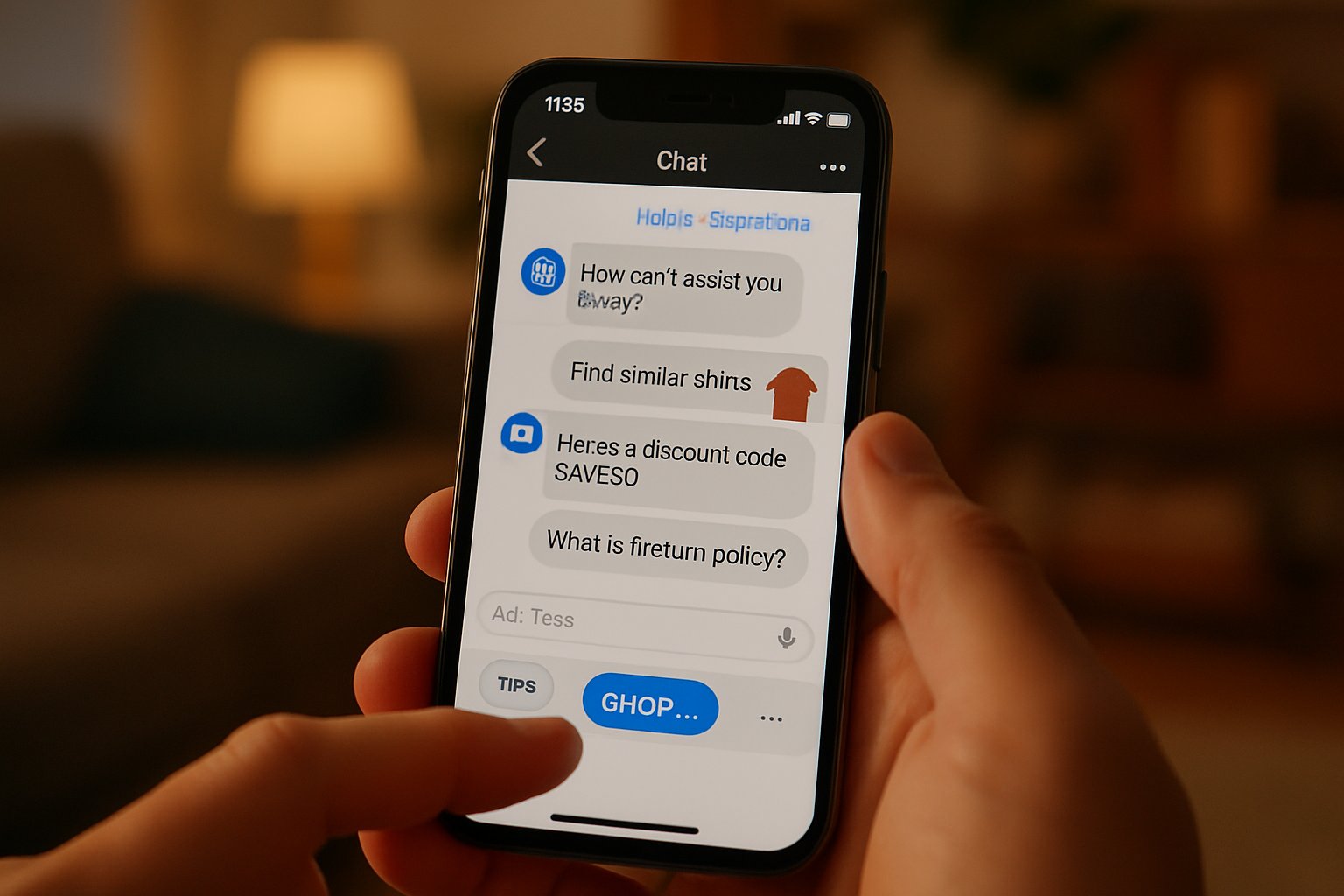
Early deployments relied on single agents limited to product search. Conversely, orchestration enables multi-agent collaboration across discovery, pricing, checkout, and post-purchase care. Consequently, Conversational Commerce Orchestration Layers now sit at the heart of agentic commerce architecture. Vendors like Adobe, Talkdesk, and Fluent Commerce market this capability aggressively.
These points clarify why the layer matters. Meanwhile, the next section reviews market momentum.
Market Momentum Accelerates Fast
Adoption metrics show fast acceleration. For example, Salesforce reports 75% of retailers deem AI agents essential within a year. Moreover, Adobe tracked a 1,200% jump in generative-AI traffic to retail sites. Morgan Stanley forecasts $115 billion in incremental e-commerce by 2030.
Additionally, several 2025-2026 announcements underscore the surge.
- Talkdesk launched Commerce Orchestration to unify discovery through fulfillment.
- Google unveiled the Universal Commerce Protocol for Gemini assistants.
- Stripe and OpenAI shipped Instant Checkout and the Agentic Commerce Protocol.
- Microsoft, Fluent Commerce, and commercetools released MCP servers and agent gateways.
Collectively, these moves cement industry confidence. Consequently, chatbot shopping pilots moved from labs into live consumer channels.
Market numbers and launches demonstrate clear acceleration. Nevertheless, understanding core functions remains critical.
Core Orchestration Layer Functions
Each layer performs three essential jobs. First, it aggregates real-time context from PIM, OMS, CRM, and payments APIs. Second, it routes user intents to specialized agents such as Product Advisor or Journey Agent. Third, it validates outputs before committing inventory, charging cards, or updating orders.
Moreover, policy engines block hallucinated prices and unauthorized discounts. Fluent Commerce CEO Graham Jackson notes backend complexity previously hindered retail automation ambitions. Conversational Commerce Orchestration Layers provide a single control plane to mitigate that risk.
Furthermore, audit logs assist compliance with emerging AI regulations. Consequently, security and trust teams support wider rollout.
Core capabilities thus turn experimentation into reliable operations. In contrast, protocol fragmentation still challenges integration.
Emerging Protocol Standards Race
Standards reduce custom code and liability. ACP from Stripe specifies checkout primitives consumed by ChatGPT. UCP from Google targets cross-assistant interoperability covering catalog, carts, and returns. MCP implementations by Microsoft and partners focus on message routing within enterprise stacks.
However, multiple overlapping standards risk vendor lock-in. Analysts warn that inconsistency could slow retail automation momentum. Therefore, industry groups push for alignment on data schemas and security models. Conversational Commerce Orchestration Layers frequently translate between protocols to shield merchants.
Standards will decide ease of agent deployment. Next, we evaluate tangible business impacts.
Retailer Benefits And Risks
Business cases center on revenue lift and cost reduction. Talkdesk cites higher conversion and average order value within guided conversations. Additionally, agents automate WISMO and returns, cutting contact center volume. Therefore, labor savings bolster ROI projections.
Nevertheless, leaders must balance gains against operational dangers.
- Pro: Seamless chatbot shopping journeys improve loyalty and upsell rates.
- Benefit: Data-driven recommendations support personalized retail automation strategies.
- Con: Legacy systems hinder real-time inventory accuracy.
- Risk: Hallucinations or fraud expose merchants to regulatory scrutiny.
Bain research shows 50% of consumers remain cautious about fully autonomous purchases. Consequently, orchestration layers must allow human override and transparent opt-outs.
Conversational Commerce Orchestration Layers embed escalation paths and explainability screens to build trust.
Balanced assessment guides realistic expectations. Integration issues now deserve focused attention.
Integration Hurdles And Solutions
Many retailers still operate siloed PIM, OMS, and CRM platforms. Consequently, real-time data flow fails during pilot projects. Orchestration vendors respond with prebuilt connectors and composable commerce blueprints. Moreover, policy templates shorten security reviews.
Leaders may upskill via the AI Project Manager™ certification. The course covers governance, KPIs, and phased rollouts for retail automation programs. Additionally, Adobe, Microsoft, and Shopify publish reference architectures easing deployment.
Conversational Commerce Orchestration Layers also expose sandbox modes for low-risk experimentation. Consequently, teams iterate quickly while protecting production data.
These tools reduce technical friction significantly. Subsequently, strategic planning becomes the main obstacle.
Strategic Roadmap For Retailers
Executives should start with clear use-case prioritization. Next, map data sources and identify required protocol adapters. Moreover, establish guardrails for pricing, privacy, and refund policies. Pilot limited chatbot shopping flows before scaling across channels.
Measure success using conversion rate, average order value, and satisfaction scores. Meanwhile, track error rates and manual escalations to refine orchestration rules. Conversational Commerce Orchestration Layers must appear in enterprise architecture roadmaps to avoid shadow IT.
Finally, negotiate vendor contracts that address evolving protocol governance. Consequently, long-term flexibility stays protected.
This phased roadmap minimizes risk and maximizes agility. Outlook considerations follow next.
Agentic commerce has left the lab and entered mainstream pilots. Consequently, Conversational Commerce Orchestration Layers will dictate whether pilots evolve into profitable scale. Standards such as ACP and UCP appear promising, yet governance remains uncertain. Nevertheless, early metrics show higher conversion and reduced service costs. Retailers that resolve data fragmentation can unlock rapid wins. Moreover, chatbot shopping flows give customers intuitive control while preserving brand identity. Leadership must prioritise trust safeguards alongside bold experimentation. Therefore, investing in talent and certifications accelerates readiness. Conversational Commerce Orchestration Layers stand poised to become the default commerce interface before 2027. Act now, explore certifications, and position your organization for the autonomous retail era.


