

AI CERTs
2 hours ago
Constitutional Clash: Federal Task Forces Confront State Laws
A high-stakes Constitutional Clash now shapes American federalism. Federal task forces have accelerated challenges to diverse state policies. Consequently, governors, attorneys general, and businesses face mounting uncertainty. Since 2025, the Department of Justice has launched multiple specialized units. However, states keep adopting bold climate and artificial-intelligence statutes. These dueling actions sharpen debates over Preemption and federal supremacy. Moreover, industries fear a fragmented Regulation landscape complicating nationwide operations. The stakes are highest in energy, technology, and data-driven sectors. Analysts warn that protracted litigation could delay investments in California and Texas. Understanding the emerging legal architecture remains essential for strategic planners. Meanwhile, professionals monitor milestones to anticipate compliance deadlines.
Federal Strategy Intensifies Efforts
The Administration has embraced a two-track federal strategy. First, it fields purpose-built task forces targeting state statutes. Secondly, it files lawsuits seeking declaratory and injunctive relief. Additionally, funding levers threaten states resisting federal priorities.
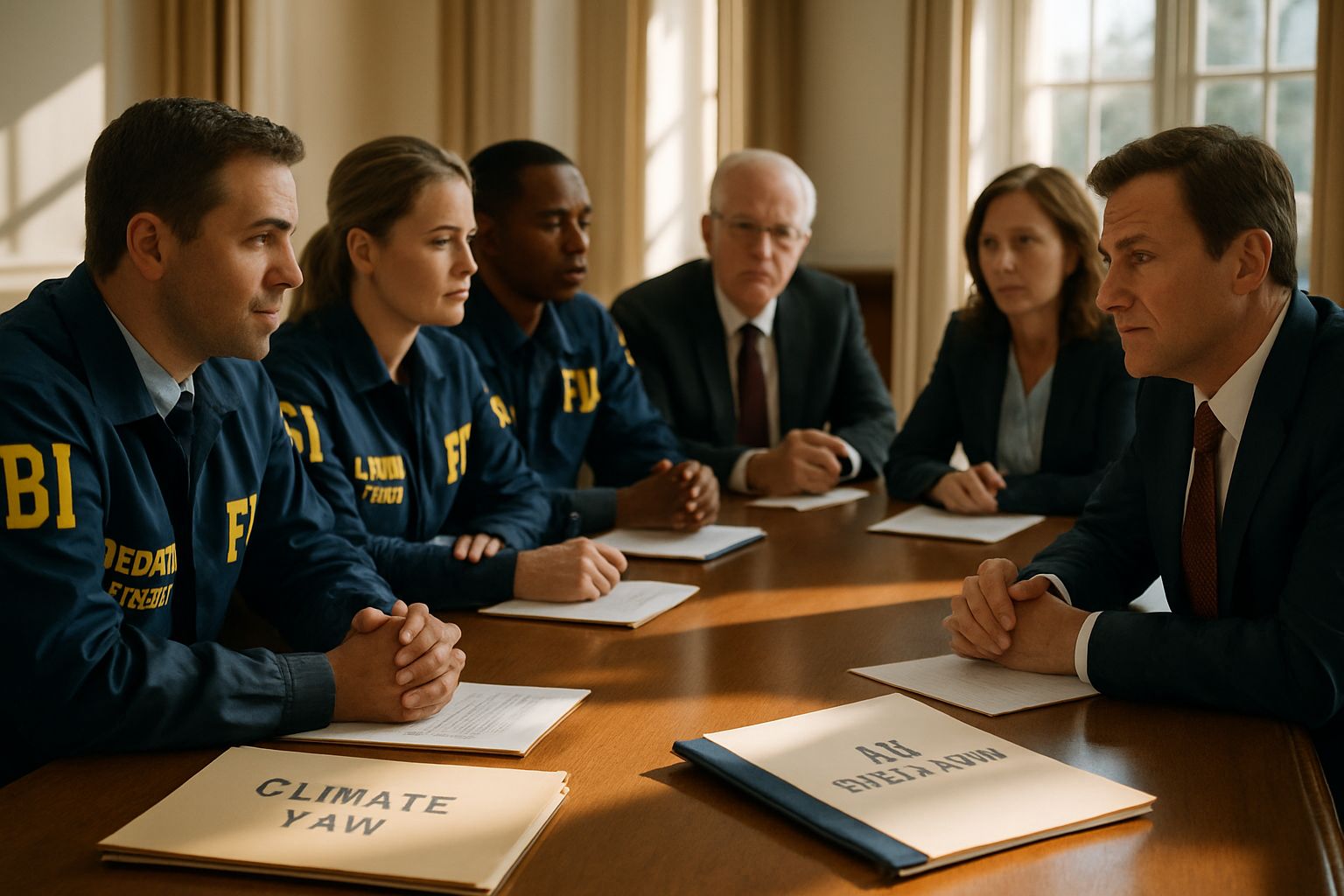
The Anticompetitive Regulation Task Force debuted on March 27, 2025. Public comments closed sixty days later under docket ATR-2025-0001. Assistant Attorney General Abigail Slater promised to unwind “burdensome rules stifling competition.” Moreover, review categories include housing, energy, and healthcare.
This Constitutional Clash empowers policymakers with multiple tools beyond courtroom battles. Task forces, guidance, and grant conditions together maximize pressure. This coordinated push sets the stage for the emerging AI offensive.
AI Task Force Emerges
The December 11, 2025 executive order created the AI Litigation Task Force. Consequently, the Attorney General must staff the unit within 30 days. Commerce, FTC, and FCC must evaluate state AI laws within 90 days. Colorado’s SB 24-205 already sits atop the federal watch list.
Analysts expect challenges to algorithmic impact assessments and bias-mitigation mandates. However, absent federal AI rules, successful Preemption arguments remain uncertain. Courts traditionally require tangible regulatory conflicts before displacing state authority. Stakeholders recognise the Constitutional Clash could redefine AI governance.
The AI initiative signals Washington’s intent to centralize technology oversight. Litigation timelines suggest industry clarity will lag until at least 2027. Attention now shifts to how climate disputes illustrate parallel dynamics.
Climate Laws Under Fire
On May 1, 2025 the DOJ sued four states over climate measures. New York, Vermont, Hawaii, and Michigan faced immediate federal complaints. DOJ portrayed the statutes as extraterritorial and obstructive to national energy policy.
The most expensive target is New York’s $75 billion Climate Change Superfund Act. Subsequently, DOJ sought summary judgment on August 29, 2025. Attorney General Pamela Bondi argued the law threatens energy independence. Observers label the unfolding litigation a paramount Constitutional Clash.
State officials fired back, labelling the filings frivolous and politically motivated. Meanwhile, environmental groups supported the state frameworks as accountability mechanisms. The courts must now balance economic impacts against constitutional doctrine.
These lawsuits exemplify a textbook Constitutional Clash over economic federalism. They also preview arguments likely to surface in AI disputes. Understanding legal doctrines becomes critical before assessing risk exposure.
Legal Theories And Risks
Federal lawyers rely chiefly on Supremacy Clause Preemption theories. Express preemption arises when Congress clearly occupies a field. Conflict preemption appears when state and federal requirements cannot coexist. Moreover, the Dormant Commerce Clause restricts discriminatory burdens on interstate trade. These doctrines sit at the heart of the Constitutional Clash.
States counter with Tenth Amendment anti-commandeering principles. Consequently, federal agencies cannot force states to enforce national programs. In contrast, courts often uphold cooperative federalism when incentives align.
Regulation gaps weaken federal cases until detailed rules exist. Therefore, DOJ may seek expedited rulemaking to buttress litigation. Law-firm memos predict prolonged uncertainty for enterprises operating nationally.
The doctrinal matrix defines probable success rates for each challenge. Yet evolving jurisprudence prevents definitive forecasts. Businesses consequently focus on compliance logistics rather than courtroom speculation.
Industry Compliance Challenges Mount
Corporations dislike juggling divergent disclosure and audit obligations. Additionally, supply chains cross many jurisdictions daily. A patchwork raises logistical costs, especially for startups in California and Texas.
Energy producers fear retroactive liability under Superfund-style schemes. Tech firms worry about algorithmic audit duplication across states. Consequently, trade groups favor predictable federal standards.
- 60-day public comment window on anticompetitive Regulation closed May 27, 2025.
- $75 billion liability possible under New York’s Superfund statute.
- 30-day deadline formed AI Task Force after December 11, 2025 order.
- 90-day deadline directs Commerce to evaluate state AI laws nationwide.
Professionals can enhance resilience with the AI Security Professional™ certification. The program addresses cross-border risk assessments and audit controls. Without clarity, the Constitutional Clash inflates insurance premiums and investment delays.
Operational complexity will escalate while courts adjudicate overarching principles. Therefore, dynamic compliance roadmaps become essential. States, however, continue defending autonomy with coordinated strategies.
State Reactions And Defense
Governors across ideological lines voice concern over federal encroachment. Michigan’s Dana Nessel labeled DOJ filings sanctionable grandstanding. Similarly, Colorado officials postponed AI Act enforcement for additional rulemaking. Their rhetoric frames the dispute as a Constitutional Clash for local control.
California lawmakers refine privacy-focused AI bills to withstand federal review. Texas legislators study litigation risks before advancing transparency proposals. Moreover, multi-state coalitions prepare amicus briefs supporting local innovation.
States thus seek procedural advantages and public support. Collective action may slow sweeping injunctions. Next, observers track docket movements and agency reports for concrete signals.
Future Litigation Watchpoints Ahead
Key milestones cluster around spring 2026. Commerce must disclose its 90-day survey of state AI statutes. Subsequently, summary judgment rulings in the climate cases could materialize. Furthermore, the Antitrust Division may publish a catalog of allegedly anticompetitive rules.
Each development will renew the nationwide Constitutional Clash conversation. In contrast, definitive Supreme Court guidance may not arrive for years. Meanwhile, companies should model multiple Regulation outcome scenarios. Journalists report each docket update fuels headlines about the ongoing Constitutional Clash.
Timely intelligence will determine strategic flexibility. Consequently, monitoring federal registers and dockets becomes a daily necessity. The concluding section distills major insights for immediate action.
Decision makers now face overlapping deadlines, lawsuits, and funding threats. Consequently, federal pressure remains intense across energy, technology, and public finance. California innovators and Texas producers must watch Preemption rulings before committing fresh capital. Meanwhile, agency rulemaking could harmonize compliance requirements or deepen fragmentation. Nevertheless, organizations should reinforce governance programs and scenario planning. Furthermore, professionals can future-proof skills through the AI Security Professional™ certification. Stay tuned, because next quarter’s filings may reset strategic assumptions again.


