

AI CERTS
2 hours ago
Constellation scales data center power amid regulatory tests
However, soaring demand also sharpens regulatory scrutiny, fuels transmission debates, and revives mothballed peaker plants. This article unpacks Constellation’s strategy, attendant risks, and what professionals must monitor as AI workloads intensify.
AI Load Reshaping Demand
Generative AI training clusters require dense, round-the-clock electricity. Therefore, market operators now project multi-gigawatt additions in every major region. Constellation summarizes those projections as 140 GW in MISO, 41 GW in ERCOT, and 10 GW in PJM queues. Meanwhile, Deloitte suggests new nuclear could address only 10 percent of incremental demand by 2035. In contrast, traditional peakers are returning from retirement, highlighting short-term gaps.
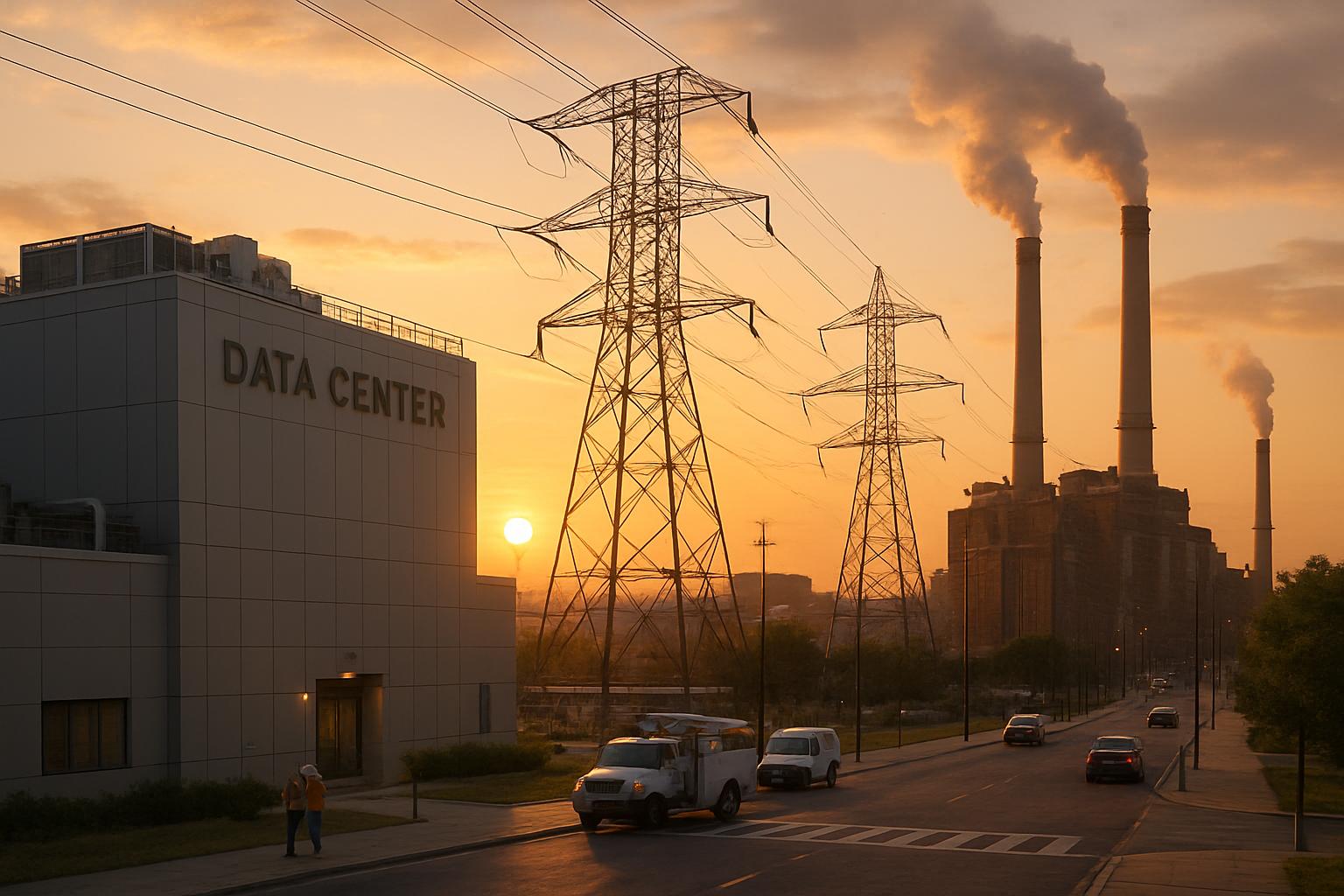
Key statistics underscore the scale:
- 45 percent rise in served data-center usage since 2023
- Approximately 60 GW combined low- or zero-emission capacity after the Calpine deal
- PJM capacity auction attracted 2.7 GW new generation but little additional demand response
These figures confirm that Data center power growth already stresses the grid. Nevertheless, Constellation believes co-location and flexibility provide faster relief. These trends set the stage for an ambitious build-out.
Demand trajectories appear compelling. However, over-forecasting remains possible because operators often file multiple siting options. This uncertainty complicates planning for utilities, developers, and regulators.
Constellation's Growth Strategy
Constellation is pursuing four parallel levers. First, the company plans direct-connect campuses beside nuclear, geothermal, and efficient gas units. Second, behind-the-meter agreements offer clients bespoke pricing without long interconnection queues. Third, an AI-driven demand-response platform with GridBeyond lets clients monetize load flexibility. Fourth, the $16.4 billion Calpine acquisition expands geographic reach and fuel diversity.
CEO Joe Dominguez argues that locating AI facilities near large, clean plants “makes all the sense in the world.” Furthermore, he insists front-of-meter deals can still deliver attractive economics. Consequently, Constellation frames itself as an indispensable partner for hyperscalers seeking reliable, low-carbon Energy.
Professionals can enhance their expertise with the AI Product Manager™ certification. The credential deepens understanding of AI workloads, cost drivers, and electrical consumption patterns—knowledge essential for vendor evaluation.
The strategic blend of generation, flexibility, and acquisitions strengthens the supply portfolio. Nevertheless, success hinges on regulatory clearance and contract execution. Therefore, vigilance remains vital.
Regulatory Hurdles And Risks
Behind-the-meter models face fierce examination. FERC rejected a proposed amendment that would have allowed Amazon to tap nuclear output at Talen’s Susquehanna plant. Commissioner Mark Christie warned that special treatment could shift costs and compromise reliability. In contrast, Chairman Willie Phillips feared the ruling might impede U.S. competitiveness.
Constellation now seeks “permissible” structures while lobbying for clearer rules. Additionally, the Department of Justice forced asset divestitures before approving the Calpine merger. Such conditions limit how much new generation can directly serve hyperscalers in certain regions.
Regulatory headwinds create three principal risks:
- Delayed or denied interconnection approvals for co-located load
- Cost allocation disputes that raise tariffs for other utilities
- Potential litigation by consumer advocates over environmental externalities
These uncertainties amplify financial exposure. However, transparent cost-sharing frameworks could unlock broader acceptance and preserve Data center power momentum.
The rule-making timeline will shape investment decisions through 2026. Subsequently, final guidance should clarify viable commercial pathways.
Demand Response Gains Traction
Because transmission upgrades require years, load flexibility offers immediate relief. The July 2025 Constellation-GridBeyond launch uses predictive analytics to anticipate peak intervals. Customers can then curtail servers or shift inference jobs, earning PJM capacity payments.
Joe Dominguez calls the platform “cheaper and faster” than new steel-in-the-ground. Moreover, the absence of additional DR resources in PJM’s latest auction underscores latent opportunity. Consequently, Constellation positions demand response as a pillar of responsible Energy management.
Widespread adoption could reduce fossil peaker dispatch, lowering localized emissions and operational consumption. Nevertheless, some hyperscalers are reluctant to delay latency-sensitive inference. Therefore, program design must balance economics and service-level agreements.
The early results will influence whether other generators replicate similar AI-specific programs. Meanwhile, PJM is drafting tariff updates to integrate flexible loads more seamlessly.
Short-term flexibility can ease pressure. However, enduring solutions still require firm capacity and expanded transmission.
Grid And Supply Mix
Nuclear, gas, renewables, and storage each offer distinct attributes. Nuclear provides steady baseload with minimal carbon intensity, yet licensing timelines remain long. Efficient gas turbines supply ramping capability but elevate carbon and local NOx. Solar and wind reduce lifecycle emissions although their intermittency complicates 24/7 coverage. Battery storage smooths volatility but suffers duration limits.
Nuclear's Partial Contribution
Deloitte estimates that new reactors could meet 10 percent of incremental Data center power demand by 2035. Therefore, nuclear alone cannot bridge the gap. Moreover, public acceptance and financing hurdles persist.
Constellation hopes its combined 60 GW portfolio can balance these trade-offs. Additionally, Calpine’s geothermal assets diversify baseload Energy. Blended portfolios may thus serve hyperscalers more reliably while moderating carbon consumption.
Supply diversity buffers outage risk and regulatory change. Consequently, investors should scrutinize asset fuel mix when assessing service resilience.
Stakeholder Implications Ahead
Hyperscalers must weigh price certainty, emissions, and approval timelines. Therefore, some will pursue several sites simultaneously, inflating queue projections and challenging planners. State regulators must protect ratepayers from unfair cost shifts while supporting economic growth. Furthermore, local communities worry about land use, water, and emissions.
Investors should monitor three leading indicators. First, watch FERC rehearing outcomes in the Talen/AWS docket. Second, track PJM tariff revisions on co-located load. Third, follow Constellation’s disclosure of executed offtake contracts versus speculative memoranda.
For technology leaders, electricity procurement now sits at board level. Consequently, professionals with cross-disciplinary expertise will command premiums. Completing the linked AI Product Manager™ course signals capability in balancing compute architecture with grid realities.
Stakeholder agendas are converging around reliability, affordability, and sustainability. Nevertheless, alignment will require transparent modeling and adaptive contracts.
Final Thoughts And Actions
Constellation’s aggressive gambit illustrates the high-stakes race for Data center power. The company blends generation scale, co-location innovation, and AI-enabled flexibility. However, regulators, utilities, and communities will dictate ultimate success. Professionals should analyze policy milestones, contract disclosures, and regional supply-demand balances.
Those insights will guide procurement, investment, and infrastructure decisions as AI reshapes Energy landscapes. Therefore, staying informed and certified becomes essential. Sign up now and future-proof your strategy.


