

AI CERTS
2 months ago
Computational Neuroscience: Ultrasound for Consciousness Study
Moreover, recent experiments already show the method modulating behavior and neural activity in healthy volunteers. Consequently, industry observers see a rare chance to unite basic theory with translational opportunity. This article unpacks the technical advances, experimental agenda, and governance challenges shaping that promise. Along the way, professionals will find concrete takeaways for emerging tools, policy, and workforce development. Finally, we highlight certification paths that can help practitioners translate the science into strategic advantage. However, first we must follow acoustic waves into the brain. That journey begins with philosophy colliding with precise acoustic engineering.
Ultrasound Meets Deep Philosophy
Philosopher David Chalmers coined the hard problem, yet engineers now supply fresh empirical ammunition. In contrast, Matthias Michel argues tFUS can experimentally arbitrate between rival theories of Consciousness. Meanwhile, Daniel Freeman stresses the unprecedented spatial resolution the method offers in living humans. The duo frames this synergy as an exemplar of Computational Neuroscience bridging mind and mechanism.
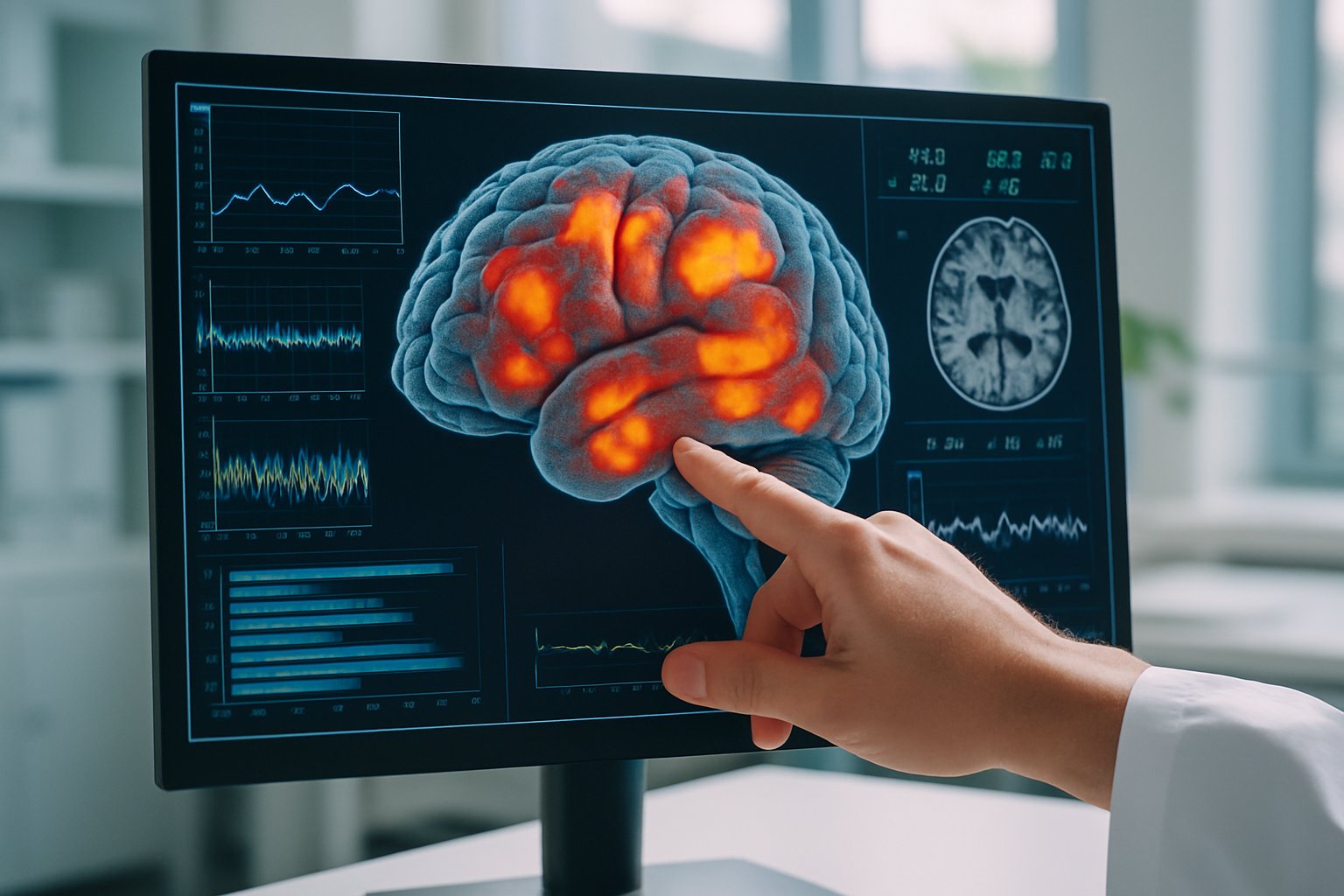
Traditional neuroimaging captured correlations, not causes. Therefore, tFUS intends to switch circuits on or off during perception tasks. If visual awareness disappears when V5 is perturbed, sensory theories gain weight. Conversely, unchanged perception under sensory disruption would bolster higher order, global workspace accounts. Consequently, philosophy receives quantitative feedback rather than endless debate.
These converging disciplines illustrate science answering age-old metaphysical puzzles. Subsequently, we examine the technical factors enabling that crossover.
Technical Promise And Limits
tFUS focuses acoustic energy through skull tissue with millimeter accuracy, surpassing TMS in depth. Moreover, recent Nature Communications data confirm functional modulation of motion area V5 in 25 volunteers. The study reported a 13.3 percent typing error under stimulation versus 15.5 percent without. Cohen’s d exceeded 0.5, indicating a moderate behavioral effect. Earlier MIT Research compared tFUS focality with TMS using phantom skulls. A 2024 Brain Stimulation paper demonstrated amygdala modulation with decreased anxiety.
- Spatial resolution reaches millimeters, even several centimeters below cortex.
- Typical frequencies range from 0.25 to 0.65 megahertz for neuromodulation.
- Human skull can attenuate 65-90 percent of incident pressure, requiring modeling.
- Safety guidelines monitor mechanical index, keeping values below 1.9 for comfort.
Nevertheless, these numbers mask important constraints. Bone thickness varies greatly, scattering energy and shifting the acoustic focus. Therefore, groups rely on MRI, CT, and computational sonication models for each participant. For Computational Neuroscience practitioners, such parameters define replicable science.
Robust modeling secures both efficacy and safety. Next, let us detail those modeling driven parameters.
Targeting Precision Key Details
Precise targeting begins with high-resolution anatomical scans. Subsequently, algorithms compute phase delays for array elements that steer the beam. In contrast, single-element devices rely on mechanical repositioning and skull curvature compensation. Pressure is calibrated using MR acoustic radiation force imaging, ensuring energy peaks at the region. Furthermore, simultaneous EEG or fMRI validates neural modulation while monitoring off-target heating. Experts in Computational Neuroscience track these calibrations closely.
These engineering layers transform conceptual theories into testable protocols. With methodology covered, attention turns to the concrete roadmap of upcoming experiments.
Key Experimental Roadmap Steps
MIT Research leaders outline an initial focus on visual cortex perturbation. Participants will view masked images while brief ultrasound pulses disrupt V1 or V5 activity. Importantly, subjective visibility reports will be collected after each pulse. Consequently, researchers can infer necessity of specific regions for conscious access.
Later phases move stimulation to prefrontal cortex to challenge global workspace predictions. Moreover, subcortical targets like thalamus and amygdala will test affective Consciousness models. Parallel Brain Stimulation techniques provide comparison benchmarks for focality and depth. Behavioral outcomes will pair with EEG source analyses, providing temporal resolution near milliseconds. Each study includes sham conditions and cross-site parameter replication to build reliability.
This rigorous staging minimizes interpretive ambiguities. However, success depends equally on strict oversight and public trust. Therefore, governance questions demand careful consideration.
Safety And Governance Hurdles
Regulatory agencies currently treat neuromodulatory ultrasound under diagnostic exposure guidelines. Nevertheless, transcranial applications sometimes require pressures approaching experimental thresholds. Consequently, the roadmap recommends mechanical index tracking and real-time temperature monitoring. ITRUSST consortium documents further advise standardized reporting of intensity metrics across papers. Regulators now consult Computational Neuroscience societies when drafting ultrasound guidance.
Ethical boards also flag potential mood manipulation and dual-use scenarios. Moreover, Department of the Air Force funding intensifies scrutiny from civil society groups. Open protocols and independent replication are proposed antidotes. Furthermore, participants must receive comprehensive briefings on unknown long-term effects.
Ethics And Dual Use
Philosopher Michel notes that manipulating Consciousness raises existential concerns beyond routine risk analysis. In contrast, Freeman emphasizes transparent publication as the best safeguard against misuse. Additionally, professional development programs can embed ethical literacy among engineers. Professionals can enhance their expertise with the AI+ Sales Strategist™ certification. This credential integrates algorithmic insight, compliance frameworks, and stakeholder communication.
Clear standards and trained personnel underpin social acceptance. Next, we look at commercial outlooks shaped by the technology.
Future Impact For Industry
Several sectors already monitor the tFUS pipeline for competitive differentiation. Healthcare companies envision noninvasive neuromodulators for depression and pain management. Moreover, brain-computer interface vendors test tFUS as a performance booster. MIT Research evidence already hints at commercially viable accuracy improvements.
Investors, however, demand reproducibility and clear regulatory pathways before scaling. Consequently, consortium driven standardization could accelerate Clinical adoption. Additionally, workforce upskilling in Computational Neuroscience will remain critical for product teams. Certification programs fill that talent gap efficiently. Venture capital also funds Computational Neuroscience startups focused on tFUS analytics.
- Diagnostic tools for disorders of Consciousness
- Adjunct therapies complementing Brain Stimulation pills
- Adaptive BCIs for aerospace operators
These emerging markets underscore the value of interdisciplinary skill sets. Consequently, organizations should monitor both scientific milestones and training opportunities.
Transcranial focused ultrasound brings Computational Neuroscience out of purely observational modes and into causal interrogation. Furthermore, recent MIT Research illustrates tangible behavioral and neural effects in human volunteers. Nevertheless, safety, replication, and ethical governance remain decisive hurdles. Industry leaders who grasp these complexities can steer innovation responsibly. Therefore, continued engagement with peer-reviewed data, policy forums, and targeted education is essential. Consider advancing your expertise through accredited programs and stay ready for the coming wave.
Explore the linked certification today and position yourself at the frontier of brain technology. Meanwhile, follow forthcoming trials as they illuminate how perception, action, and Consciousness intertwine. The search for mind's mechanism has never been so experimentally grounded or commercially relevant. Computational Neuroscience will guide evidence thresholds regulators set.


