

AI CERTs
3 months ago
Compliance Monitoring Systems Drive FinTech Resilience
FinTech growth invites complex crime. Consequently, firms adopt advanced defenses. Compliance Monitoring Systems now anchor strategic roadmaps. These platforms unite transaction monitoring, sanctions screening, and continuous KYC.
However, escalating regulation and AI driven fraud raise stakes. Boards demand proof that controls work in real time. Meanwhile, investors expect seamless user experiences with low friction.
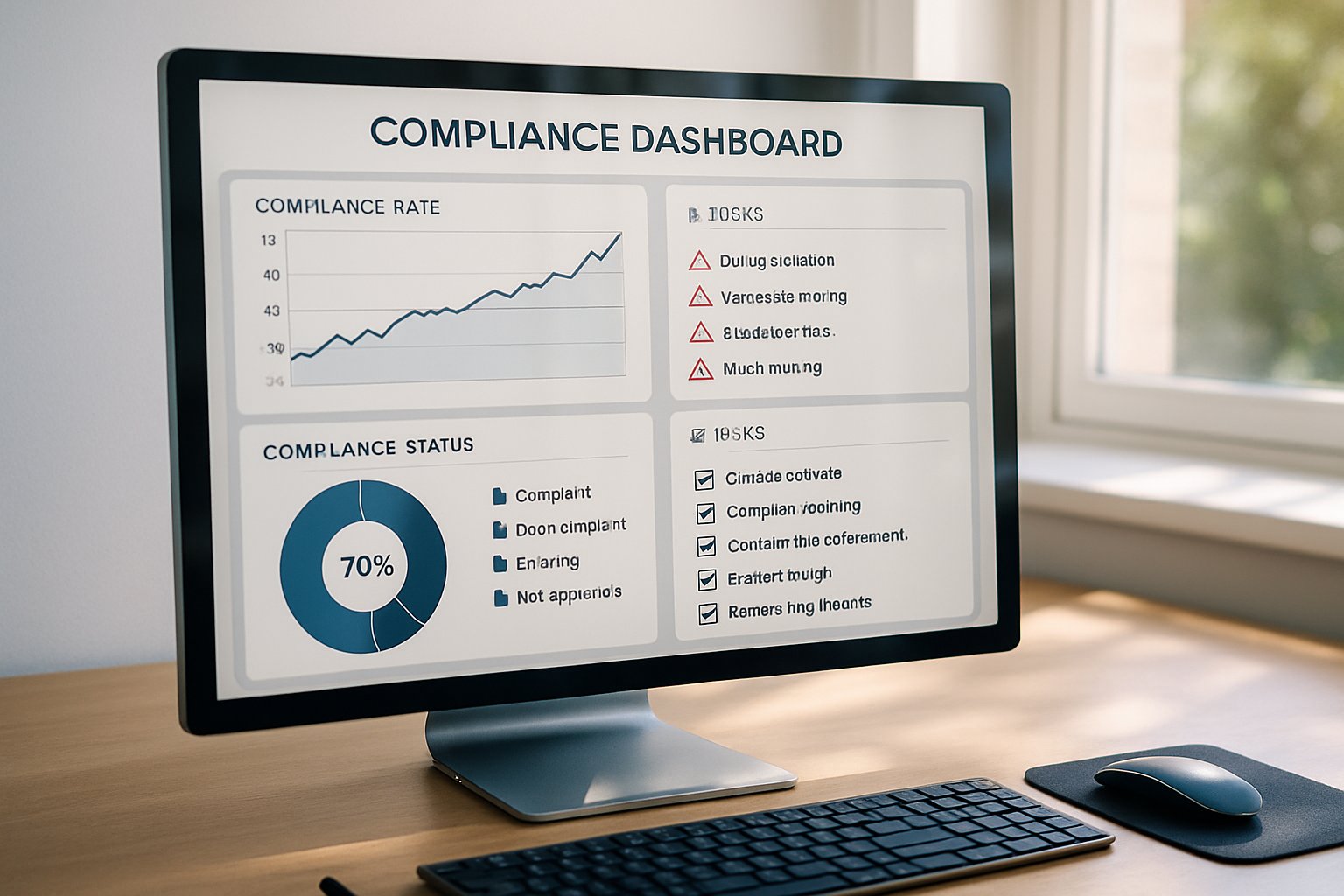
This article examines how Compliance Monitoring Systems safeguard modern FinTech operations. Moreover, it maps recent policy changes, vendor moves, and practical steps. Readers will gain actionable insight for resilient Financial Operations amid shifting rules. In contrast, legacy rule engines struggle against synthetic identities and token flows. Therefore, executives explore AI native controls with auditable governance. Additionally, emerging certifications equip teams with needed analytical and governance skills.
FinTech Market Shifts Accelerate
Recent data shows soaring RegTech demand despite macro uncertainty. The Business Research Company projects legal risk solutions reaching $14.8B by 2030. Furthermore, transaction monitoring subsegments expect high-teens CAGR during 2025-2030.
FinCEN’s July 2025 postponement illustrates regulation’s moving target. Nevertheless, the delay does not relax reporting expectations for investment advisers. FATF simultaneously flagged AI deepfakes as priority threats.
Consequently, Compliance Monitoring Systems have shifted from optional tools to core infrastructure. Firms now budget alongside payments engines and customer onboarding stacks.
These trends confirm enduring growth momentum. Subsequently, technology choices determine competitive resilience.
Modern Technology Stack Evolution
Vendors integrate rules, machine learning, and graph analytics within unified workflows. NICE Actimize launched multilayered AI transaction monitoring in 2025. Moreover, ComplyAdvantage marketed an AI-native platform recognized by Chartis.
Chainalysis and TRM Labs added on-chain surveillance to institutional rails. Therefore, tokenized asset monitoring converges with mainstream alerting dashboards. Compliance Monitoring Systems now span fiat, crypto, and instant payments in one console.
However, data quality remains the chief bottleneck. Missing device signals or beneficial owner details erode model accuracy. Consequently, teams map every data source before model training.
Integrated, clean data fuels predictive precision. Meanwhile, regulators raise governance expectations.
Growing Global Regulator Pressure
Supervisors increasingly demand continuous monitoring rather than periodic reviews. Additionally, FATF urged stronger model governance for AI deployments. The FCA updated its Financial Crime Guide to cover AI testing.
Strong Regulatory Compliance frameworks anchor these supervisory demands. Regulators ask institutions to quantify false-positive reduction and detection efficacy. Compliance Monitoring Systems must therefore generate audit-ready metrics on demand.
In contrast, black-box outputs risk supervisory findings and fines. Model validation logs, retraining evidence, and explainability layers become core artefacts. Consequently, skilled analysts gain influence within compliance programs.
Governance pressure shapes technology procurement. Next, we examine vendor positioning.
Key Vendor Landscape Highlights
Market leaders promote measurable efficiency gains. For example, NICE Actimize claimed reduced false positives through generative analytics. Similarly, ComplyAdvantage emphasised unified fraud and AML intelligence.
Research firms place both providers in leadership quadrants across multiple years. Moreover, blockchain specialists extend reach by partnering with banks and PSPs. Compliance Monitoring Systems integrate these niche feeds via APIs or low-code connectors.
Selection criteria now prioritise explainability, cloud latency, and crypto coverage. Yet, independent benchmarks remain scarce and often vendor sponsored.
Decision makers need rigorous proof points. Accordingly, best-practice frameworks guide due diligence.
Proven Implementation Best Practices
Successful rollouts follow a layered approach. Teams start with baseline rules before enabling ML scoring in shadow mode. Subsequently, they activate graph analytics for network typologies.
Key checklist steps:
- Catalogue every transaction and customer data feed.
- Define risk hypotheses and map typologies.
- Set explainable features and validation metrics.
- Conduct backtesting against historical alerts.
- Document governance artifacts for Regulatory Compliance reviews.
Professionals can enhance expertise with the AI Human Resources™ certification. Continuous learning ensures teams maintain effective Financial Operations amidst evolving threats.
Implementation success also hinges on change management and staff training. Moreover, cross functional governance committees align models with business objectives.
Solid foundations accelerate regulatory approval. Let us now weigh benefits against persistent risks.
Key Benefits And Risks
Modern platforms significantly lower false positives, sometimes by half. Consequently, investigators focus on genuine threats and file higher quality SARs. Financial Operations gain speed as fewer transactions await manual reviews.
Compliance Monitoring Systems also enable real-time blocks on suspicious instant payments. Therefore, customer losses and downstream disputes decline. Nevertheless, misconfigured models can miss new typologies or flood teams with noise.
Data silos, weak lineage, and limited explainability remain top implementation risks. Moreover, criminals exploit generative AI to spoof identities and documents.
Balanced investment and rigorous governance mitigate these exposures. These insights inform the strategic next steps summarised below.
Modern Compliance Monitoring Systems transform defensive cost centers into strategic growth enablers. Furthermore, they reinforce Regulatory Compliance while supporting rapid product launches. FinCEN delays and FATF warnings prove that rulebooks evolve continuously. Consequently, adaptable platforms with strong governance remain essential. Financial Operations benefit through faster clearing, lower fraud, and improved customer trust. Nevertheless, success hinges on data quality, explainable models, and skilled personnel. Professionals should deepen expertise and validate skills through the AI Human Resources™ certification. Therefore, investing in next-generation Compliance Monitoring Systems today secures tomorrow’s competitive advantage. Explore emerging Compliance Monitoring Systems now to stay ahead of sophisticated financial crime.


