

AI CERTs
2 months ago
Commercial Construction Shift: Data Centers Surpass Offices
Record spending on Data Centers is redrawing America’s building landscape. Consequently, investors and planners label the phenomenon the Commercial Construction Shift. ConstructConnect data shows year-to-date data-center starts hitting $32.9 billion through September 2025. Moreover, July alone delivered a record $14 billion, eclipsing many annual office tallies. Goldman Sachs analysts therefore argue that capital is pivoting faster than previous Construction Trends predicted. In contrast, official Census categories still mask the magnitude because they classify many data centers as offices. This article disentangles the metrics, explores drivers, assesses grid pressure, and outlines strategic responses for Real Estate leaders. Additionally, it highlights actionable skills and certifications that keep professionals ahead.
U.S. Spending Gap Widens
ConstructConnect’s starts-spending series separates data centers from offices. Consequently, the tracker reveals a 92.8% year-over-year surge through September 2025. Meanwhile, late-stage pipelines worth $25.5 billion could push annual totals past $58 billion. By comparison, new office starts continue their post-pandemic slump. Therefore, several banks conclude the Commercial Construction Shift is already visible in monthly ledgers. Goldman Sachs names hyperscaler capital expenditure “a striking shift” for equity markets. JLL research adds that global occupancy remains 97%, and most projects are pre-leased. These numbers confirm a decisive turning point. However, understanding why demand exploded requires deeper context.
Key Drivers Behind Surge
AI workloads top the list of catalysts. Moreover, Andrew Batson of JLL notes that AI training needs ten times traditional power density. Consequently, facilities designed for GPUs command lease premiums of about 60%. Hyperscalers such as Amazon, Microsoft, Google, and Meta respond with unprecedented multiyear budgets. JLL estimates those firms could allocate nearly $1 trillion between 2024 and 2026. Furthermore, tax incentives in southern states sharpen the Commercial Construction Shift by tilting site selection southward. Regional economic studies show thousands of temporary construction jobs following each groundbreaking.
- Exploding AI compute intensity
- Near-zero data-center vacancy rates
- Favorable state incentives and land costs
- Capital market appetite for digital infrastructure
Collectively, these factors create a once-in-a-generation infrastructure supercycle. Consequently, attention shifts from ground breaking to grid provisioning.
Grid And Energy Costs
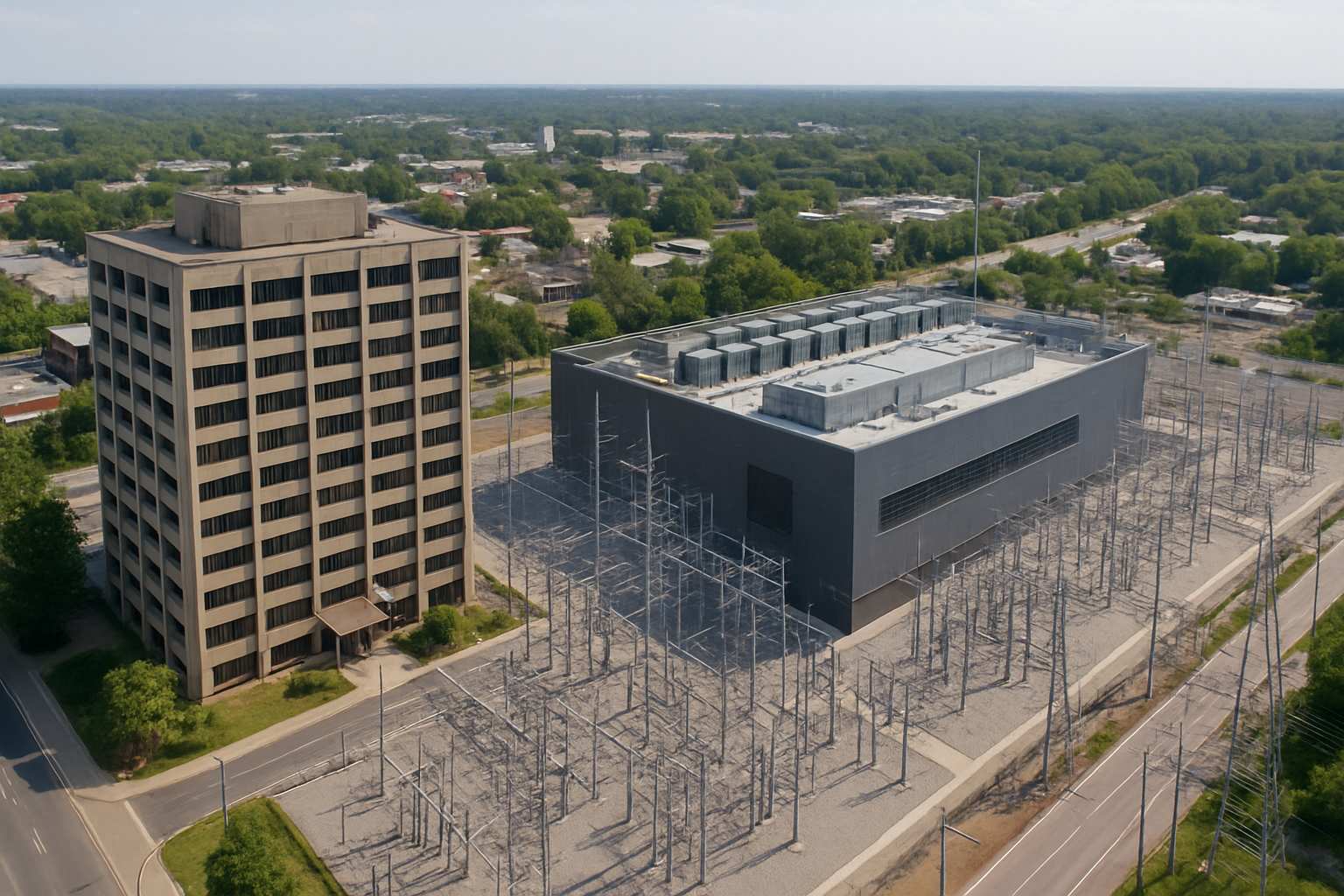
Rising megawatt requirements challenge regional operators. NERC labels large Data Centers a foremost near-term reliability risk. Subsequently, PJM’s market monitor warned that data-center load drove 40% of a $16.4 billion capacity auction. In contrast, office buildings contribute negligible incremental load. Therefore, the Commercial Construction Shift intensifies electricity demand far beyond previous Construction Trends. Pew Research cites IEA forecasts that U.S. consumption may reach 426 TWh by 2030. Moreover, Berkeley Lab calculates 17 billion gallons of water consumed in 2023 for cooling. Utilities now insist that many applicants finance on-site generation or storage. These pressures expose hidden project costs. Nevertheless, investors still pour capital, suggesting confidence in mitigation strategies.
Critical Market Risks Emerging
Not every analyst remains optimistic. Goldman Sachs cautions that returns may lag surging capex. Additionally, community opposition grows in water-stressed regions. Some municipalities paused incentives after land price spikes. Meanwhile, classification quirks within Census data can mislead policy makers. Consequently, comparisons must always cite methodology and data source. Failure to do so could distort narratives around the Commercial Construction Shift. Transparency reduces misunderstanding and supports balanced regulation. Therefore, stakeholders need proactive strategies.
Strategic Moves For Stakeholders
Developers should lock power agreements early. Furthermore, diversified site portfolios mitigate interconnection delays. Real Estate funds increasingly partner with specialized operators to navigate technical complexity. In contrast, corporate occupiers focus on contractual flexibility to hedge technology change. Moreover, integrated design teams now prioritize liquid cooling and modular construction. These tactics align with the Commercial Construction Shift and protect margins. Effective collaboration keeps projects on schedule. Subsequently, individual career skills determine who executes these plans.
Essential Skills And Certifications
Advanced interdisciplinary expertise commands premium salaries. Professionals can enhance their expertise with the AI+ UX Designer™ certification. Additionally, knowledge of sustainability frameworks adds value during grid negotiations. JLL hiring managers emphasize candidates who can translate technical jargon for Real Estate investors. Consequently, the Commercial Construction Shift rewards communicators as much as engineers.
- Power systems modeling skills
- Water neutral cooling design
- Tax incentive navigation
- AI workload optimization
Continuous learning maintains relevance in this dynamic market. Meanwhile, attention turns toward future demand projections.
Data Center Outlook 2026
JLL projects global investment in Data Centers could approach $3 trillion within five years. ConstructConnect expects U.S. starts to exceed $58 billion if all late-stage projects launch. Moreover, capacity constraints might accelerate on-site renewable microgrids. Therefore, the Commercial Construction Shift appears durable through at least mid-decade. However, regulators will scrutinize environmental impacts more closely. Data trust, power sourcing, and community engagement will shape permitting timelines. Forward-looking teams must align capex with these realities. Consequently, disciplined execution could secure outsized returns.
U.S. building priorities are tilting decisively toward digital infrastructure. Moreover, record spending, tight capacity, and policy scrutiny will continue shaping Construction Trends. Investors, utilities, and Real Estate professionals must collaborate to manage grid stress and community concerns. Nevertheless, robust demand signals suggest sustained opportunity for disciplined players. Visit our learning hub today and future-proof your career.


