

AI CERTS
3 hours ago
Collaborative AI Agents Redefine Meeting Intelligence
Moreover, executives see them as linchpins for efficient Workflow and inclusive communication. However, the technology’s rapid shift from passive note-takers to proactive copilots raises new questions. Regulators, privacy advocates, and unions are watching implementations closely. Meanwhile, investors chase breakout vendors promising differentiated accuracy, security, and agentic capabilities.
The following analysis unpacks market momentum, vendor moves, risks, and skills professionals need now. Therefore, decision makers can benchmark offerings and chart responsible adoption paths. Additionally, we highlight certification routes that strengthen internal expertise during deployment.
Rapid Market Momentum Rise
Analyst firms value conversation intelligence software between USD 2 and 27 billion today. Future Market Insights projects a robust double-digit CAGR through 2030. Moreover, Otter.ai reported $100M ARR in 2025, signalling enterprise willingness to pay.
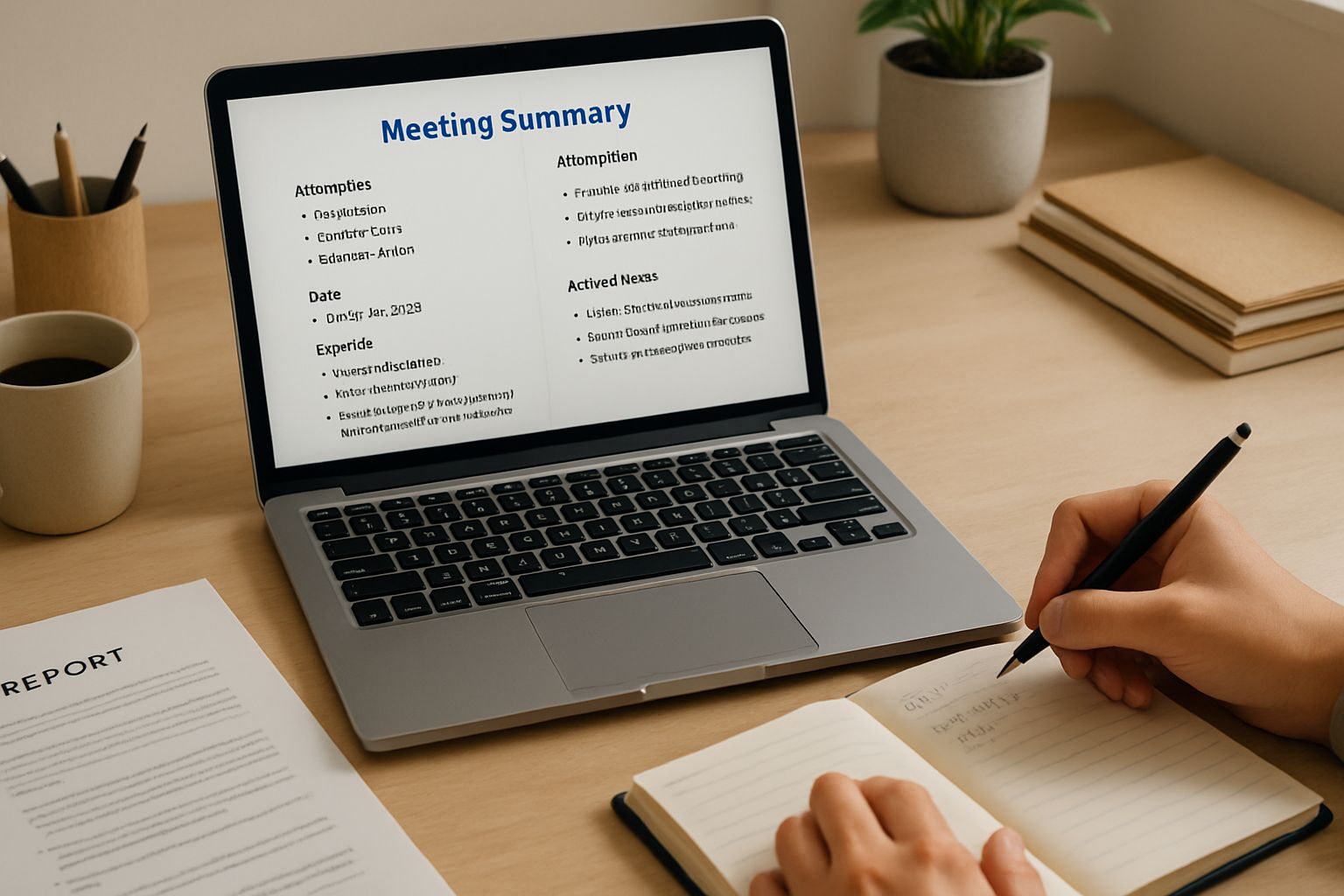
Fireflies.ai followed with a $1B valuation and bold vertical expansion announcements. In contrast, platform owners embed native capabilities that pressure independent vendors on price. Consequently, differentiation now hinges on Collaborative AI Agents delivering value beyond plain Transcription accuracy.
Market data confirms rising spend and fierce feature competition. However, vendor strategies diverge sharply, as the next section reveals.
Key Industry Players Emerge
Gong, Chorus, and ZoomInfo focus on revenue coaching and CRM assimilation. Meanwhile, Otter.ai positions Collaborative AI Agents for broad productivity and compliance cases. Fireflies.ai integrates real-time web search through Perplexity, extending agent reach beyond meetings.
Microsoft is bundling Copilot recaps inside Teams, while Zoom and Google push comparable companions. Moreover, these embedded services influence buyers’ calculus when evaluating separate licences. Nevertheless, cross-platform support keeps independent vendors present where mixed conferencing software persists.
Each vendor claims unique accuracy, integrations, and governance safeguards. Subsequently, buyers must weigh ecosystem lock-in against advanced agent functions.
From Notes To Action
The product story now revolves around shifting from static records to active guidance. Collaborative AI Agents can answer in-meeting questions, draft follow-up emails, and create tasks. Consequently, vendors label their offerings as Copilot layers for every digital Workflow.
- Otter.ai processed over 1 billion meetings and 25 million users to date.
- Independent benchmarks show leading tools reaching 90 % word accuracy under ideal audio.
- 70 % of enterprise deployments target sales coaching and customer support functions.
Moreover, agentic designs apply speaker diarization and large language models to craft concise Summary sections automatically. However, hallucinations and mis-attribution still require human oversight for high-stakes decisions.
Action orientation represents the biggest product differentiation for Collaborative AI Agents today. Therefore, understanding capability gaps guides safer rollouts discussed next.
Privacy And Legal Risks
August 2025 brought a class-action suit accusing Otter.ai of secret recordings. Plaintiffs allege violations of California’s all-party consent statutes and federal wiretap rules. In contrast, privacy experts warn that silent bots can expose privileged conversations company-wide.
Additionally, different states maintain conflicting recording regulations, complicating cross-border meetings. Consequently, enterprises need transparent disclaimers, participant opt-outs, and short retention settings. Collaborative AI Agents must also avoid using customer data for model training without explicit contracts.
Ignoring these safeguards invites litigation, reputational harm, and regulatory enforcement. Therefore, governance frameworks shape adoption strategies outlined ahead.
Enterprise Adoption Strategies Today
Successful rollouts start with a cross-functional steering committee involving legal, security, and operations leaders. Teams first map meeting categories, flagging sessions unsuitable for automated Transcription or Summary generation. Subsequently, administrators configure recording prompts and encryption using vendor dashboards or platform Copilot policies.
Procurement should demand SOC 2 reports, HIPAA options, and detailed data handling exhibits. Moreover, enterprises benefit when Collaborative AI Agents export structured action items directly into project Workflow systems. Pilot groups then validate accuracy and cultural acceptance before company-wide expansion.
Disciplined staging mitigates risk while proving tangible productivity gains. Consequently, skill development becomes the next focal point.
Future Roadmap And Skills
Next-generation roadmaps combine multimodal input and knowledge bases into Collaborative AI Agents with outbound Workflow automation. Microsoft’s Copilot ecosystem hints at agents orchestrating documents, chats, and dashboards beyond meetings. Furthermore, vendors plan context-aware nudges that surface competitive data mid-conversation.
Professionals can enhance expertise via the AI Prompt Engineer™ certification. Moreover, upskilling helps staff construct safe prompts, evaluate Summary quality, and troubleshoot diarization defects. Additionally, data analysts should monitor agent actions through audit logs to ensure compliance.
Skill building ensures humans stay in control as sophistication grows. Therefore, leaders can scale benefits without amplifying risk.
Collaborative AI Agents now sit at the heart of meeting intelligence, productivity, and governance. They convert speech to rich Transcription, produce an accurate Summary, and push tasks into Workflow automatically. Moreover, forward-looking leadership views them as connective tissue across cloud apps and Copilot environments. Nevertheless, legal scrutiny, accuracy gaps, and cultural resistance demand thoughtful controls and skills investment. Consequently, organizations should pilot tools, monitor metrics, and refine policies continuously. Leaders who master these disciplines will unlock competitive advantage with Collaborative AI Agents across the enterprise. Act now by exploring the certification link and sharing these insights with your implementation team.


