

AI CERTs
3 months ago
Collaboration Orchestrators Elevate Remote Team Performance
Remote work has entrenched itself as the default operating model for global enterprises. Consequently, leaders now juggle dozens of apps, channels, and AI assistants each working day. Such fragmentation drains focus and erodes Team Productivity across time zones. Collaboration Orchestrators have emerged to close this costly gap. These orchestration layers unify people, data, and intelligent agents within one governed workflow fabric. Moreover, early adopters cite sharper decision cycles and faster follow-through. Market analysts expect accelerated investment as Enterprise Collaboration budgets rise. This article unpacks the concept, market dynamics, benefits, and risks for technology executives. Additionally, it offers a pragmatic roadmap for piloting orchestrators safely. Finally, readers will discover certification resources that deepen orchestration and AI governance expertise.
Market Forces Driving Rise
Global spending on collaboration and communications reached $402.6 billion in 2023, according to ResearchAndMarkets. Furthermore, forecasters project $561.1 billion by 2028, a 6.9 percent compound growth rate. The surge stems from hybrid work expansion and relentless app proliferation. Gartner already reports 80 percent of employees using collaboration tools, up 44 percent since 2019.
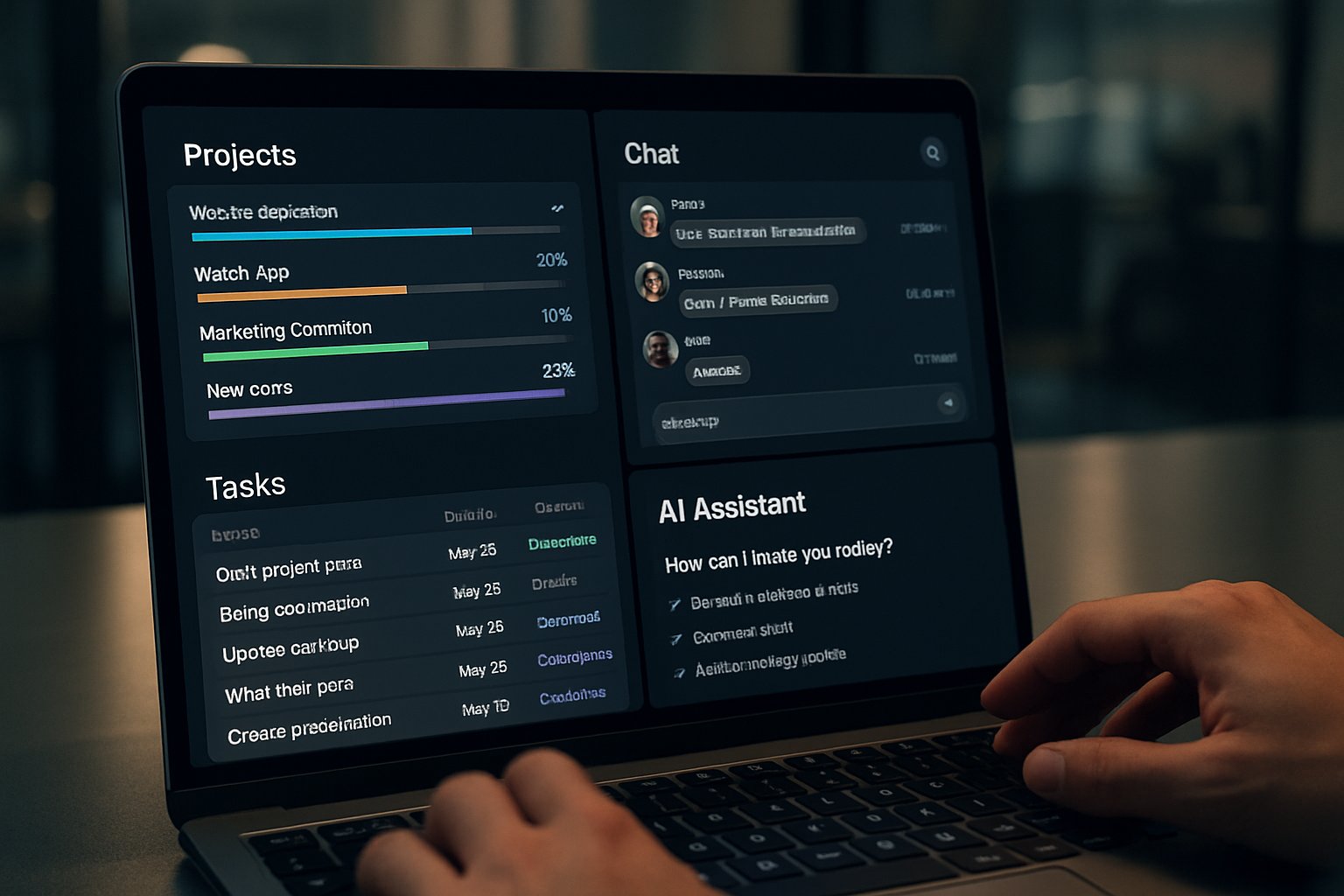
However, McKinsey finds knowledge workers lose one day weekly searching for scattered information. This inefficiency creates urgent demand for orchestration layers that minimize context switching. Therefore, investors and vendors frame orchestrators as the next value lever atop existing suites.
Market numbers confirm sustained budget momentum for integration tooling. Consequently, attention shifts toward platforms able to tame collaboration overload. Against this backdrop, we now examine what Collaboration Orchestrators actually deliver.
What Collaboration Orchestrators Do
Collaboration Orchestrators sit above chat, calendar, document, and task services. They capture events, convert context into structured tasks, and route ownership to humans or AI. Moreover, they orchestrate multiple AI agents, selecting the best model for each subtask. Governance modules log every action for compliance and audit readiness.
Key capabilities include:
- Automatic meeting-to-task conversion
- Cross-app data synchronization
- Multi-agent AI routing
- Role-based nudging and reminders
- Observability dashboards for collaboration health
Collectively, these features collapse manual handoffs and boost Team Productivity. In contrast, traditional integrations demand users copy content between apps repeatedly. The orchestrator layer translates intent into action with minimal friction. Therefore, Collaboration Orchestrators deliver unified flow rather than another standalone tool.
Technology And Vendor Landscape
Currently, multiple vendor groups compete to supply orchestration. ServiceNow integrates Microsoft 365 Copilot to manage AI agents across familiar work hubs. Meanwhile, 8x8's AI Orchestrator chooses optimal bots within contact-center workflows. HCL, NICE, and Oracle embed orchestration into broader automation suites. Startups such as WorkElate and Gloat position pure-play orchestration layers above existing stacks.
Academic research reinforces technical legitimacy of orchestrating humans and agents. For example, the HALO framework accelerates multi-agent task completion through hierarchical planning. Consequently, enterprises can trust that orchestration foundations rest on peer-reviewed findings.
Collaboration Orchestrators differ in governance depth, integration breadth, and pricing models. Therefore, buyers should compare audit logging, role controls, and no-code mapping before selection. Collaboration Orchestrators are becoming check-list items in RFPs for unified communications.
The vendor field is crowded yet rapidly maturing. Subsequently, careful evaluation helps align capabilities with Enterprise Collaboration roadmaps. Next, we review the tangible benefits driving adoption.
Benefits For Remote Teams
Remote teams battle distance, time zones, and cognitive overload. Collaboration Orchestrators tackle these frictions through automation and intelligent routing.
Core benefits include:
- Reduced context switching, saving up to one day weekly
- Higher Team Productivity via automatic follow-up assignments
- Improved Enterprise Collaboration quality by aligning people and AI
- Vendor-agnostic AI governance and fallback to humans
- Collaboration observability that lets IT remediate issues proactively
Moreover, orchestration unlocks flexible AI strategy by letting companies swap large language models without rewiring. In contrast, monolithic stacks often lock teams into single vendors. Quantifiable time savings and governance assurances resonate with CFOs and CISOs alike. Consequently, organizations accelerate pilots despite macroeconomic caution. However, potential pitfalls deserve equal scrutiny.
Challenges And Risk Factors
Deploying orchestrators demands deep API mapping and change management. Nevertheless, integration projects can recreate the very complexity they aim to eliminate. Data privacy introduces further hurdles when Collaboration Orchestrators access mailboxes and documents.
AI risks also loom. Hallucinations or mis-routed actions could undermine Enterprise Collaboration trust. Therefore, governance features such as audit logs, approval gates, and explainability are non-negotiable. Cost justification is another barrier because hard ROI data remains scarce beyond vendor claims.
Risks span technology, compliance, and culture. Yet disciplined pilots mitigate most concerns before large rollouts. The next section outlines a practical pilot approach.
Implementation Playbook For Enterprises
Successful pilots isolate one recurring workflow, such as sprint planning or incident triage. Subsequently, teams integrate the orchestrator with calendar, chat, and task systems only. Metrics must track meeting minutes, follow-up completion, and Team Productivity changes.
Recommended steps include:
- Secure executive sponsorship and budget guardrails
- Define governance policies and audit requirements
- Select two success metrics tied to Enterprise Collaboration goals
- Run a 6-12 week controlled pilot
- Iterate based on quantitative feedback
Furthermore, professionals can deepen orchestration knowledge through specialized credentials. For example, AI-Robotics™ certification covers agent governance within collaboration ecosystems.
Structured pilots convert concept curiosity into measured value. Consequently, stakeholder confidence grows ahead of enterprise-wide adoption. We close with outlook and actions.
Future Outlook And Actions
Analysts foresee orchestrators embedding into mainstream platforms within two years. Meanwhile, multi-agent research will expand feature depth and reliability. Enterprise Collaboration strategies should therefore budget for orchestration capabilities in upcoming refresh cycles.
Collaboration Orchestrators will likely shift from point solutions to native platform services. In summary, orchestration layers promise measurable gains in focus, agility, and governance for distributed workforces. Benefits span reduced context switching, higher Team Productivity, and safer AI deployment. Nevertheless, success hinges on disciplined pilots, strong governance, and thoughtful change management. Forward-looking leaders should map orchestration to Enterprise Collaboration roadmaps now. Additionally, professionals can validate their skills via the linked AI-Robotics™ certification. Click the course to start building governed, multi-agent workflows that drive tomorrow's distributed enterprises.


