

AI CERTs
2 months ago
Cognitive supply chain twins reshape resilient U.S. manufacturing
Storms, strikes, and semiconductor shortages exposed brittle factory networks over recent years. Consequently, manufacturers now hunt for technology that predicts disruptions and orchestrates rapid responses. Enter cognitive supply chain twins, digital replicas enhanced with AI that think, simulate, and act. These dynamic models integrate real-time shop-floor telemetry, supplier feeds, and market signals. Furthermore, they recommend reroutes, reschedules, or design tweaks before physical assets feel the shock. Federal funding, standards roadmaps, and flashy plant pilots indicate that the concept is scaling. Meanwhile, early adopters claim double-digit throughput gains and multi-million-dollar savings. However, data silos, cybersecurity exposure, and skills gaps still slow widespread deployment. This article examines developments, benefits, pitfalls, and practical next steps for U.S. manufacturers. Readers will also discover training resources, including a valuable marketing AI certification.
Federal Funding Momentum Grows
Washington has placed sizable bets on digital twin research. In January 2025, the CHIPS Act launched SMART USA with a proposed $285 million award. Moreover, the institute focuses on semiconductor twins that shorten cycle times, cut emissions, and train workers. NIST followed with a digital-thread roadmap stressing interoperability and data governance across manufacturing tiers. Consequently, standards guidance now complements capital grants, creating a one-two policy punch.
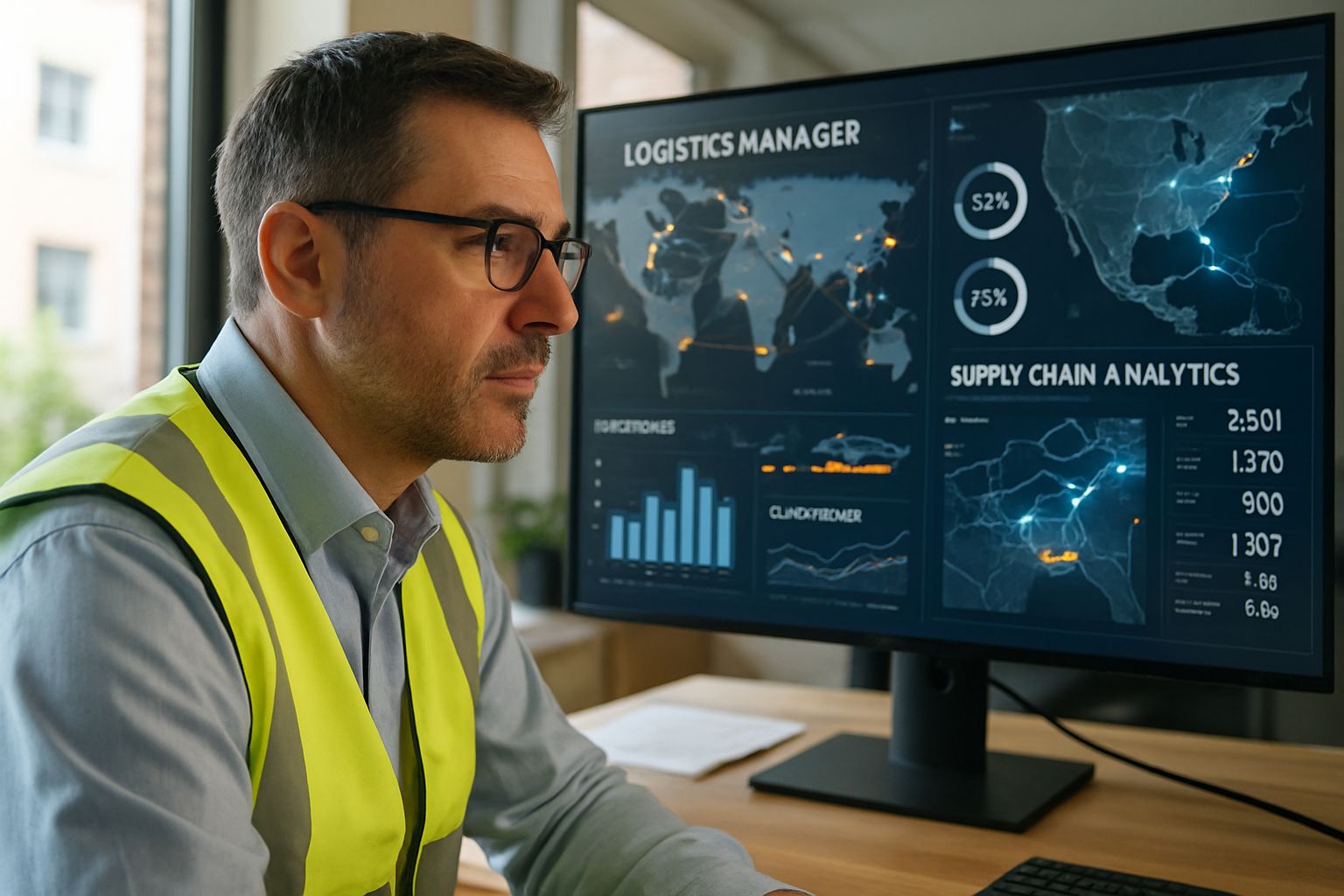
Federal dollars and standards now accelerate adoption momentum. Therefore, companies must align pilot proposals with SMART USA and NIST priorities.
Key Technology Building Blocks
Cognitive supply chain twins rely on three technical pillars. First, high-fidelity digital models mirror machines, lines, and entire networks. Additionally, a streaming digital thread feeds continuous telemetry into those models. Second, machine-learning engines generate predictive insights and prescriptive actions. Third, a control tower orchestrates workflows while keeping humans in the loop. In contrast, legacy manufacturing dashboards deliver only after-the-fact visibility. Therefore, the new stack enables proactive mitigation and self-healing operations. Cognitive supply chain twins knit these pillars into a living decision fabric.
These integrated layers convert raw data into trusted, actionable intelligence. Subsequently, factories can test responses virtually before touching physical assets.
Real Factory Pilot Wins
Hyundai’s Metaplant in Georgia opened as an AI-first greenfield facility. The plant’s twin predicts defects, balances inventory, and coordinates autonomous mobile robots. Moreover, early internal reports cite faster root-cause analysis and reduced downtime. Cognitive supply chain twins guided commissioning from day one.
PepsiCo partnered with Siemens to deploy a twin for a high-volume beverage line. Results include a 20 percent throughput boost and capital savings near 15 percent. Similarly, JetZero simulated assembly sequences to validate investments before ordering tooling. Engineers employed factory AI optimization to refine cycle times before hardware purchases.
IBM even saved about $160 million after rolling out enterprise-wide cognitive supply chain twins. Nevertheless, most success stories still come from large corporations with generous digital budgets.
Pilot data shows measurable productivity and cost benefits. However, translating those wins to smaller plants remains challenging, setting up our benefits discussion.
Quantified Business Benefits
Consultants aggregate performance gains across dozens of deployments. Typical figures include 10–15 percent productivity improvements and five percent inventory cuts. Furthermore, cognitive supply chain twins often lift EBITDA by up to three percentage points.
- 20% forecast accuracy improvement via real-time logistics simulation scenarios
- 10–15% capital expenditure reduction after virtual line balancing
- 5% inventory decrease through network optimization and logistics simulation
- Accelerated workforce onboarding using immersive factory AI optimization modules
Moreover, scenario planning shortens decision cycles from days to minutes during disruptions. Consequently, firms maintain customer service levels while protecting margins. Many analysts call cognitive supply chain twins the fastest route to structural resilience.
Data suggests twins enhance resilience and profitability simultaneously. In contrast, benefits hinge on data quality, which segues into adoption hurdles.
Persistent Adoption Challenges
Data silos remain the foremost barrier. Legacy ERP, PLM, and PLC systems rarely share standardized semantics. Therefore, integration projects consume significant time and budget. Additionally, model fidelity demands rigorous validation to prevent misguided autonomous actions.
Cybersecurity ranks close behind, because twins centralize sensitive operational data and control surfaces. Meanwhile, SMEs struggle with scarce twin engineers and unclear return timelines. Without secure foundations, cognitive supply chain twins become attractive targets.
Governance questions also arise over intellectual property and cross-enterprise data sharing. Nevertheless, emerging frameworks from NIST and industry groups aim to clarify responsibilities.
Technical, security, and talent gaps slow progress. Consequently, firms need structured roadmaps, addressed next.
Action Plan For Manufacturers
Executives should begin with a narrow, high-value twin proof of concept. Select a bottleneck line where factory AI optimization can show quick wins. Moreover, align metrics with SMART USA funding criteria to tap public grants. Ultimately, cognitive supply chain twins should scale from line twins to network twins.
Document a data inventory and prioritize standards-based identifiers such as GS1. Subsequently, establish a zero-trust security model and model-validation gates. Pair the twin with a human-in-the-loop control tower to ensure accountability.
Workforce readiness is critical. Professionals may upskill via the AI Marketing Strategist™ certification covering analytics and automation. Additionally, simulation engineers should practice advanced logistics simulation scenarios inside cloud sandboxes.
Structured pilots, standards alignment, and training reduce risk. Therefore, companies can accelerate toward enterprise-wide cognitive supply chain twins adoption.
Market Outlook Insights Ahead
Market researchers predict the supply-chain twin segment could surpass six billion dollars by 2030. Definitions vary, yet every forecast shows double-digit compound annual growth. Moreover, vendor roadmaps integrate GPUs, physics engines, and generative models for richer logistics simulation. Cognitive supply chain twins therefore sit at the heart of emerging industrial roadmaps.
Consequently, solution cost curves are expected to decline, enticing mid-market manufacturers. In contrast, rising cyber threats could influence spending priorities toward secure architectures. Meanwhile, regulatory pressure for transparency may mandate some twin capabilities.
Growth prospects appear robust yet uncertain around security and regulation. Subsequently, decision makers should monitor policy signals and vendor hardening initiatives.
Cognitive supply chain twins are shifting from hype to measurable factory value. Federal incentives, vendor ecosystems, and proven pilots now lower barriers. However, data governance, security, and skills must advance in parallel. Manufacturers that start with focused proofs, enforce standards, and nurture talent will capture early gains. Consequently, stakeholders should evaluate grants, partner roadmaps, and internal readiness within the next planning cycle. Explore deeper guidance and certifications to build competitive advantage today. Therefore, click the resources above and begin architecting a resilient, AI-driven supply network.


