

AI CERTs
3 hours ago
Clinical Trial Matching Algorithms Reshape Trial Recruitment
Pressure to accelerate drug development has never been higher. Consequently, sponsors are turning to Clinical Trial Matching Algorithms to expand recruitment and cut delays. These tools employ large language models, natural language processing, and structured data reasoning. Moreover, recent studies report retrieval and accuracy gains above ninety percent.
TrialGPT, TrialMatchAI, and commercial pipelines now surface eligible studies clinicians previously missed. Meanwhile, screening workloads drop by roughly forty percent in pilot settings. Life sciences AI investments are surging around Clinical Trial Matching Algorithms, and acquisitions underscore market confidence. However, data privacy, fairness, and workflow integration still challenge deployment.
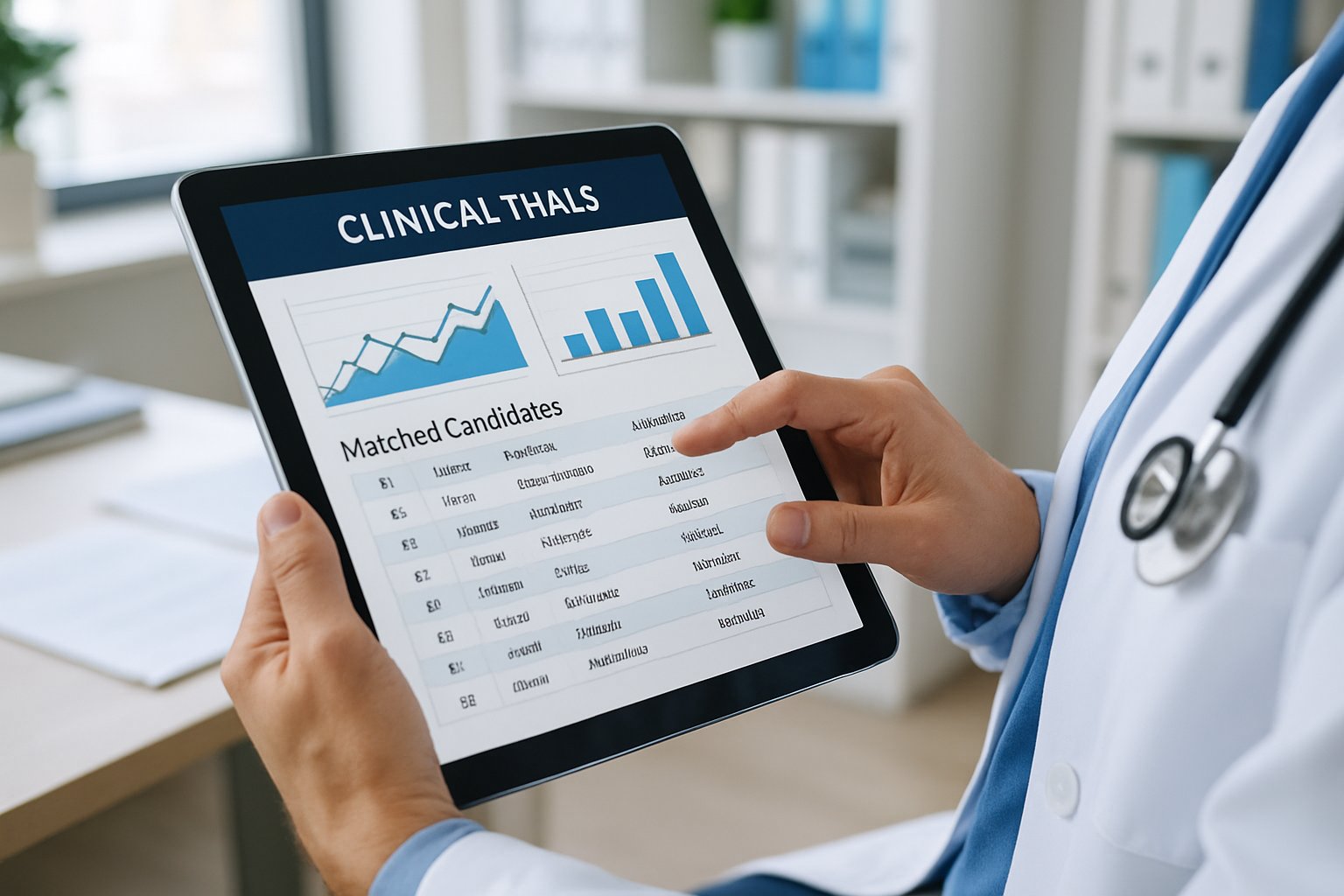
This article examines progress, evidence, risks, and next steps for stakeholders evaluating matching solutions. Readers will gain practical insights supported by peer-reviewed results and commercial trends. Additionally, we highlight key skills and certifications for professionals entering this evolving niche. Understanding these dynamics will help organizations translate algorithms into measurable recruitment impact.
Technology Momentum Rapidly Grows
TrialGPT set a high standard for Clinical Trial Matching Algorithms when Nature Communications published its November 2024 results. Specifically, the model recalled over ninety percent of relevant studies while reviewing only six percent of the registry. Furthermore, criterion-level accuracy reached 87.3 percent, matching experienced clinicians on complex oncologic criteria.
Academic teams quickly built upon that foundation. In May 2025, TrialMatchAI showed similar performance on real-world oncology datasets. In contrast, a March 2025 multimodal pipeline merged imaging, genomics, and notes for even richer profiles.
Commercial vendors adopted the innovations at record speed. Deep 6 AI merged with Tempus, bringing 750 provider sites and thirty million patient records into one network. Consequently, algorithmic reach now spans community hospitals and national programs like the NHS app initiative.
Evidence confirms that technical breakthroughs are translating from labs to production code. Retrieval precision and multimodal inputs continue to climb each release. Operational benefits emerging from these advances deserve separate attention.
Operational Efficiency Gains Evident
Clinicians spend precious hours checking inclusion and exclusion lists manually. Therefore, any reduction directly frees capacity for patient care. Clinical Trial Matching Algorithms cut screening time by roughly forty percent in TrialGPT user studies.
TrialMatchAI similarly reduced chart review minutes per oncology patient. Moreover, higher recall increases the average number of candidate studies per individual, broadening therapeutic options.
- TrialGPT: 42.6% screening time reduction
- TrialMatchAI: 92% of patients matched within top 20 trials
- Tufts CSDD: 11% of sites historically enroll zero participants
These metrics translate into faster first-patient-in dates and fewer costly trial extensions. Consequently, sponsors anticipate millions in savings across large portfolios.
Operational data validate that automation is not mere hype. Time savings and match breadth hold tangible fiscal value. Integration initiatives now aim to deliver those gains at national scale.
Integration Efforts Rapidly Accelerate
EHR vendors, CROs, and governments are embedding Clinical Trial Matching Algorithms directly into clinician workflows. Meanwhile, the UK plans to notify citizens through the NHS app using patient eligibility automation.
Tempus combines genomic testing with Deep 6 search to surface trials during molecular report reviews. Additionally, IQVIA and TriNetX advertise single-click trial queries inside their analytics dashboards.
Such tight coupling minimizes context switching for busy staff. Therefore, adoption barriers fall when matching appears alongside routine order entry.
Real-time integration expands the candidate pool beyond specialist centers. Patient self-service tools further democratize access. However, risks grow alongside reach and warrant close scrutiny.
Persistent Risks Require Vigilance
Data fragmentation remains a stubborn obstacle for Clinical Trial Matching Algorithms in many health systems. Missing labs or genomic markers can lead algorithms to overlook otherwise eligible patients.
Bias also lurks within training data drawn from academic medical centers. Nevertheless, fairness reviews urge subgroup reporting and mitigation strategies.
Explainability presents another concern. Consequently, many systems adopt retrieval-augmented generation to ground eligibility statements in protocol text.
Privacy and regulatory compliance add legal complexity. In contrast, de-identification and consent models vary widely across jurisdictions.
Left unchecked, these risks could erode clinician trust and public support. Transparent metrics and governance are essential safeguards. Best practice frameworks are emerging to guide responsible implementation.
Implementation Demands Best Practices
Successful rollouts start with stakeholder alignment across teams deploying Clinical Trial Matching Algorithms. Moreover, pilot studies should benchmark baseline recruitment before introducing any tool.
Life sciences AI experts recommend continuous monitoring of model performance, especially for minority populations. Subsequently, findings can inform retraining or rule adjustments.
- Create multidisciplinary governance committees
- Audit algorithm output explanations regularly
- Document consent pathways for notifications
- Measure diversity in enrolled cohorts
Patient eligibility automation shines when combined with site activation support and resourcing. Therefore, sponsors must address operational bottlenecks beyond matching alone.
Structured processes convert technical accuracy into real enrollment gains. Proactive oversight maintains safety and equity. Market forecasts indicate growing demand for such disciplined approaches.
Expanding Market Outlook Ahead
ResearchAndMarkets projects robust double-digit growth for matching software through 2030. Life sciences AI budgets allocate increasing shares to recruitment technologies.
Consolidation continues as larger platforms acquire specialist vendors to secure data pipelines. Nevertheless, open standards push for interoperability and competitive ecosystems.
Investors view Clinical Trial Matching Algorithms as foundational infrastructure, similar to eConsent earlier. Consequently, more venture funding flows into workflow extensions and global expansion.
Financial indicators suggest a durable trajectory rather than a transient trend. Competitive differentiation will hinge on talent and expertise. Upskilling opportunities are already available for industry professionals.
Upskilling For Trial Stakeholders
Operational leaders, data scientists, and clinicians need shared literacy around algorithmic eligibility. Furthermore, specialized credentials can validate that knowledge for employers.
Professionals can enhance their expertise with the AI Learning Development™ certification. Additionally, curricula cover governance, fairness, and integration case studies.
Life sciences AI teams benefit when certified members bridge technical depth and clinical context. Meanwhile, patient eligibility automation projects progress faster under common frameworks.
Structured training cultivates the human capabilities essential for sustained algorithm success. Certified professionals often spearhead cross-functional deployment wins. A brief synthesis underscores the core lessons.
Clinical Trial Matching Algorithms have progressed from experimental prototypes to enterprise platforms. Therefore, sponsors now enjoy broader recruitment pools and quicker timelines. Life sciences AI investments and national initiatives accelerate this momentum, while patient eligibility automation streamlines daily workflows.
Nevertheless, data quality, bias, and privacy risks demand diligent oversight. Implementation best practices, transparent metrics, and skilled professionals mitigate those concerns. Stakeholders should monitor real-world performance studies and equity metrics.
Moreover, earning recognized certifications positions teams to navigate evolving technology and regulatory landscapes. Explore the resources referenced here and assess how matching algorithms can advance your organization’s trial goals today.


