

AI CERTs
2 months ago
Clinical Inference Automation Cuts Hospital Diagnostic Backlogs
Radiology reports, stroke alerts, and sepsis warnings now queue faster than staff can clear them. Consequently, diagnostic backlogs stretch from community hospitals to renowned academic centers. Meanwhile, executives search for scalable answers that neither exhaust clinicians nor compromise safety. Clinical Inference Automation has emerged as a leading candidate. Furthermore, recent peer-reviewed studies suggest the technology shortens reporting, triage, and intervention timelines significantly. This article unpacks the evidence, operational mechanics, and strategic considerations for health-system leaders. Readers will learn how AI-driven inference tools can relieve pressure while advancing care optimization goals. Additionally, we highlight certifications that help professionals steer these transformative programs responsibly. Market data from Deloitte and FDA clearance trends provide broader context. Nevertheless, gaps in randomized evidence and equity monitoring remain.
Backlog Crisis Snapshot Today
Diagnostic delays hurt outcomes and finances. Moreover, imaging volume continues to climb faster than radiologist supply. The American College of Radiology reports double-digit modality growth annually. In contrast, fellowship output has plateaued. Sepsis detection and neurovascular triage face similar bottlenecks across emergency departments.
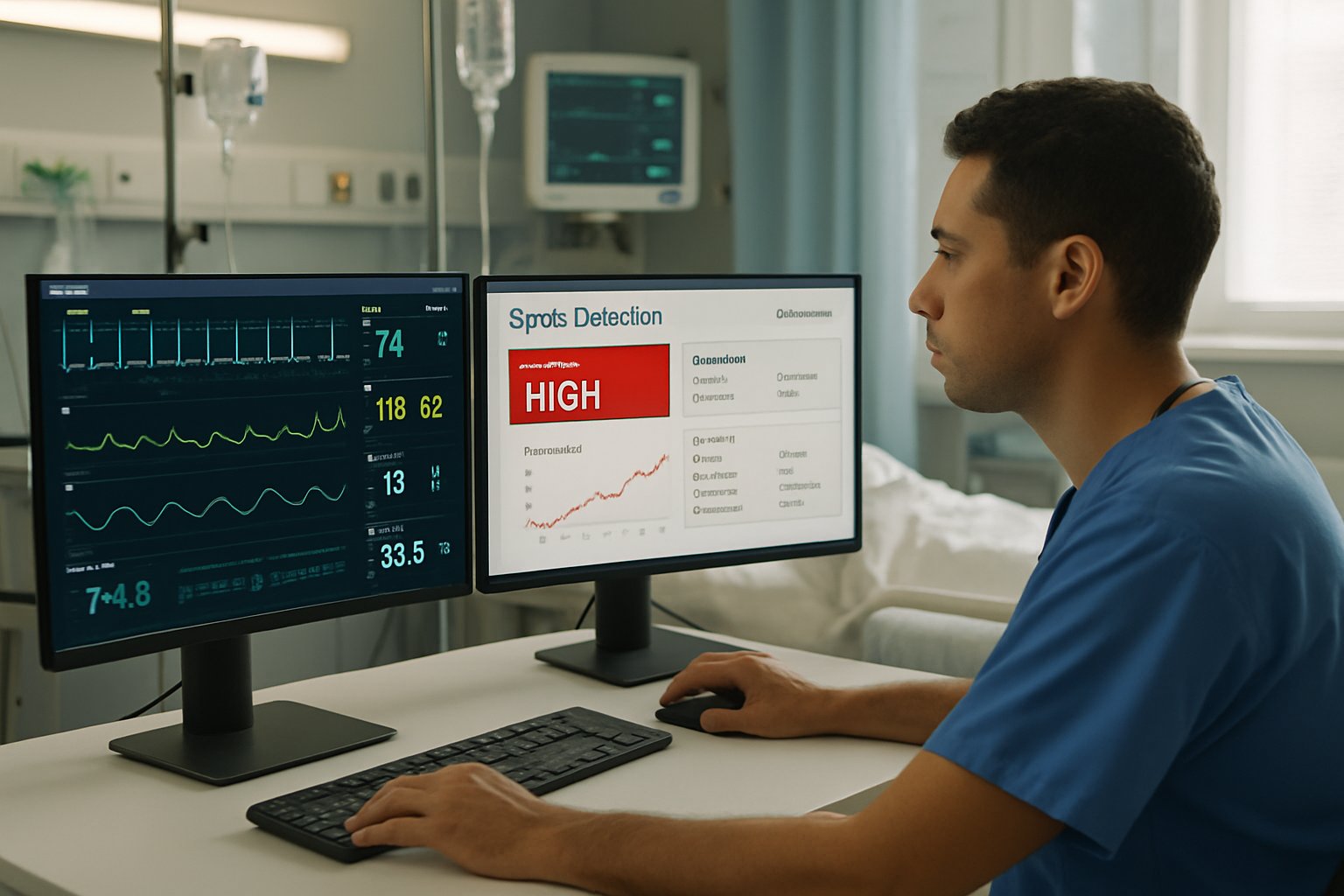
Consequently, many networks sit on days of unreported films and alerts awaiting confirmation. Northwestern Medicine quantified the effect while piloting internal generative reporting tools. Before automation, radiologists spent 189 seconds drafting a single radiograph report. Multiply that by thousands, and backlog compounds rapidly.
Backlog metrics illuminate a systemic strain requiring fresh approaches. Therefore, Clinical Inference Automation now ranks high on executive agendas, setting the stage for deeper analysis.
Clinical Inference Automation Evidence
Published data now validate real-world gains. For example, Northwestern's study examined 23,960 radiographs across multiple hospitals. AI assistance cut documentation time 15.5 percent without sacrificing accuracy. Furthermore, some readers enjoyed 40 percent speed boosts.
Stroke programs adopting Viz.ai demonstrated median door-to-groin reductions of 11-40 minutes. Consequently, fewer unnecessary transfers disrupted regional networks. TREWS flagged sepsis nearly six hours earlier, delivering an 18.7 percent relative mortality drop when alerts were acted upon quickly. These multicenter findings span more than 600,000 patient encounters.
- 15.5% faster radiograph reports (Northwestern, 2025)
- Up to 40 minutes saved in stroke workflows (Viz.ai meta-analysis, 2024)
- 18.7% relative sepsis mortality reduction (TREWS, Nature Medicine, 2022)
- 168 AI/ML devices cleared by FDA in 2024 alone
Such evidence underpins expanding pilots into enterprise rollouts. Clinical Inference Automation therefore shifts from experimental novelty to essential infrastructure.
Peer-reviewed numbers reveal consistent time savings across diverse settings. However, understanding the operational mechanics clarifies why those savings emerge and scale.
Operational Gains Explained Clearly
Automation targets high-volume, low-complexity tasks first. Generative models draft radiology text in the attending's style, ready for quick edits. Meanwhile, triage algorithms continuously monitor PACS and EHR feeds for emergent patterns. Alerts push priority cases to the top of the reading list within seconds.
Additionally, dashboards visualize queue status, enabling proactive staffing adjustments. Hospital command centers leverage these insights for broader care optimization. Clinical Inference Automation therefore multiplies specialist throughput without lengthening shifts.
These tools integrate with existing medical decision systems through standards like HL7 and FHIR. Consequently, staff avoid disruptive context switching.
The mechanism is simple: shave seconds repeatedly, accumulate hours system-wide. Next, we examine barriers that threaten sustained performance.
Challenges And Mitigation Strategies
Evidence quality remains uneven. Many FDA submissions rely on retrospective data and lack randomized controls. Moreover, real-world drift can erode accuracy if models are not monitored. Alert fatigue also reduces clinician engagement.
Implementers therefore must design feedback loops, governance committees, and escalation paths. Hospitals with mature medical decision systems already possess some infrastructure for oversight. Nevertheless, demographic bias checks and performance dashboards need expansion.
Regulatory uncertainty about adaptive algorithms introduces legal risk. Consequently, vendors and providers collaborate on update playbooks aligning with draft FDA frameworks.
These hurdles are significant yet manageable with disciplined engineering and policy alignment. The following section explores the external environment shaping adoption trajectories.
Regulatory And Market Outlook
FDA clearance volume signals commercial momentum. Radiology represents nearly 70 percent of authorized AI devices. Additionally, 168 machine-learning tools gained approval during 2024 alone. Consultant surveys show AI leads hospital investment priorities for 2025 budgeting cycles.
Epic and Cerner now bundle inference modules as optional extensions. Cloud giants offer scalable inference engines that support Clinical Inference Automation at regional level. Moreover, payers explore reimbursement models tied to measurable care optimization outcomes.
Professionals can sharpen skills through the AI Prompt Engineer™ certification. Consequently, organizations gain internal champions capable of translating algorithms into bedside value.
Market indicators therefore favor continued technology diffusion. However, leadership must convert enthusiasm into structured Clinical Inference Automation roadmaps.
Actionable Steps For Leaders
Step one involves quantifying backlog baselines. Subsequently, select priority use cases with clear time-sensitive outcomes, such as stroke or sepsis. Form multidisciplinary teams blending clinicians, data scientists, and legal advisors.
Deploy pilot models within existing medical decision systems to minimize integration risk. Measure throughput, accuracy, and care optimization metrics weekly. Furthermore, publish aggregated results to encourage transparency and peer learning.
- Establish continuous performance monitoring dashboards
- Run equity audits across demographic slices quarterly
- Define rollback criteria for safety events
- Align model updates with regulatory guidance
Clinical Inference Automation should enter service only after governance committees approve the evidence package. Nevertheless, sustain engagement by celebrating small efficiency wins monthly.
Structured playbooks convert pilot momentum into permanent backlog relief. Next, we consolidate the narrative and outline practical calls to action.
Key Takeaways And CTA
Evidence confirms that Clinical Inference Automation accelerates reporting, triage, and intervention across diverse workflows. Radiology studies show 15.5 percent speed gains, while sepsis alerts lower mortality when acted upon quickly. Stroke programs shave crucial minutes, improving eligibility for endovascular therapy. Moreover, market momentum and regulatory clearances suggest these gains will compound.
However, success depends on solid governance, performance monitoring, and integration with medical decision systems. Consequently, leaders should map backlog metrics, pilot responsibly, and scale only after proving sustained care optimization. Clinical Inference Automation offers a strategic path forward, provided organizations respect evidence and workflow realities. Download our implementation checklist and explore the linked certification to deepen your operational expertise today.


