

AI CERTs
2 hours ago
Climate Goal Conflict: Google Weighs Gas Power for AI Datacenters
Datacenter electricity demand is soaring as AI workloads explode. Consequently, Google now faces an acute supply dilemma in Texas. Permit filings reveal a 933-megawatt on-site gas plant at the Goodnight campus. The revelation ignites a Climate Goal Conflict that challenges Google's clean image. Moreover, analysts see similar tendencies across Nebraska and Illinois proposals. Industry insiders debate whether natural gas is a pragmatic bridge or a backward step. Meanwhile, environmental groups warn of massive Carbon lock-in from unabated combustion. This article examines the facts, drivers, and ramifications for Sustainability commitments. Readers will gain data-rich insight into the emerging power calculus shaping hyperscale Infrastructure. In contrast, Google still markets its 24/7 carbon-free Energy objective. Nevertheless, the Goodnight blueprint suggests a complicated roadmap toward that heralded ambition. Therefore, stakeholders must reassess expectations before billions flow into next-generation campuses.
Google Gas Strategy Shift
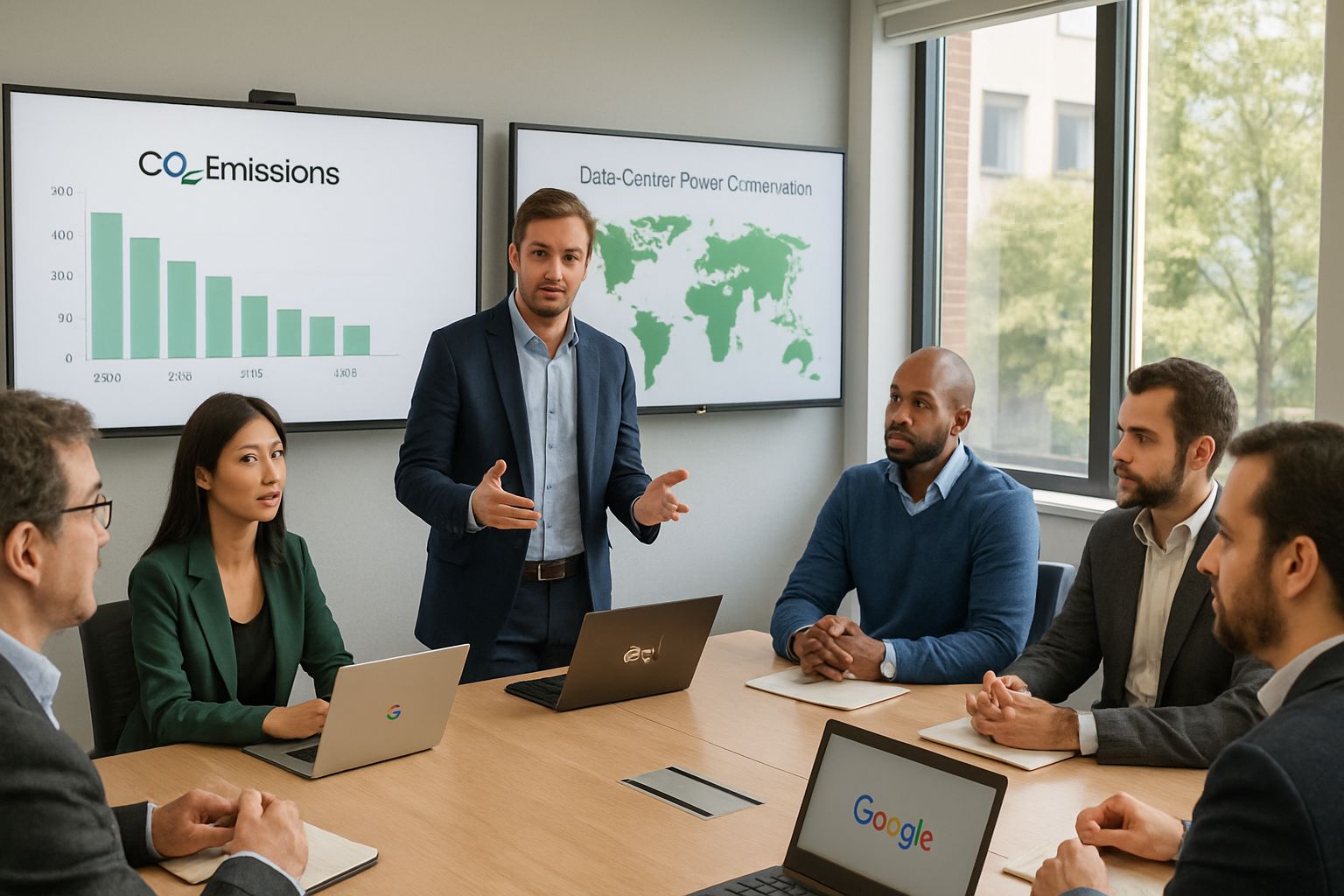
Google confirmed a partnership at the Goodnight AI campus yet denies a fuel contract signing. However, Texas regulators published Crusoe Energy filings that outline twenty aeroderivative turbines on site. Those machines would generate 933 megawatts, intensifying the Climate Goal Conflict around Google's operations. Furthermore, Cleanview satellite images show two completed halls and foundations for additional Infrastructure phases.
Goodnight Campus Design Details
- On-site gas capacity: 933 MW
- Permit CO2e: 4.595 million short tons yearly
- Wind interconnection: 265 MW
- Diesel backup: 519 MW
- Planned battery space: ~1 GW
Consequently, the hybrid stack merges renewable Energy with fossil reliability. This mix deepens the Climate Goal Conflict heading into Section 2.
Broader Industry Trend Snapshot
Google is not alone in reevaluating supply strategies. Moreover, GEM counts over 97 gigawatts of gas capacity linked to data centers nationwide. Microsoft and Chevron negotiate a multi-gigawatt West Texas hub, while Meta studies similar builds. In contrast, traditional utilities struggle with congested queues and aging Infrastructure. Therefore, hyperscalers embrace onsite Power to sidestep delays and guarantee five-nines uptime. Nevertheless, each deal intensifies the ongoing Climate Goal Conflict across Silicon Valley boardrooms.
The trend highlights a pivot toward private generation footprints. Subsequently, policymakers face pressure to balance grid Integrity with corporate ambitions.
Emissions By The Numbers
Cleanview calculates Goodnight's yearly Carbon output at 4.595 million short tons. Additionally, that single plant equals emissions from roughly one million passenger cars. GEM warns new gas projects could expand the U.S. fleet by fifty percent. Moreover, methane leakage could erode any efficiency gains promised by modern turbines. Google reported a 12 percent drop in data-center emissions in 2024 despite rising Energy use. Consequently, critics argue the gas pivot endangers Sustainability milestones and intensifies the Climate Goal Conflict.
- Google 2024 data-center demand: 30.8 TWh
- U.S. gas capacity in development: 252 GW
- Data-center linked projects: 97 GW
- Potential fleet expansion: 50% increase
Numbers demonstrate the scale of prospective emissions. However, corporate leaders emphasize reliability, leading us to compare promises and reality next.
Reliability Versus Climate Promises
AI training clusters demand constant Power with millisecond tolerance for disruption. Therefore, developers prize on-site gas because it can start instantly and run indefinitely. Cully Cavness of Crusoe argues gas is the most scalable resource available today. Nevertheless, Michael Thomas says Google's pivot undermines Sustainability branding built over decades. In contrast, Google still promotes its 24/7 Carbon-free Energy procurement framework. Yet, the Goodnight permit omits any carbon capture equipment, worsening the Climate Goal Conflict. Meanwhile, an Illinois offtake includes CCS, signaling possible future mitigation pathways. Professionals can enhance expertise via the AI+ Human Resources™ certification.
Trade-offs between uptime and emissions remain unresolved. Subsequently, regulatory scrutiny is intensifying, as explored in Section 5.
Policy And Market Stakes
Lawmakers monitor whether hyperscalers shift grid costs to ordinary customers. Furthermore, the White House secured a ratepayer protection pledge from major firms. State agencies must also review air permits, interconnections, and water use for each campus. In Texas, public comment periods for the Goodnight permit close later this year. Consequently, opposition groups may challenge approvals based on Carbon impacts and local pollution. The persistent Climate Goal Conflict also fuels bipartisan hearings on data-center resilience. Market analysts warn of stranded asset risk if AI power intensity declines. Moreover, investors are assessing how Climate Goal Conflict could translate into reputational penalties.
Regulatory decisions will shape financial outcomes for every proposed plant. Therefore, upcoming milestones merit close attention, which we outline next.
Upcoming Project Milestones Watch
Cleanview expects Phase One of Goodnight to enter service in 2027. However, satellite imagery indicates turbines have not yet arrived onsite. Construction schedules depend on supply chain timing and final offtake signatures. Nebraska and Illinois proposals await environmental reviews and financing decisions in 2026. Additionally, GEM will update project databases each quarter, offering fresh visibility. Investors should monitor permit amendments, CCS add-ons, and battery procurement notices. Ultimately, each milestone could either ease or deepen the Climate Goal Conflict.
Timelines remain fluid amid regulatory and market uncertainty. Nevertheless, strategic choices made now will echo for decades across global Energy systems.
Conclusion And Forward Outlook
Google’s gas experiments spotlight the precarious balance between innovation and Sustainability mandates. Moreover, the Goodnight permit quantifies a massive Carbon footprint that challenges prior commitments. Consequently, the phrase Climate Goal Conflict will likely dominate corporate energy discussions throughout 2026. Investors, regulators, and communities must weigh reliable Power against long-term planetary costs. In contrast, emerging CCS, geothermal, and advanced nuclear options could still realign trajectories. Nevertheless, immediate procurement choices may lock Infrastructure patterns for decades. Therefore, readers can track permits and upskill via the AI+ Human Resources™ certification. The energy landscape shifts quickly; act now to stay ahead of the curve.


