

AI CERTS
3 hours ago
China’s AI Labels Deepen State Censorship Controls
This feature unpacks the new framework, its timeline, and its impact on developers. Readers will gain insight into technical obligations, enforcement tactics, and strategic responses. Meanwhile, we assess how State Censorship aligns with broader LLM regulation trends.
AI Enforcement Timeline Snapshot
March 7, 2025 saw four ministries release the Measures for identifying synthetic content. Additionally, GB 45438-2025 provided the mandatory technical blueprint for explicit and implicit labels. Subsequently, platforms were given six months to retrofit systems before the September 1 deadline.
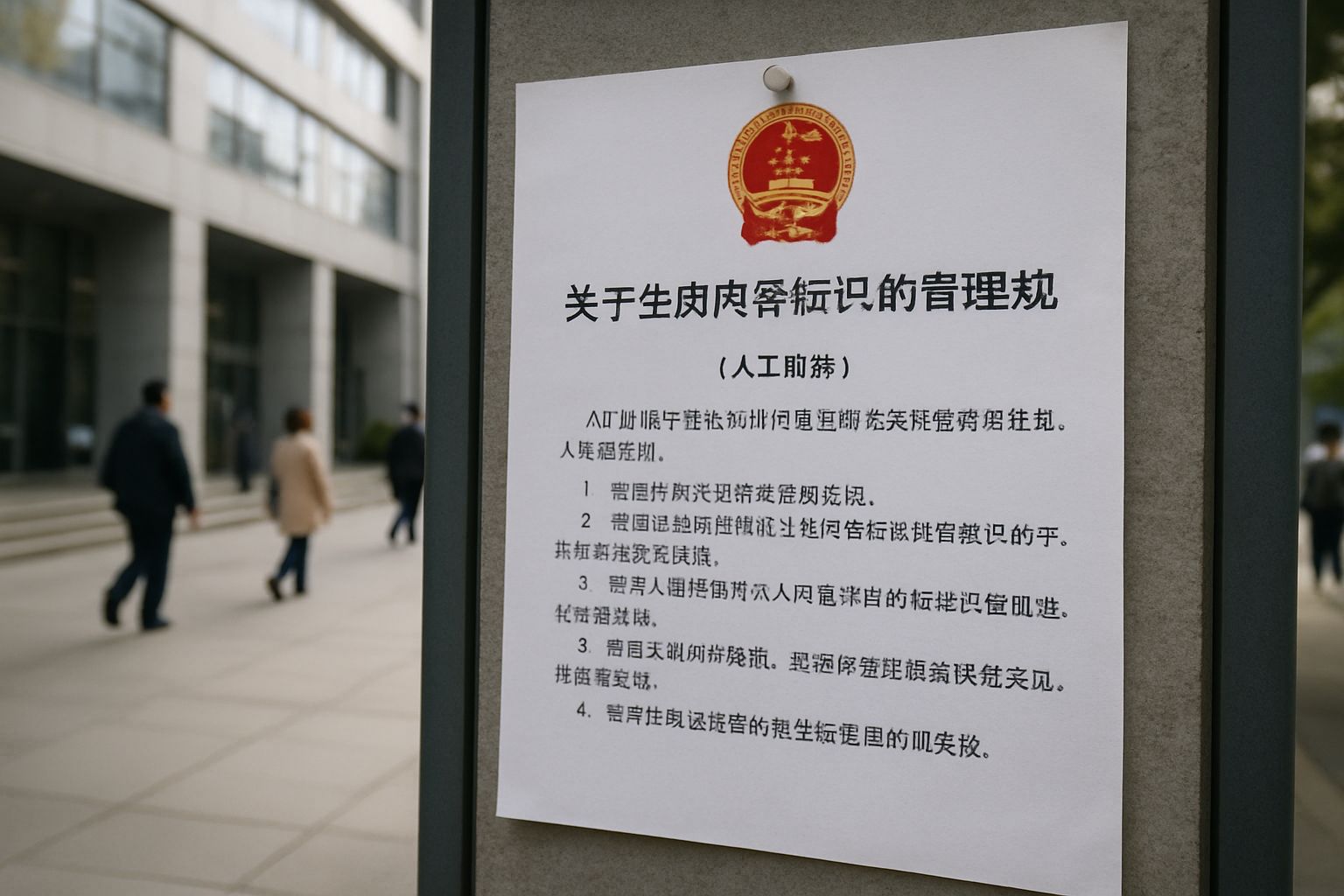
- March 7: Labeling Measures and GB 45438-2025 released.
- September 1: National compliance deadline for dual labels.
- December 28: Draft rules for anthropomorphic agents published.
Enforcement escalated once the deadline passed with coordinated “Qinglang” sweeps across major services. Moreover, provincial branches published takedown tallies showing the breadth of State Censorship in the first month. Analysts link those sweeps to parallel LLM regulation ambitions aimed at curbing misinformation spikes.
December brought draft controls on anthropomorphic chatbots, signaling further tightening of conversational AI. Consequently, many developers filed new security assessments to pre-empt additional penalties. These milestones sketch a rapid calendar that other tech jurisdictions now scrutinize.
In twelve months, China shifted from planning to forceful action. Regulators displayed speed and coordination rarely matched elsewhere. Consequently, attention now turns to the twin labeling requirement.
China's Dual Label Obligations
The Measures impose both explicit and implicit disclosure for every AI-generated asset. Explicit cues include watermarks, on-screen text, or spoken prompts visible to end users. Meanwhile, implicit tags embed metadata or digital watermarks detectable by platform scanners.
Therefore, creators must add marks at the source, and platforms must verify those marks downstream. Failure triggers takedown and possible fines under State Censorship provisions. In contrast, foreign services often treat labeling as voluntary, creating compliance gaps.
Legal advisers stress that model providers completing LLM regulation filings must also document labeling pipelines. Moreover, the government demands provenance logs retained for months for audit access. These strictures aim to improve content safety by enabling traceability across the vast ecosystem.
The twin-label rule embeds identification into every file and interface. Consequently, operational complexity rises for small studios lacking watermark tooling. Next, we examine how platforms absorb that pressure.
Platform Compliance Pressures Rise
Major platforms integrated detection models, user reporting flows, and auto-label overlays before September. Tencent claimed 96% detection accuracy during initial sweeps; nevertheless, unlabeled clips still slipped through. Therefore, engineering teams now rerun back catalogs to patch missing implicit markers.
ByteDance created a provenance dashboard allowing creators to confirm embedded metadata within minutes. Meanwhile, Alibaba Cloud launched an SDK bundling watermark APIs with LLM regulation filing templates. Such tooling appeals to overseas tech vendors eyeing Chinese distribution channels.
However, compliance carries heavy compute costs, especially when scanning millions of legacy assets. Some start-ups complain that State Censorship forces them toward costly third-party verification services. Nevertheless, the government remains unmoved, citing public safety as paramount.
Platform experience shows that labeling at scale is feasible yet expensive. Consequently, market power may consolidate around large incumbents with ample resources. Stakeholder reactions illustrate that consolidation trend.
Stakeholder Responses Rapidly Evolve
Regulators publish weekly FAQs and hotline numbers to guide enterprises through arcane clauses. In contrast, civil society groups question whether State Censorship suppresses legitimate satire and research. Moreover, international observers track how metadata mandates intersect with privacy law.
Corporate stakeholders react pragmatically, prioritizing LLM regulation milestones and patenting watermark algorithms. Meanwhile, security vendors market deepfake scanners as turnkey compliance aids. Academic researchers partner with industry to test watermark robustness under real network conditions.
Some provincial government units run public demonstrations to educate citizens on detecting AI tags. Consequently, awareness campaigns support broader content safety goals. Nevertheless, rights advocates argue that traceability can enable new surveillance vectors.
Stakeholders walk a tightrope between innovation, risk, and speech limits. Therefore, their feedback will shape future amendments. Yet, unresolved risks still loom large.
Risks And Challenges Persist
Watermarks can be removed, and metadata can be stripped during file transcodes. Furthermore, detection models raise false positives, undermining user trust. These technical flaws may dilute State Censorship objectives over time.
Over-breadth also chills creative discourse because ambiguous clauses push platforms to over-delete. In contrast, the government emphasizes national security priorities over expressive latitude. Critics warn that aggressive State Censorship could erode innovation incentives. Consequently, some artists migrate to offshore forums pursuing fewer constraints.
Compliance costs hit small developers hardest, diverting funding away from core tech research. Moreover, mandatory provenance logs raise privacy questions about user identities. Safety gains may erode if public trust declines due to perceived surveillance.
Technical and legal gaps remain significant. Nevertheless, iterative standards could address some weaknesses. Global observers are already extracting lessons.
Global Lessons For Tech
Foreign policymakers study Beijing’s model as they draft parallel deepfake bills. Consequently, watermark standards from GB 45438-2025 may influence ISO proposals. However, democratic systems may temper State Censorship impulses with stronger judicial oversight.
International companies entering China should map obligations across labeling, filing, and content safety. Professionals can upskill through the AI+ Sales™ certification. Moreover, tech vendors should embed dual labels by default to avoid late rework.
In contrast, civil liberties groups urge robust appeal processes against erroneous takedowns. Subsequently, hybrid governance models may emerge balancing control with expressive rights. These debates foreshadow upcoming negotiations at multilateral digital policy forums.
China’s approach offers a living laboratory for watermark enforcement. Therefore, foreign actors should track updates and adjust roadmaps. Finally, we recap core insights.
Conclusion And Forward Outlook
China now operates the world’s most prescriptive AI labeling regime. State Censorship drives visible marks, machine tags, and heavy platform liability. Therefore, developers must master watermark engineering, provenance logging, and agile policy monitoring. Meanwhile, large platforms leverage compliance tooling to reinforce market advantages.
Foreign enterprises can still engage the market by embedding labels early and filing models promptly. Additionally, aligning with government timelines reduces disruption risk. Professionals should monitor standard revisions and pursue certifications that bolster trusted sales narratives.
Consequently, readers should act now. Explore the linked certification and evaluate your readiness before regulators escalate new audits.


