

AI CERTS
3 hours ago
China’s AI Chip Trade Milestone: Nvidia H200 Imports Approved
Market analysts describe the move as pivotal. However, supply remains constrained because demand dwarfs inventory. This article unpacks the policy background, production realities, technical gains, and looming risks. Throughout, we place the AI Chip Trade story in strategic context for industry planners.
Beijing Grants First Batch
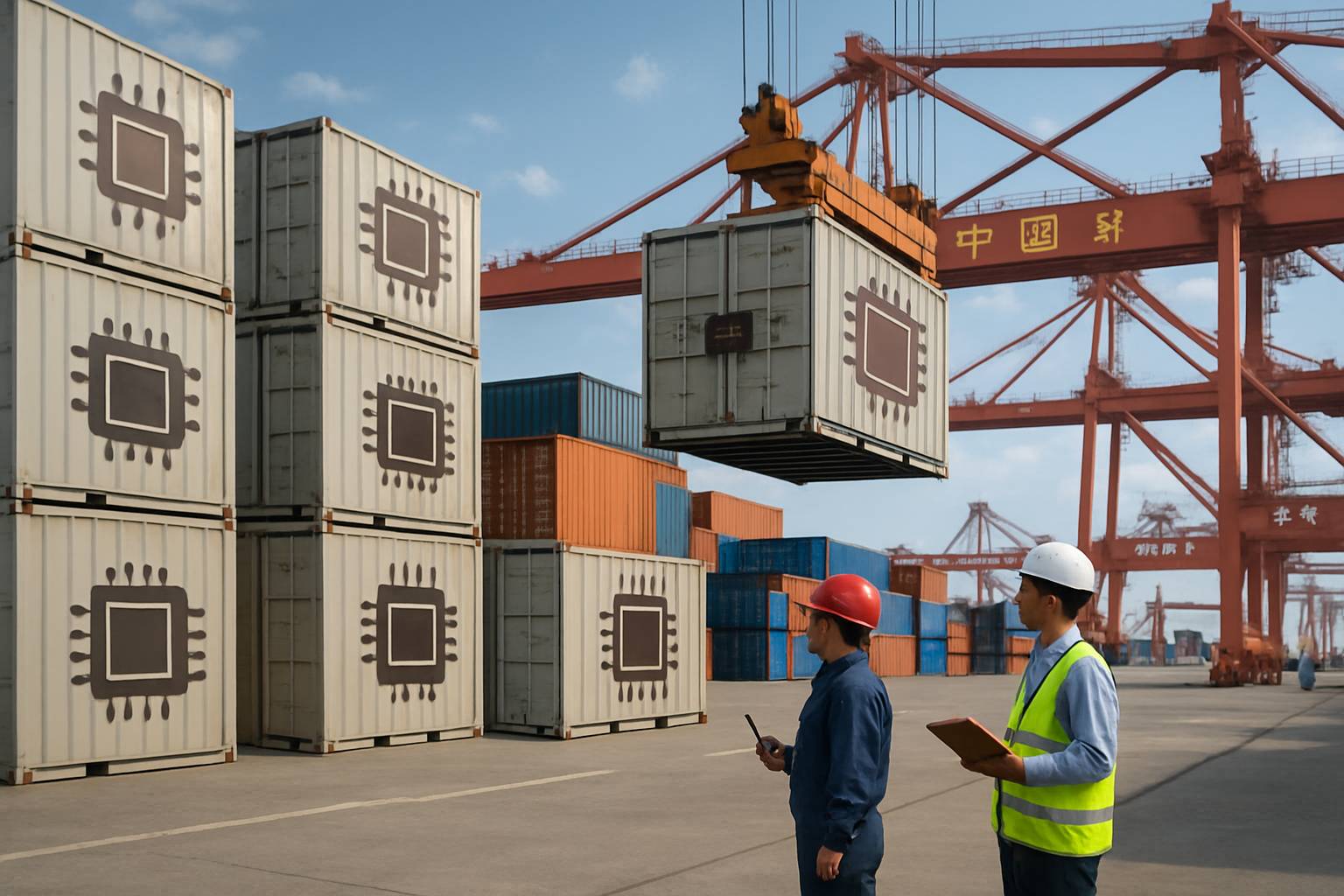
On 27 January 2026, several outlets confirmed Chinese regulators authorized several hundred thousand H200 units. Alibaba, Tencent, and ByteDance reportedly secured most allocations. Nevertheless, ministries offered no public comment. Nvidia chief Jensen Huang had forecast such silent approvals during CES. Therefore, purchase orders became the clearest signal.
For perspective, Chinese cloud groups ordered more than two million chips for 2026 delivery. In contrast, Nvidia held roughly 700,000 units in late December. Consequently, the approved shipment covers only a fraction of open requests. Still, executives view it as a vital beachhead for broader AI Chip Trade flows.
These early numbers highlight pent-up appetite. However, they also show supply tension that could reshape regional pricing.
US Licensing Framework Shifts
Washington’s Bureau of Industry and Security revised licensing on 13 January 2026. The rule set case-by-case reviews for high-end GPUs, including H200. Additionally, exporters must prove shipments will not erode capacity needed by American customers. Third-party testing and buyer-security audits are mandatory. Moreover, some reports cite a 25 percent transaction fee, although the official text omits exact levies.
This framework gives Commerce flexibility. Consequently, approvals can expand or tighten without fresh legislation. For the current AI Chip Trade, Nvidia must document every shipment. Chinese buyers must pass compliance checks. Therefore, bilateral bureaucracy governs each crate leaving a bonded warehouse.
Licensing changes offered Beijing political cover. Subsequently, import authorities moved once U.S. conditions crystallized. The synchronized timing underscores how dual approval shapes every future transaction.
Demand Outpaces Current Supply
Reuters data show >2 million H200 orders lodged by Chinese firms. Meanwhile, inventory sits well below one million units worldwide. Consequently, Nvidia approached TSMC to boost wafer starts. However, new capacity takes quarters, not weeks.
Consider these supply-demand signals:
- Initial approval: ~400,000 units, worth an estimated US$10 billion.
- Outstanding orders: above two million units for 2026.
- Current stock: roughly 700,000 H200 GPUs available globally.
- TSMC ramp: additional capacity expected in late Q3 2026.
Moreover, each H200 often ships inside an HGX board housing eight GPUs. Therefore, server integrators must secure complementary components. Supply friction could ripple through memory, power, and cooling vendors.
These figures reveal a widening gap. Nevertheless, controlled releases help avoid sudden shortages for Western customers. The delicate balance defines this phase of the AI Chip Trade.
Supply constraints heighten competitive stakes. However, incremental production should relieve pressure by year-end.
Tech Specs And Impact
The H200 delivers 141 GB of HBM3e and 4.8 TB/s bandwidth per chip. Furthermore, multi-precision tensor throughput surpasses the export-compliant H20 by wide margins. Consequently, Chinese labs gain capacity to train larger language models domestically. Nvidia positions the chip just below its newer Blackwell line, which remains restricted.
In practice, one HGX H200 board pushes memory-bound workloads nearly 2× faster than an H100 setup. Moreover, cloud providers can slot the PCIe variant into existing H100 clusters, accelerating ramp-up. Therefore, performance gains unlock shorter iteration cycles for recommendation engines and vision systems.
Professionals seeking deeper policy knowledge may pursue the AI Policy Maker™ certification. This course contextualizes regulatory forces shaping the AI Chip Trade.
Technical advantages appear clear. However, engineering teams must optimize power envelopes and cooling to extract full value. Proper planning mitigates integration delays.
Geopolitical Risk Factors Unfold
Despite approvals, geopolitical tension endures. U.S. lawmakers fear dual-use diversion toward military labs. Consequently, Congress is weighing tighter auditing powers. Meanwhile, Beijing balances foreign purchases with incentives for local accelerators. Subsidies funnel billions toward startups such as Biren and Moore Threads.
Additionally, any escalation in Taiwan Strait security could disrupt TSMC fabrication lines. Therefore, multi-sourcing strategies gain urgency. Nevertheless, the initial shipment indicates both capitals currently prefer calibrated engagement.
The AI Chip Trade thus functions as a diplomatic barometer. However, sudden policy swings remain possible, demanding constant scenario planning.
Risk signals persist. Consequently, firms should model supply shocks alongside cost projections.
Strategic Takeaways For Firms
Industry leaders must translate headlines into action. Key recommendations follow:
- Diversify accelerator roadmaps across Nvidia, AMD, and domestic options.
- Secure forward contracts covering memory, power units, and networking gear.
- Invest in policy expertise through certified programs like AI Policy Maker™.
- Establish compliance teams to track U.S. and Chinese licensing shifts.
- Model pricing scenarios under varying quota regimes.
Moreover, communicate allocation status transparently to application teams. Clear guidance avoids wasted model-training cycles while hardware queues build.
These actions convert uncertainty into advantage. Therefore, proactive governance becomes a core pillar of every AI Chip Trade strategy.
Executives who act early secure compute, manage risk, and reassure stakeholders. Consequently, organizational resilience rises.
Forward Looking Signals
Signs point to additional approvals by mid-year. Furthermore, TSMC’s capacity expansion should land before Q4. Nevertheless, backlog levels suggest constrained availability through 2026.
Analysts expect average selling prices to stay elevated. In contrast, lower-spec accelerators could face discount pressure. Therefore, budgeting teams should adjust capital forecasts accordingly.
Continued monitoring of BIS notices and Chinese customs updates remains critical. Moreover, cross-functional war-gaming prepares firms for rapid rule changes.
These signals shape the next phase. However, agile planning keeps organizations ahead of the AI Chip Trade curve.
Recent indicators outline likely trajectories. Consequently, leadership teams gain a clearer decision framework.
Conclusion And Next Steps
The first H200 shipment marks a historic moment for the AI Chip Trade. Beijing’s approval, paired with U.S. licensing tweaks, opens a narrow yet valuable corridor. Demand still exceeds supply, while geopolitical variables remain volatile. Nevertheless, firms that secure hardware, strengthen compliance, and build policy literacy stand to gain strategic advantage.
Moreover, performance leaps from H200 platforms will reshape model development timelines across Chinese clouds. Consequently, global partners must adapt roadmaps and cost structures.
Stay informed, refine contingency plans, and explore certifications such as the AI Policy Maker™ program to deepen regulatory insight. Embrace proactive learning and safeguard your organization’s foothold in the evolving AI Chip Trade landscape.


