

AI CERTS
2 hours ago
ChatGPT StubHub App Redefines Conversational Ticket Shopping
However, many professionals still ask what real problems this fresh interface solves. The ChatGPT StubHub App promises quicker discovery, real-time accuracy, and personalized suggestions that remember user context. Moreover, the integration offers StubHub a new distribution channel while shining a spotlight on privacy and regulatory issues. These dynamics set the stage for a deeper look at the technology, the market, and the unanswered questions.
Why StubHub Chose Chat
StubHub executives frame the decision as fan centric. Consequently, they argue that natural language lowers friction more than any redesigned filter bar. Art Yegorov, CTO, said the firm must “meet fans where they are” when announcing the tool. Meanwhile, VP Nick Turley added that AI will connect services directly to intent, saving precious minutes during event planning.
From a strategic view, StubHub also seeks insulation from volatile search algorithms on traditional web engines. Therefore, embedding inside ChatGPT’s ecosystem can diversify traffic sources and reduce paid marketing costs. In contrast, rivals like Ticketmaster still rely heavily on external search channels and branded mobile apps. This distinction may influence market share once conversational discovery gains mainstream adoption.
StubHub’s rationale combines user convenience with distribution hedging. Consequently, understanding the experience flow helps quantify those benefits.
Inside The Ticket Flow
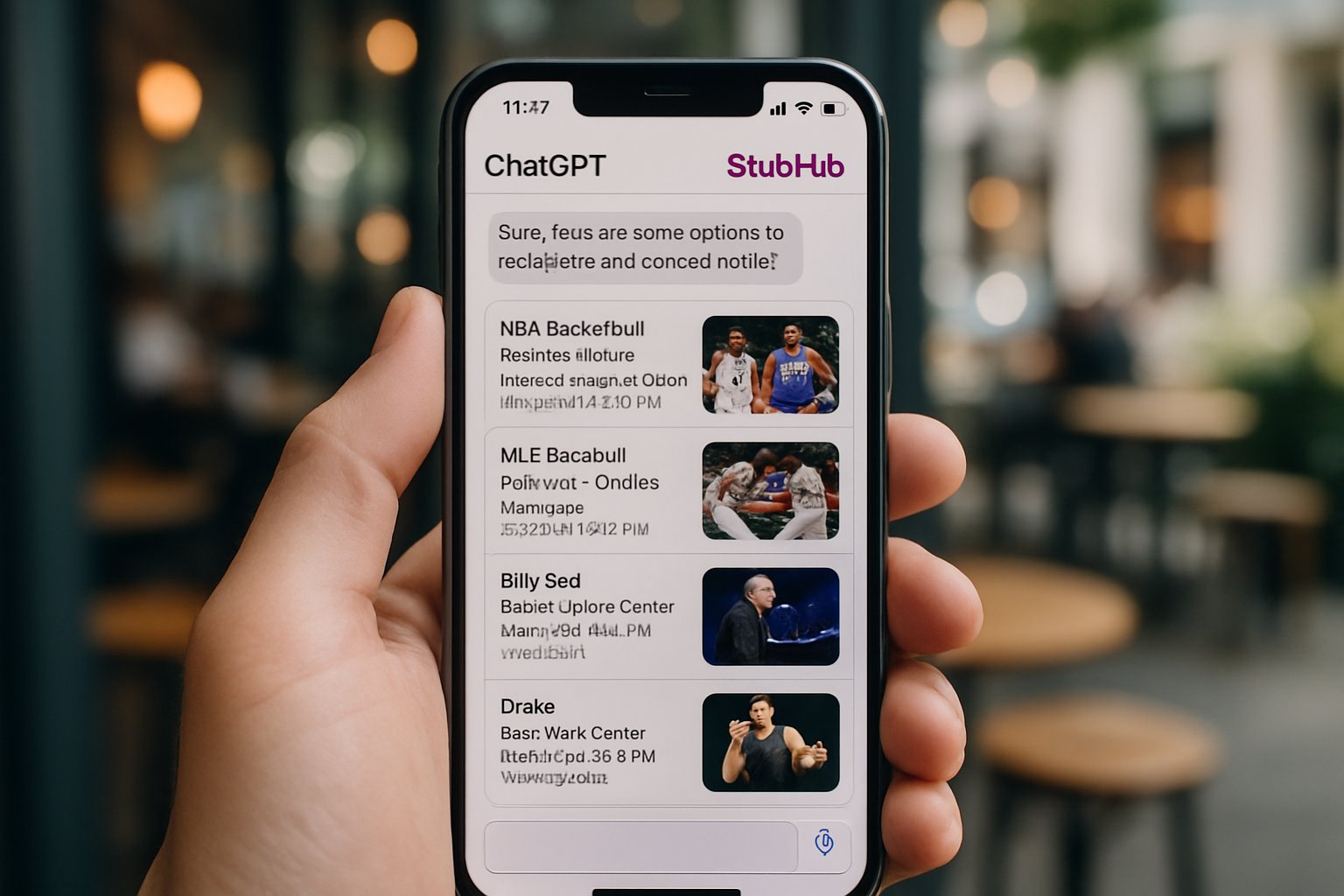
Users first open ChatGPT, navigate to the Apps directory, and enable StubHub’s listing. Subsequently, they ask direct questions such as “When are the Lakers playing next month?”. Other users might request, “Find two cheapest floor seats for Saturday.” The ChatGPT StubHub App responds with real-time inventory cards, each showing seat, price, and view rating. Moreover, the thread remembers filters, letting fans refine by price ceiling, section, or date without restarting.
Checkout still occurs on StubHub’s site or mobile surface. Nevertheless, the handoff carries selected seat details, reducing duplicate entry. FanProtect coverage then applies, guaranteeing valid tickets or comparable replacements. Therefore, the conversational channel complements rather than replaces StubHub’s existing payment stack.
Functionally, the flow merges chat convenience with standard checkout assurances. The next section quantifies why that blend matters.
Market Context And Stakes
The secondary ticket market sits somewhere between USD 3 billion and USD 30 billion, depending on methodology. Mordor Intelligence offers the low estimate, whereas GlobalGrowthInsights cites the higher figure. StubHub alone enabled over 40 million ticket sales in 2024, covering more than 10 million live events. Consequently, incremental conversion improvements inside ChatGPT could translate into meaningful gross merchandise value.
Key scale indicators highlight the stakes:
- 40 million tickets sold through StubHub in 2024.
- 10 million live events currently indexed.
- Industry value up to USD 30 billion by some estimates.
- Early adopters praise the ChatGPT StubHub App for speed.
- Chat interfaces projected 25% annual growth in retail commerce queries.
These numbers suggest even modest chat-driven lifts can shift market share. However, scale also invites scrutiny from regulators and consumer groups.
IPO Timing And Impact
StubHub filed for an IPO during 2025, seeking capital for growth and technology investment. Consequently, demonstrating innovative channels like ChatGPT bolsters its valuation narrative. Executives tout the ChatGPT StubHub App as proof of platform agility. Therefore, adoption data could influence offering price and analyst ratings.
Market size offers opportunity and risk in equal measure. Next, we examine direct benefits for everyday fans.
Benefits For Busy Fans
First, speed matters. Conversational flows reduce time spent hopping between tabs and filters. Additionally, the ChatGPT StubHub App remembers user context, so each refinement feels effortless. That immediacy is critical for high-demand tickets where prices swing within minutes.
Moreover, StubHub layers its proprietary signals to rank options.
- Value score weighs price against seat quality.
- View quality predicts sightline satisfaction.
- Session memory keeps preferred quantity and budget.
Consequently, fans spend less effort parsing massive grids of seat maps.
Reduced friction and smarter ranking bring clear upside for buyers. Nevertheless, every improvement carries trade-offs that merit inspection.
Risks And Open Questions
Critics warn that privacy remains hazy. TechCrunch notes that OpenAI and third-party apps may log interaction data beyond obvious fields. Therefore, professionals should review the StubHub privacy policy before enabling the channel. StubHub claims it minimizes data sharing; however, specifics on retention periods are still unclear.
Furthermore, watchdogs like The Guardian spotlight speculative listings and bot activities on resale marketplaces. Expanding discovery through ChatGPT could accelerate such behaviors if guardrails lag. In contrast, StubHub insists that anti-bot controls remain active across every channel, including chat. Regulators will likely test that assertion during future investigations.
Fee transparency is another sticking point. The ChatGPT StubHub App streamlines discovery but still hands buyers to a fee-laden checkout. Consequently, some users may feel blindsided once final totals appear. Clear upfront estimates could mitigate anger and potential policy interventions.
These issues illustrate why adoption metrics must be grounded in user trust. Subsequently, the final section outlines measures analysts should track.
Adoption Metrics To Watch
StubHub has not disclosed usage data since the December launch. Nevertheless, early TechRadar reviews praised speed and accuracy during hands-on tests. Whether the ChatGPT StubHub App maintains that ranking depends on sustained repeat usage. Analysts should seek numbers on daily active users, conversion rate, and average handling time. Moreover, comparative tests versus the main website would reveal whether chat truly boosts incremental sales.
Suggested data points include:
- Percentage of ChatGPT sessions that reach checkout.
- Average messages required to finalize a listing.
- Latency between query and inventory response.
- Fraud incidence compared with web traffic.
- Product teams evaluating the ChatGPT StubHub App can benchmark these metrics against alternative channels.
Professionals can also benchmark the channel against competing chat ticket tools like TicketsFinder. In contrast, uptake gaps may highlight ecosystem advantages or shortcomings. Commerce teams will watch these data points closely. Organic search will remain important but may decline if chat converts better.
Reliable metrics will inform product roadmaps and regulatory oversight. Therefore, stakeholders should monitor updates over the coming quarters. Professionals seeking structured guidance on policy implications can deepen expertise through the AI Policy Maker™ certification.
Conclusion And Outlook
StubHub’s December launch proves that real-time inventory can thrive inside everyday chat tools. The ChatGPT StubHub App brings faster discovery, personalized recommendations, and a direct link to secure tickets. Nevertheless, unresolved questions around privacy, fees, and market fairness persist. Additionally, analysts still lack hard adoption numbers needed to validate long-term impact. Consequently, continued scrutiny will ensure the channel delivers genuine value rather than fleeting novelty. Explore emerging certifications and stay ahead of AI-driven commerce shifts.


