

AI CERTS
3 hours ago
CES 2026 Reshapes Consumer Tech AR Strategies
Las Vegas once again set the tone for Consumer Tech at CES 2026. However, the most consequential conversation happened off the show floor during a WIRED-hosted panel with executives from Meta and Garmin. Industry veterans praised the session for crystalizing a near-term playbook: fuse data across glasses, bands, watches, and vehicles to unlock richer insights. Consequently, investors are recalibrating expectations, suppliers are racing to expand capacity, and product teams are rewriting roadmaps. The implications stretch far beyond flashy demos, affecting hiring, supply chain commitments, and privacy policy debates.
CES Panel Key Insights
Kelly Ingham of Meta framed the thesis plainly: “When it all communicates, the insights become exponentially more valuable.” Moreover, Garmin executives echoed that claim while showcasing a Unified Cabin prototype that linked Meta’s Neural Band gestures to in-vehicle controls. Analysts noted that the proof-of-concept demonstrated tangible user value rather than abstract promises. In contrast, earlier CES cycles spotlighted isolated devices. Now the conversation centers on interoperable systems powered by AI. These points underscore why Consumer Tech strategists must track partnership dynamics as closely as hardware specs.
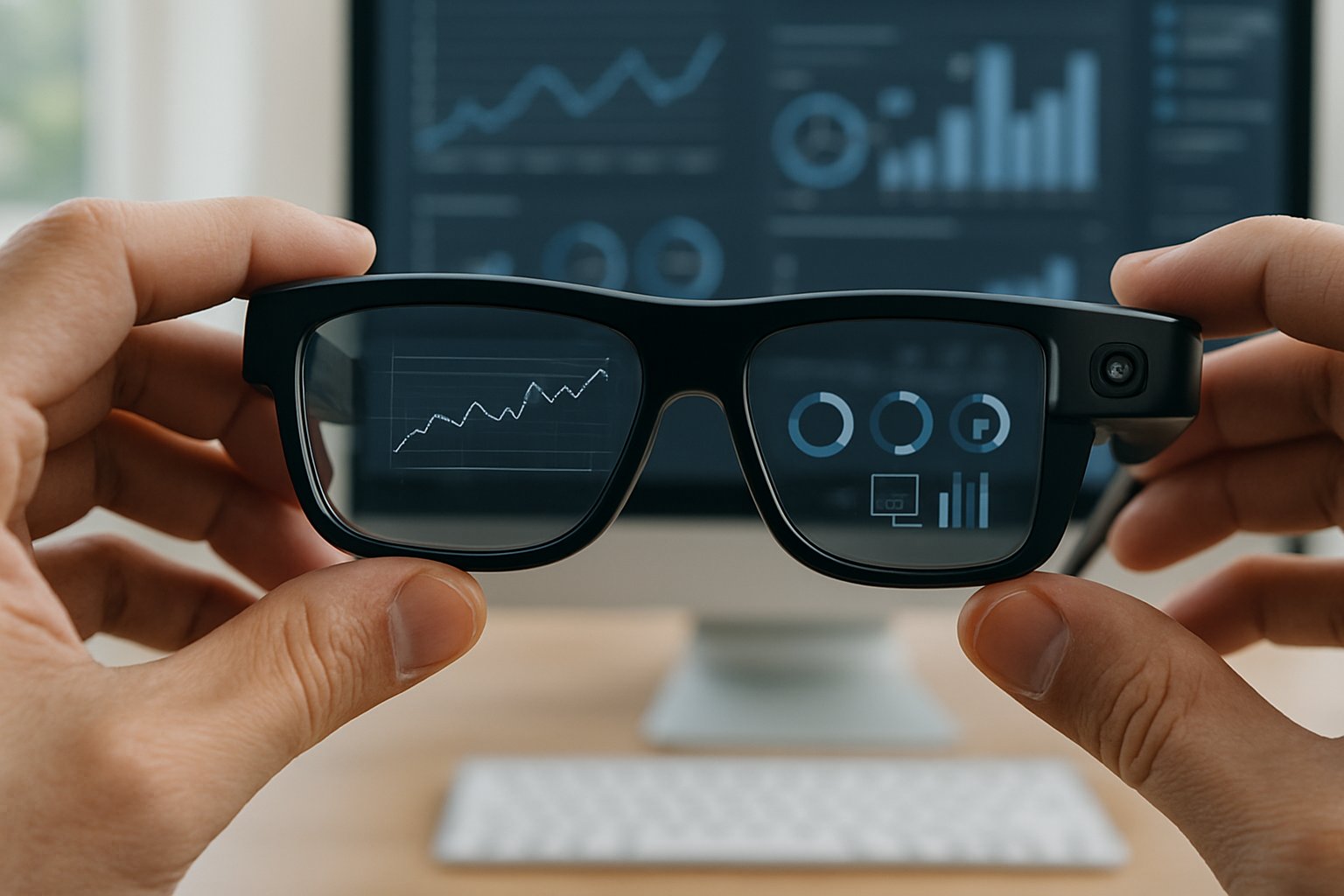
These insights elevate collaboration to a strategic imperative. Subsequently, companies that ignore ecosystem alignment will struggle.
Cross-Device Data Fusion
Sensor fusion sits at the heart of the new roadmap. Augmented Reality devices already capture motion, gaze, and environment data. Meanwhile, wristbands measure electromyography signals, and smartwatches log biometrics. When combined, those streams feed AI models that deliver context-aware coaching, safety alerts, and ambient controls. Furthermore, the approach reduces cognitive load by turning subtle gestures into powerful commands.
Key technical enablers include low-latency wireless protocols, on-device neural engines, and cloud orchestration. Meta’s Neural Band demo proved that fine EMG signals can trigger precise actions without cameras. Garmin’s vehicle integration showed how in-car systems extend that intelligence. Consequently, cross-industry standards for data exchange will become critical within Consumer Tech.
- Fusion yields earlier health warnings, according to medical researchers.
- IDC forecasts 50 million head-worn AR/VR units shipped in 2026.
- Meta and EssilorLuxottica may double Ray-Ban capacity to 20 million units.
These capabilities highlight the shift from feature checklists to holistic experiences. Nevertheless, seamless execution remains challenging.
Supply Chain Scaling Shifts
Strong U.S. demand forced Meta to pause the international rollout of Ray-Ban smart glasses. Subsequently, reports surfaced that production could climb toward 20 million units, with contingency plans for 30 million. However, EssilorLuxottica has yet to confirm those figures. Parallel to hardware expansion, Meta cut roughly 1,000 Reality Labs jobs. Andrew Bosworth cited a need to redirect funds toward wearables and mobile AI.
Lumus also announced geometric waveguides exceeding a 70-degree field of view. Moreover, several Asian suppliers unveiled micro-LED engines designed for thinner lenses. Collectively, these moves suggest that inventory shortages, not demand, will cap near-term sales. Therefore, procurement leaders across Consumer Tech must secure optical and compute components early.
Scaling decisions today will define competitive inventory positions next holiday season. Consequently, proactive contracts can mitigate shortages.
Optics And Interface Advances
Display quality remains a core determinant of Augmented Reality adoption. Lumus’s ZOE waveguide pushes field-of-view boundaries while maintaining slim frames. Additionally, emerging pancake optics reduce weight, enabling all-day wear. Interface breakthroughs are occurring in parallel. Meta’s EMG band offers near-invisible input, and Qualcomm’s latest XR chipset packs improved neural processing. Furthermore, Garmin’s automotive integration blends voice, gesture, and contextual data for multi-modal control.
Anshel Sag of Moor Insights observed, “Everything is AI now, so nothing is AI.” The comment underscores that execution defines value. Consequently, the most successful Consumer Tech brands will refine latency, comfort, and battery efficiency rather than chase gimmicks.
Optics and interface innovation together foster immersive yet unobtrusive experiences. Meanwhile, privacy safeguards must evolve alongside capability.
Emerging Market Risks Ahead
Despite optimism, several risks loom. Privacy frameworks lag behind sensor fusion ambitions, raising regulatory exposure. Moreover, platform concentration could squeeze smaller hardware makers if data access becomes restrictive. Supply constraints threaten launch schedules, as witnessed with Ray-Ban inventory issues. Additionally, workforce reallocations might slow software ecosystem growth even while hardware accelerates.
Nevertheless, proactive governance, transparent opt-in flows, and edge processing can ease consumer concerns. In contrast, ignoring these factors invites backlash and litigation. Therefore, risk management should occupy equal footing with product design in Consumer Tech roadmaps.
Addressing these challenges early preserves brand trust and regulatory goodwill. Subsequently, firms can focus resources on differentiated experiences.
Strategic Recommendations Moving Forward
Executives should prioritize three parallel tracks. First, double down on ecosystem alliances that guarantee seamless cross-device data flow. Second, secure optical and compute supply through multi-year agreements. Third, invest in privacy engineering that enables granular user consent.
- Form cross-industry working groups on sensor standards.
- Adopt modular reference designs to accelerate iteration.
- Allocate contingency capital for capacity surprises.
Additionally, roadmaps must factor evolving regulatory landscapes in Europe and California. Moreover, continuous user testing will expose friction points before scaling. Consequently, disciplined execution will separate leaders from followers within Consumer Tech.
Clear priorities and measured bets sharpen competitive focus. However, success hinges on specialized talent capable of translating strategy into product.
Professional Skills Pathways Next
Demand for product managers who understand Augmented Reality, AI, and supply logistics is rising sharply. Professionals can expand their expertise with the AI Product Manager™ certification. Furthermore, cross-functional literacy in optics, AI ethics, and automotive standards will command premium salaries. Consequently, upskilling now positions leaders to guide the next wave of Consumer Tech innovation.
Training programs that blend technical depth with business strategy deliver immediate impact. Nevertheless, hands-on project experience remains indispensable. Therefore, certification combined with practical deployments offers the strongest career leverage.
Equipped with validated credentials and real-world insights, professionals can navigate the complex, fast-moving AR landscape. Subsequently, they will influence product roadmaps that define daily computing.
Conclusion
CES 2026 marked a strategic pivot for Consumer Tech. Cross-device data fusion, supply-chain scaling, and optical breakthroughs coalesced into a coherent roadmap. Moreover, successful execution now depends on partnerships, privacy engineering, and talent development. Nevertheless, risks around inventory, regulation, and platform power persist. Therefore, leaders must balance ambition with governance, while professionals should pursue targeted certifications to stay ahead. Take action today and position yourself at the forefront of the wearable revolution.


