

AI CERTs
13 hours ago
CES 2026: AI-augmented smart terminals redefine hardware strategy
Las Vegas buzzed as CES 2026 spotlighted a dramatic hardware pivot. Instead of isolated features, exhibitors promoted devices as continuous, AI driven companions. Central to the story were AI-augmented smart terminals that fuse local silicon with cloud agents. Consequently, TVs, phones, wearables, and even kitchen ranges behaved like synchronized assistants. Moreover, vendors framed the shift as an ecosystem overhaul, not a simple specification bump. Microsoft Copilot devices demonstrated cross-screen workflows that moved conversations from living room displays to wristbands. Meanwhile, NVIDIA, Qualcomm, and Lenovo underscored edge intelligence with new processors and toolkits. This article unpacks the announcements, silicon advances, strategic motives, and remaining obstacles. Furthermore, it explains why the term will influence procurement roadmaps through 2030. Professionals seeking deeper expertise can later explore a relevant certification link. Nevertheless, consistent terminology and metrics remain critical as manufacturers race to differentiate. Therefore, we begin with market signals that validate the emerging narrative.
Market Momentum Unfolds
Analyst forecasts indicate sustained double-digit growth for edge AI platforms through 2031. MarketsandMarkets places 2025 revenue between twelve and twenty six billion dollars. Furthermore, device counts that embed local accelerators are projected to surge during the same window.
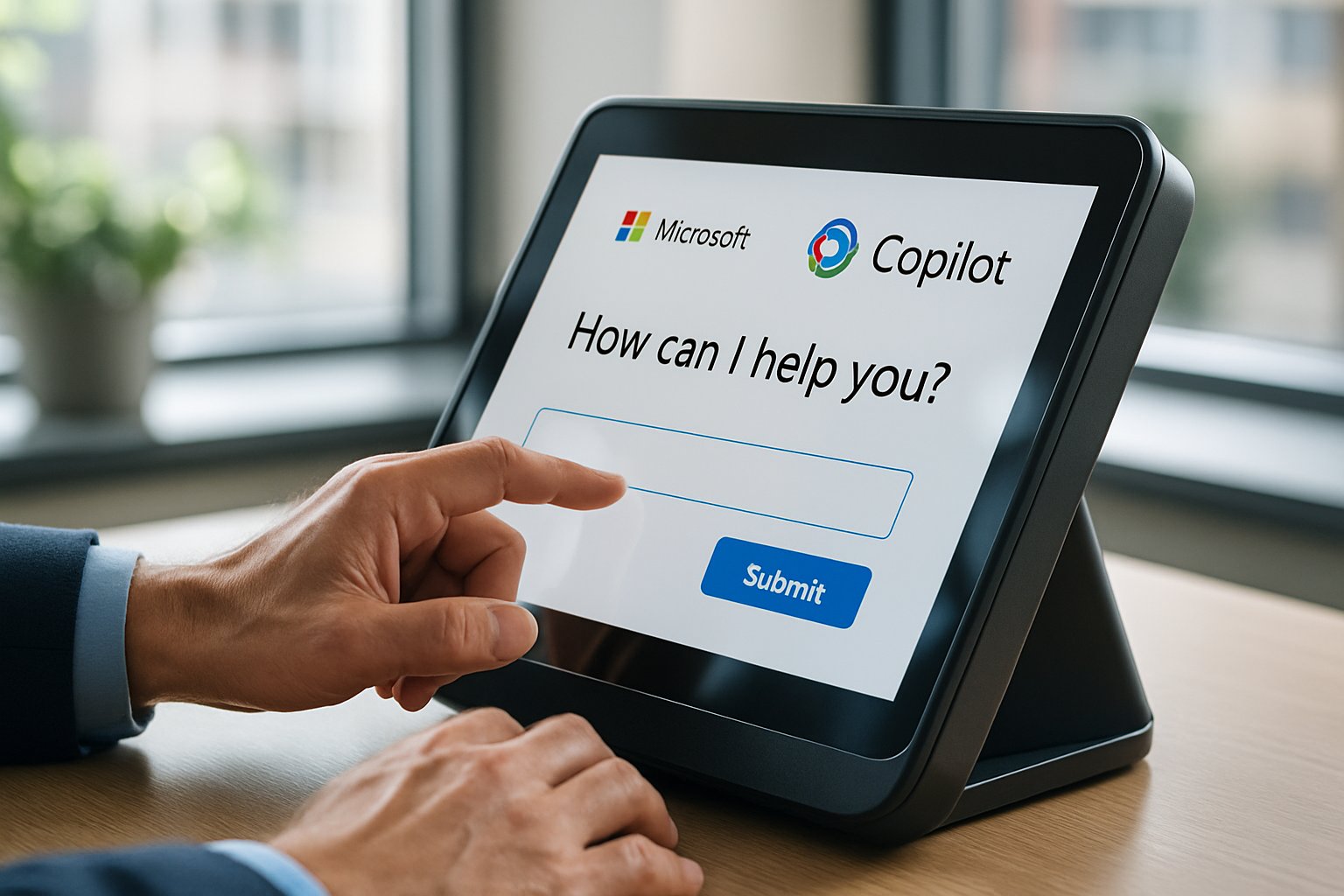
At CES 2026, executives translated those charts into concrete roadmaps. TCL pledged regionally phased deployments of AI functions across its entire portfolio. Moreover, Roan Kang from Microsoft emphasized responsible deployment across Microsoft Copilot devices that span price tiers. AI-augmented smart terminals therefore dominate vendor keynote narratives.
Consequently, early adopters gain multimodal translation, live transcription, and generative overlays directly on displays. These services now launch instantly because latency sensitive workloads run at the edge. In contrast, earlier generations relied on distant data centers and felt sluggish.
The numbers and promises jointly confirm that mainstream inflection has arrived. However, raw processing muscle remains the enabler, so silicon advances deserve attention.
Silicon Powers Edge
NVIDIA introduced the Jetson T4000 module delivering approximately 1200 FP4 teraFLOPs. Additionally, its TensorRT Edge-LLM stack optimizes local LLM and VLM operation on compact boards. Consequently, developers can fine-tune assistants without sending frames to the cloud.
Qualcomm answered with Dragonwing Q-7790 and Q-8750 silicon pushing tens of TOPS. Moreover, these chips target smart displays, AR viewers, and industrial kiosks. Their power envelopes suit battery based AI-augmented smart terminals in mobile contexts.
Meanwhile, Lenovo and GIGABYTE showcased desktop enclosures for creators demanding on-prem training capacity. Such rigs illustrate another flavor of edge intelligence that favors privacy over mobility.
- Jetson T4000: ~1200 FP4 TFLOPs, JetPack 7.1, Edge-LLM ready.
- Dragonwing Q-8750: ~45 TOPS, integrated NPU and 5G modem.
- Snapdragon X2: 35 TOPS, dedicated image signal processor for on-device vision.
- AI-augmented smart terminals demand accelerators delivering at least 20 TOPS.
These benchmarks highlight relentless acceleration trends that shrink once datacenter tasks onto wrists. Therefore, silicon leadership directly shapes user experience leadership. The narrative now shifts to software orchestration.
Cloud And Device Synergy
Hardware muscle alone cannot deliver cohesive experiences. Therefore, cloud frameworks like Azure OpenAI and Foundry supply shared memory for personal data. Moreover, Microsoft Copilot devices demonstrate seamless session handoff from living room TV to tablet.
TCL integrates those APIs with on-screen menus that summon creative assistants or instant subtitles. In contrast, Razer displayed a holographic avatar that docks into headphones yet leverages the same endpoints. Consequently, AI-augmented smart terminals now feel like cross-category orchestrators rather than isolated endpoints. Those AI-augmented smart terminals illustrate harmonious device orchestration. Many Microsoft Copilot devices will ship OTA updates to enable advanced prompting.
Edge compute still matters because many tasks cannot tolerate round-trip latency. Additionally, regional compliance rules limit cloud routing for sensitive voice snippets. Hybrid pipelines thus allocate segmentation: private inference locally, broader context building remotely.
Unified orchestration drives stickiness while preserving flexibility. However, business models also evolve alongside technical design.
Strategy Shifts Emerging
OEMs are recasting AI as the real operating system of devices. Moreover, subscriptions accompany hardware, bundling premium prompts, personalized agents, and cloud storage. Consequently, margin profiles tilt from pure hardware to recurring revenue.
Lenovo’s Aura platform exemplifies this trajectory. Aura threads identity across laptops, phones, and smart glasses, leveraging edge intelligence for offline fallback.
- Lower latency voice commands in noisy environments
- Offline access during connectivity outages
- Enhanced privacy for health or financial data
- Consistent UI conventions across form factors
Business strategists see two distinct plays. First, sell premium AI-augmented smart terminals bundled with cloud passes. Second, sell on-prem compute boxes to enterprises needing regulation compliant inference. Subsequently, partner ecosystems decide which mix suits their geography and audience.
These strategic pivots promise new value capture. Nevertheless, multiple barriers could slow momentum. We explore them next.
Risks And Challenges
Cloud rollout fragmentation threatens consistent feature delivery across regions. Consequently, users in emerging markets may wait months for Copilot access. Moreover, regulatory data regimes impose additional approvals. Without safeguards, AI-augmented smart terminals could expose sensitive voice or vision data.
Hardware cost inflation represents another issue. Memory and NPU components remain supply constrained, pressuring mid-range price tiers. Therefore, some buyers may defer upgrades until subsidies appear.
Security also surfaces as a pivotal concern. In contrast to cloud isolation, local models expand the attack surface to millions of endpoints. Nevertheless, vendors tout encrypted model stores and runtime attestation.
Collectively, these hurdles could dilute user trust and margin. However, proactive governance and transparent pricing can mitigate backlash. The final section considers next actions for stakeholders.
Outlook For Stakeholders
Investors should track silicon roadmaps and cloud partnership depth. Furthermore, procurement teams must evaluate regional service support before signing bulk contracts. Professionals can enhance skills through specialized courses that decode edge intelligence architectures. For example, practitioners can upskill with the AI Healthcare Architect™ certification.
Developers should align tooling with TensorRT Edge-LLM or Qualcomm SDK containers for faster deployment. Additionally, startups can differentiate by specializing in trustworthy agent monitoring for AI-augmented smart terminals.
Government bodies need updated test suites that evaluate on-device inference accuracy and safety. Consequently, procurement guidelines can remain technology neutral yet protective.
The ecosystem thrives when every actor shares metrics and interoperable APIs. Therefore, continued dialogue across summits like CES remains essential.
CES 2026 marked the moment AI crossed from buzzword to baseline. Across booths, AI-augmented smart terminals presented a unified vision of responsive, personalized hardware. Moreover, advancing silicon and cloud orchestration made that vision believable. Nevertheless, costs, compliance, and security must be solved before mass adoption. Consequently, stakeholders should monitor silicon yields, regional rollouts, and standard frameworks. Professionals who master these dynamics position themselves for lucrative, future-proof careers. Therefore, explore certifications, follow vendor roadmaps, and stay engaged as releases accelerate.


