

AI CERTS
2 hours ago
Cerebras IPO Fuels Wall Street Hunt for AI Chip Stocks
Morgan Stanley, Citigroup, Barclays, and UBS each assigned Buy or Overweight ratings.
Meanwhile, price targets clustered around $340, reinforcing momentum among AI Chip Stocks skeptics and enthusiasts alike.
This article dissects the bullish narrative, technical merits, and risks shaping the company's first weeks as a public entity.
Ultimately, the analysis provides practical insights for investors tracking AI accelerator plays across volatile markets.
IPO Surge Signals Strength
Cerebras sold roughly 30 million shares at $185, raising about $5.55 billion.
Subsequently, shares opened near $350, triggering immediate comparisons with veteran AI Chip Stocks darlings.
That open vaulted the market cap past $100 billion, a milestone rarely seen in semiconductor IPOs.
Moreover, such dramatic appreciation set an aggressive valuation baseline before fundamental models even reached spreadsheets.
Public markets participants cited limited float and intense generative-AI demand as key catalysts.
Consequently, bookrunners exercised greenshoe options quickly, yet the float remained tight relative to interest.
Nvidia rivals rarely enjoy similar day-one enthusiasm, underscoring the uniqueness of the wafer-scale thesis.
In contrast, most recent semiconductor listings priced conservatively, then drifted sideways for months.
The debut showcased pent-up appetite for differentiated silicon.
However, initial hype needed validation from seasoned analysts, a topic explored next.
Brokers Turn Boldly Bullish
The post-IPO quiet period expired on June 8, unleashing a wave of coverage initiations.
Notably, Morgan Stanley issued an Overweight rating, citing fast, low-latency inference demand.
Meanwhile, Citigroup pegged a $340 price target, aligning with street consensus.
Across Wall Street, at least nine firms began formal models on the same morning.
Furthermore, UBS highlighted robust customer pipelines spanning OpenAI and Amazon.
Barclays analysts pointed to scalable cloud deployments funded by the fresh capital.
Consequently, buy-side desks interpreted the synchronized optimism as a momentum green light for AI Chip Stocks momentum traders.
Secondary trading volumes doubled average semiconductor prints, confirming that read.
Broker enthusiasm cemented early valuation floors.
Nevertheless, technical differentiation remains the linchpin for sustained advantage, as the next section explains.
Hardware Differentiation Edge Explained
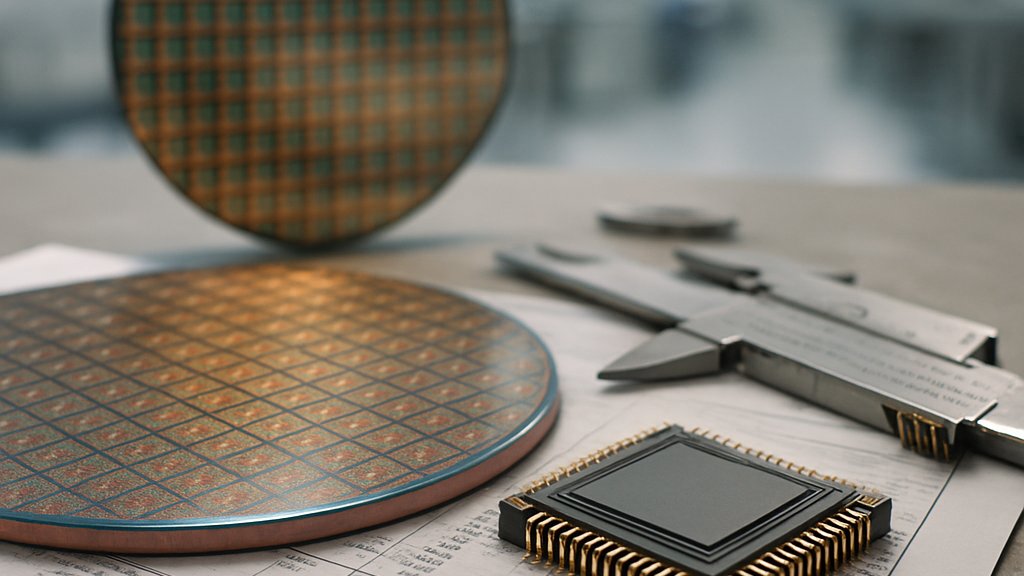
Cerebras' Wafer-Scale Engine, now on its third generation, remains its headline innovation.
Specifically, the WSE-3 packs about four trillion transistors and 900,000 compute cores.
On-chip memory reaches 44 GB, dwarfing discrete GPU caches.
Therefore, latency drops because data never leaves the monolithic die.
The company claims WSE-3 is 58 times larger than Nvidia's B200 package.
Moreover, memory bandwidth advantages grow during inference, where streams change rapidly, a sweet spot for AI Chip Stocks aspirants.
These architectural gains underpin the firm's positioning as an AI accelerator optimized for reasoning workloads.
Consequently, some analysts view the design as complementary rather than adversarial to GPU clusters.
Wafer Scale Engine Highlights
- 4 trillion transistors, delivering dense compute without chip-to-chip hops.
- 900,000 cores connected through high-speed on-die mesh.
- 44 GB SRAM offering 20 PB/s bandwidth for model weights.
- Single package simplifies deployment, lowering network latency.
These specifications impress engineers and investors alike.
However, technology wins must translate into sustainable demand, covered in the following section.
Demand Drivers Emerge Rapidly
Revenue reached $510 million in 2025, growing 76% year over year.
Additionally, management forecasts accelerated uptake as cloud partners expose inference tiers based on WSE-3.
OpenAI and AWS have already publicized pilot clusters for conversational models.
Consequently, the company enjoys reference deployments that validate performance claims in production settings.
Wall Street models project multibillion-dollar revenue within three years if adoption curves hold.
Moreover, supply agreements funded by IPO proceeds accelerate manufacturing capacity across multiple fabs.
The company also courts sovereign funds seeking diversified AI accelerator exposure.
Subsequently, investors tracking AI Chip Stocks may view backlog growth as a critical leading indicator.
Strong demand signals strengthen the bullish outlook.
Nevertheless, robust competition and valuation risks remain material, as discussed next.
Risks Temper Lofty Valuations
Post-IPO trading has already produced a 30% pullback from early highs.
In contrast, Nvidia rivals often retrace less because they ride mature ecosystems.
Management must now shift focus from novelty to predictable quarterly execution.
Consequently, customer concentration and supply chain bottlenecks top investor diligence lists.
Software lock-in also favors incumbents controlling framework optimizations.
However, open standards like ONNX reduce friction for migrating models onto new hardware.
Public markets therefore demand tangible progress on tooling and developer mindshare.
Meanwhile, extended valuation multiples magnify downside if revenue ramps stall across AI Chip Stocks universe.
Risk management will shape near-term price discovery.
The strategic path forward now enters focus.
Strategic Outlook And Catalysts
Management plans to channel IPO capital into global cloud regions dedicated to inference.
Furthermore, integrated software stacks aim to simplify model porting for data scientists.
The firm seeks partnership expansion beyond early adopters to differentiate from other AI accelerator vendors.
Consequently, tracking announcements with SoftBank or regional telecoms will matter for AI Chip Stocks benchmarks.
Upcoming lock-up expirations, quarterly results, and potential index inclusions form near-term trading catalysts.
Moreover, additional coverage initiations from boutique research shops may broaden institutional ownership.
Professionals can deepen expertise through the AI Engineer™ certification to evaluate hardware roadmaps.
Ultimately, disciplined monitoring of execution metrics will separate durable stories from speculative bursts among Nvidia rivals.
Clear milestones and expanded analyst attention should stabilize valuation bands.
The final section distills essential takeaways for investors navigating volatile semiconductor terrain.
Key Takeaways For Investors
Cerebras dazzled public markets with an oversubscribed IPO and wafer-scale silicon narrative.
However, sustaining momentum within AI Chip Stocks will depend on predictable execution and continued broker support.
Wall Street coverage initiations provided early validation, yet revenue diversification remains crucial.
Meanwhile, WSE-3 technical advantages position the firm as a compelling AI accelerator alternative to traditional GPU fleets.
Consequently, partnerships, software tooling, and capacity expansion form the primary catalysts ahead.
Nevertheless, lofty valuations and competitive pressure from Nvidia rivals warrant diligent monitoring.
Therefore, investors should track backlog growth, quarterly margins, and new customer wins.
Consider leveraging the linked AI Engineer™ credential to sharpen technical diligence and risk assessment skills.
Act now, and position portfolios for the next decisive move among AI Chip Stocks winners.
Disclaimer: Some content may be AI-generated or assisted and is provided ‘as is’ for informational purposes only, without warranties of accuracy or completeness, and does not imply endorsement or affiliation.


