

AI CERTS
3 months ago
Centric Software Elevates Fashion With Design Generative AI Tools
However, executives also face new legal, data, and change-management questions. This article examines the market forces, technical foundations, and strategic implications of Centric’s September 2024 launch. Moreover, we compare competing solutions and outline next steps for innovation leaders. Therefore, unified data across the product lifecycle becomes a competitive necessity.
Fashion AI Market Momentum
AI investment across fashion keeps climbing despite macro uncertainty. Data Bridge Research pegs the global AI fashion market at roughly USD 1.17 billion for 2025. Moreover, several firms forecast compound growth rates above 35 percent through 2033. Although the baselines differ, consensus predicts rapid adoption in design, planning, and consumer engagement.
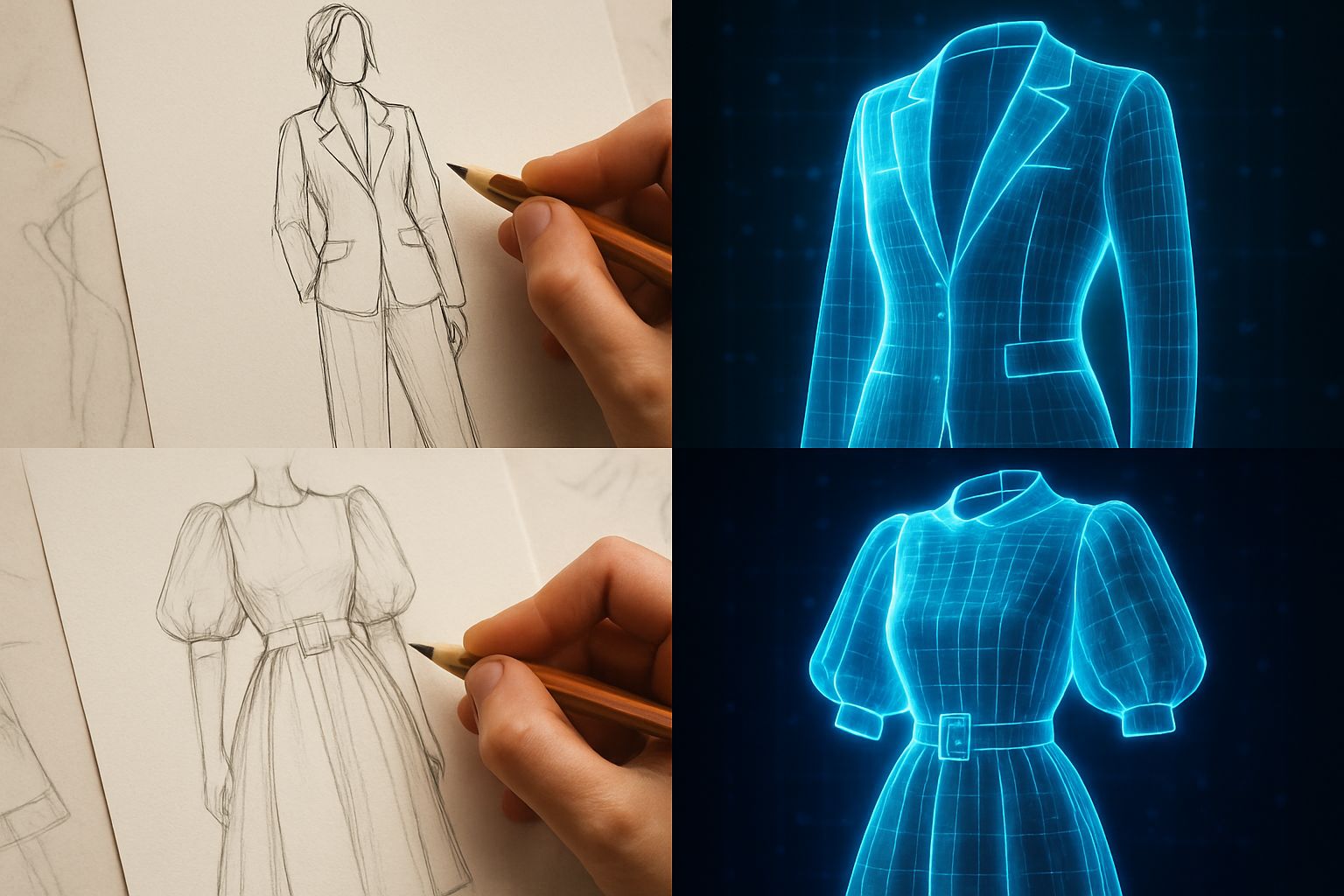
Consequently, vendors race to embed models into existing stacks. Centric, Dassault, and rivals like Vue.ai or Stitch Fix’s internal labs compete for creative teams’ loyalty. Meanwhile, cloud hyperscalers supply the backbone for scalable inference. Designers craving fresh inspiration find algorithmic suggestions addictive. Design Generative AI now captures boardroom attention as brands chase speed and personalization.
These numbers confirm momentum and validate management attention. Therefore, exploring Centric’s specific approach offers timely insight.
Centric AI Strategy Unpacked
Centric launched its flagship Centric AI Fashion Inspiration on 16 September 2024. Additionally, a streamlined SMB edition arrived in December 2024 for emerging labels. Subsequently, broader integrations debuted during NRF Asia 2025, stretching models across planning, pricing, and market intelligence.
- Sep 2024: Generative ideation tool integrated with PLM.
- Dec 2024: SMB version democratizes AI for small design teams.
- May 2025: Platform enhancements connect concept to commercialization workflows.
- Feb 2025: Planned Contentserv acquisition merges PXM, DAM, and AI.
Furthermore, Frost & Sullivan honored Centric with a 2024 Technology Innovation award for its AI advances. Just Style followed with multiple accolades in May 2025. Each release reinforces Centric’s commitment to Design Generative AI leadership.
These milestones depict a deliberate, acquisition-enabled roadmap. Consequently, technical details deserve closer attention.
Technical Foundations Demystified
At the heart sits a proprietary diffusion model trained on more than one billion fashion images. Centric claims coverage of 800 categories and 1,000 design attributes, spanning footwear, accessories, and apparel. However, external audits of dataset hygiene remain pending. Consequently, Design Generative AI shifts from laboratory experiment to embedded workflow engine.
Users prompt the system inside Centric PLM; generated images automatically inherit metadata and version control. Therefore, downstream teams can trace ideas through the entire product lifecycle without manual duplication. Design Generative AI also tags colorways and fabrics with structured attributes. Moreover, upcoming connectors will send assets to Contentserv for channel syndication and personalization.
Tight linkage between model, PLM, and PXM underpins Centric’s differentiated pitch. Nevertheless, benefits only matter if they outweigh emerging risks.
Benefits And Key Challenges
Designers cite faster concept turnaround and broader inspiration palettes as primary gains. Centric reports up to 50 percent productivity lifts and 60 percent shorter development cycles. Additionally, automatic metadata tagging reduces administrative friction across the product lifecycle.
- Expanded creativity without extra headcount.
- Integrated workflow supporting apparel cost accuracy.
- Potential intellectual property overlap.
- Bias in generated silhouettes and sizes.
- Skill gaps for prompt engineering.
In contrast, legal experts warn that generative outputs may unintentionally echo protected designs. Moreover, dataset imbalance could skew size ranges or cultural motifs. Consequently, Centric has added filters and human-in-the-loop review checkpoints. Teams exploiting Design Generative AI report greater creativity and faster mood-board assembly.
Balanced governance will determine adoption velocity. Subsequently, competitive pressure also influences buying decisions.
Competitive Landscape Snapshot
Several specialized startups chase the same designer pain points. Vue.ai markets virtual styling, while SpreeAI focuses on try-on imagery. Meanwhile, Google and Microsoft provide foundational APIs that brands assemble into bespoke stacks.
Centric differentiates through deep PLM integration and vertical process coverage. Furthermore, the pending Contentserv buy stretches reach into omnichannel content management. Competitors lacking that continuum must rely on partnerships or custom middleware. Competitors that ignore Design Generative AI risk losing designer mindshare. Analyst firms expect consolidation as buyers favor vendors offering secure data pipelines.
Ecosystem breadth could tilt the field toward platforms rather than point tools. Therefore, forward planners should examine Centric’s roadmap timelines closely.
Roadmap And Next Steps
Centric’s public roadmap signals quarterly AI feature drops through late 2025. Subsequently, 3D garment rendering and sustainability scoring may join the stack. Additionally, SMB pricing models will likely expand to mid-market retailers.
Professionals can sharpen skills via the AI+ Data Robotics™ certification. Moreover, internal training on prompt engineering will remain crucial for efficient Design Generative AI use.
Upcoming features will test Centric’s ability to scale governance alongside innovation. Nevertheless, early adopters can influence roadmaps by sharing measurable outcomes.
Conclusion And Call Forward
Centric’s latest release confirms that Design Generative AI is no longer a speculative prototype. Instead, embedded models now boost apparel teams, streamline the product lifecycle, and unlock fresh creativity. Moreover, early ROI figures, while vendor-supplied, hint at material time-to-market gains. However, intellectual property and bias risks demand vigilant governance. Therefore, leaders should pilot features, set guardrails, and measure outcomes before scaling. Subsequently, sharing results with Centric can shape upcoming Design Generative AI capabilities. Finally, consider earning the linked certification and join peers advancing responsible fashion technology. Consequently, your organization will foster agile culture and attract next-generation design talent. Take the first step today.


