

AI CERTS
2 hours ago
Carreyrou AI Lawsuit Targets Six AI Titans
Moreover, the case targets Anthropic, Google, Meta, OpenAI, xAI, and Perplexity in one sweeping attack. Plaintiffs demand jury evaluation, statutory damages, and injunctive relief that could reshape training pipelines. Meanwhile, enterprise users question dataset provenance weaknesses revealed by the detailed complaint. This article unpacks legal theories, strategic choices, and business implications of the unfolding battle. Readers will also discover practical steps for risk mitigation and certification opportunities.
Lawsuit Sets New Precedent
Federal docket number 3:25-cv-10897 anchors the dispute in the Northern District of California. The complaint spans 95 pages and cites extensive exhibits showing alleged shadow library downloads. In contrast, defendants previously touted transformative fair use defenses in related matters. Nevertheless, plaintiffs argue two distinct infringements occur per work: acquisition and training duplication.
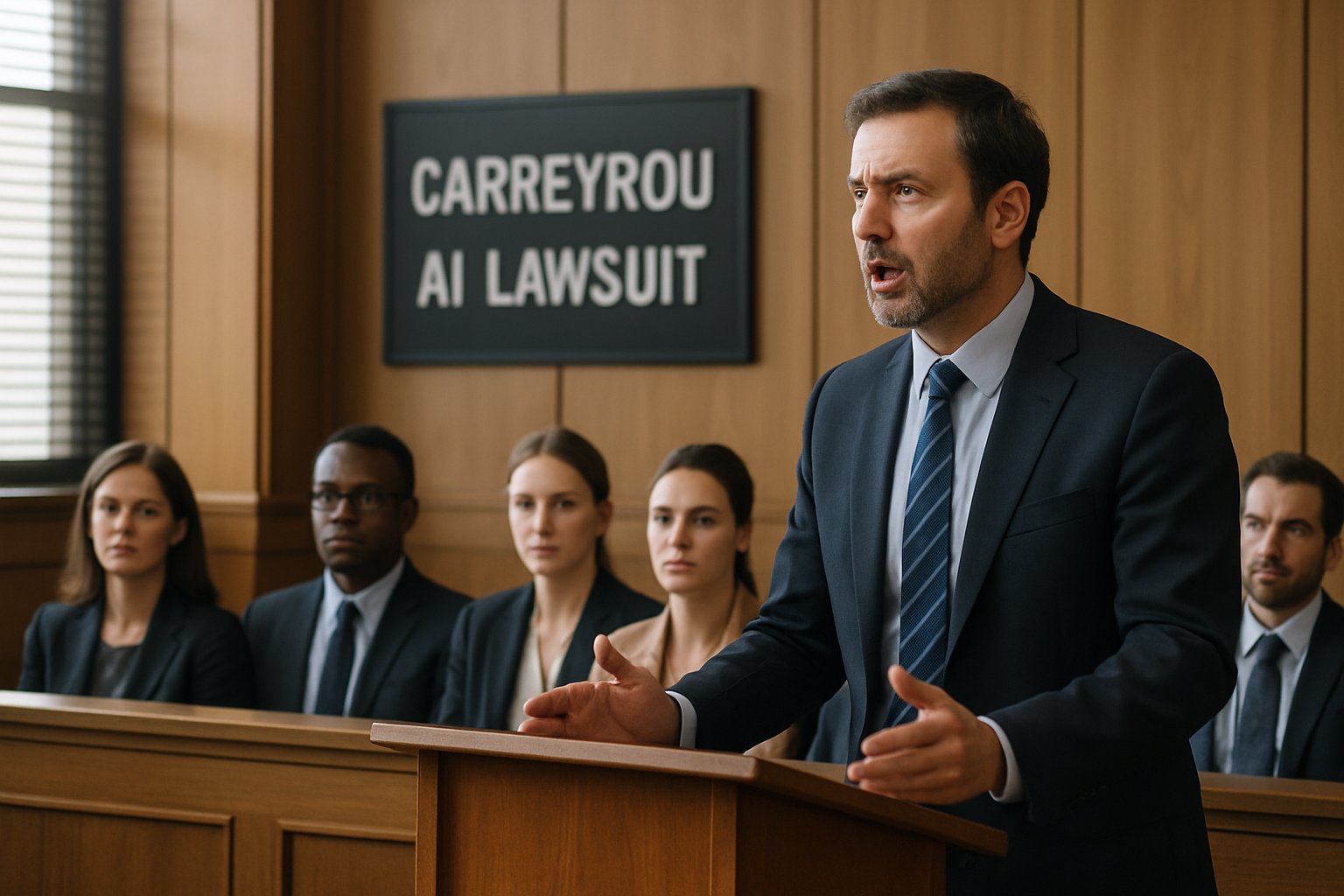
The Carreyrou AI Lawsuit positions these dual acts as independent statutory violations. Furthermore, the filing rejects class mechanisms, describing prior settlements as bargain-basement giveaways. Such framing heightens pressure because statutory maxima reach $150,000 for each willful act.
Plaintiffs Reject Class Settlements
Authors fault class actions for diluting individual claims to roughly $3,000 per infringed title. Consequently, they seek jury awards potentially fifty times higher under §504(c). Bad-Blood fame intensifies media attention, amplifying negotiating leverage. Moreover, each Author asserts exclusive rights to control reproduction and distribution.
The complaint emphasizes that no license covered the alleged Piracy pipeline. Subsequently, the Carreyrou AI Lawsuit demands disgorgement of profits tied to infringing training runs. Critics, however, warn individualized litigation moves slowly and consumes significant legal budgets. Nevertheless, plaintiffs claim this Suit will spotlight systemic data abuses.
Alleged Piracy Pipeline Evidence
Plaintiffs cite repositories like LibGen, Z-Library, and Books3 as primary source nodes. Additionally, forensic analysis allegedly reveals over seven million mirrored volumes inside certain corporate datasets. That scale, they argue, proves knowing Piracy rather than incidental inclusion. Bad-Blood appears four times within the exhibits, highlighting high-profile sensitivity.
Furthermore, metadata logs reportedly show repeated hashing, chunking, and storage of each Author’s manuscript. The Carreyrou AI Lawsuit credits Judge Alsup’s earlier orders distinguishing lawful versus pirate copies. Experts predict discovery battles over dataset manifests and retention policies.
Statutory Damages Math Explained
Under willful infringement, juries may award $150,000 per book. Consequently, six plaintiffs potentially face aggregate ceilings approaching nine hundred million dollars. In contrast, the Anthropic class deal valued similar claims near thirty million total. Therefore, settling now could create unfavorable optics for defendants. Analysts remind enterprises that unresolved Copyright questions raise financial and reputational exposure.
These numbers underscore vast downside for unlicensed training. However, verification of dataset origin remains the pivotal hurdle ahead. The upcoming defense motions will clarify strategic positions.
Defense Strategies In Focus
Defendants will likely file motions to dismiss under Rule 12(b)(6). Additionally, they can contest personal jurisdiction for xAI and Perplexity. Fair use remains the marquee defense, especially regarding transformative outputs. However, storing pirated corpora weakens that narrative significantly.
Google may highlight internal filtering tools aimed at removing Copyright-protected volumes. Moreover, companies could argue de minimis use when any single Author work contributes minimal token volume. Discovery requests will probe model snapshots, data contracts, and retention lifecycles.
- Argue transformative fair use under recent mixed rulings.
- Claim independent creation for downstream model outputs.
- Emphasize compliance investments after earlier Piracy controversies.
- Seek stay pending Anthropic settlement approval.
Nevertheless, precedent from Judge Alsup suggests factual disputes will survive early dismissal. Consequently, the Carreyrou AI Lawsuit may advance into intensive discovery quickly.
Defense filings will test fair use boundaries. Meanwhile, plaintiffs prepare subpoenas targeting dataset suppliers and cloud logs. These maneuvers feed into wider market uncertainty.
Market And Regulatory Ripples
Investors already monitor litigation reserves after the $1.5B Anthropic settlement. Moreover, procurement teams now ask direct questions about training data provenance. European regulators drafting the AI Act cite Piracy risks in recent working papers. Bad-Blood headlines also pressure policymakers to accelerate licensing frameworks.
Consequently, large publishers explore collective bargaining for model feeding rights. The United States Copyright Office continues studying generative models’ economic impact. Additionally, risk officers direct counsel to monitor each new Suit involving shadow libraries. Analysts routinely cite the Carreyrou AI Lawsuit when forecasting regulatory costs.
Discovery Battles Loom Ahead
Subpoenas could expose vendor relationships controlling pipeline ingestion. Therefore, enterprises contracting with these vendors face derivative liability concerns. Transparency obligations will likely expand under future regulation. Furthermore, staff can prove readiness by earning the AI Legal Strategist™ certification. This credential signals commitment to governance and compliance excellence.
Regulatory momentum compels stronger data hygiene practices. However, ongoing litigation will shape final compliance thresholds. Organizations must prepare proactive playbooks now.
Practical Guidance For Enterprises
Technology leaders should inventory training sources and document licenses. Additionally, audit teams must verify shadow library exclusions within ingestion code. Implementing retrieval filters helps avoid Bad-Blood style headline risks. Moreover, contractual indemnities with model vendors protect downstream applications. The Carreyrou AI Lawsuit demonstrates why waiting invites heavier liability.
- Create data maps detailing each third-party corpus.
- Secure written Copyright assurances from suppliers.
- Monitor dockets for every new Suit involving training sets.
- Train staff using accredited programs on AI law.
- Study the Carreyrou AI Lawsuit to benchmark risk tolerances.
Subsequently, teams should update model cards reflecting excluded Author works. Consequently, investors will view the organization as a low-risk partner.
Proactive governance reduces litigation exposure. Nevertheless, vigilance must remain constant amid rapid case developments. The final section recaps critical insights.
Litigation over training data is accelerating across the technology landscape. The Carreyrou AI Lawsuit stands as the most concentrated challenge yet. Plaintiffs leverage Bad-Blood notoriety to keep public scrutiny intense. Meanwhile, defendants refine fair use defenses, yet Piracy allegations complicate that stance. Organizations should document licenses, monitor each emerging Suit, and educate staff on evolving Copyright norms. Consequently, earning the AI Legal Strategist™ credential fortifies governance credibility. The Carreyrou AI Lawsuit reminds leaders that ignoring provenance risks costly verdicts. Act now, secure compliant data pipelines, and capitalize on responsible innovation momentum.


