

AI CERTS
1 week ago
Campus Security Faces AI Promise And Peril
Meanwhile, federal guidance urges districts to consult parents before rolling out new algorithms. Consequently, decision makers need a clear map of benefits, risks, and compliance duties. This review delivers that balanced perspective.
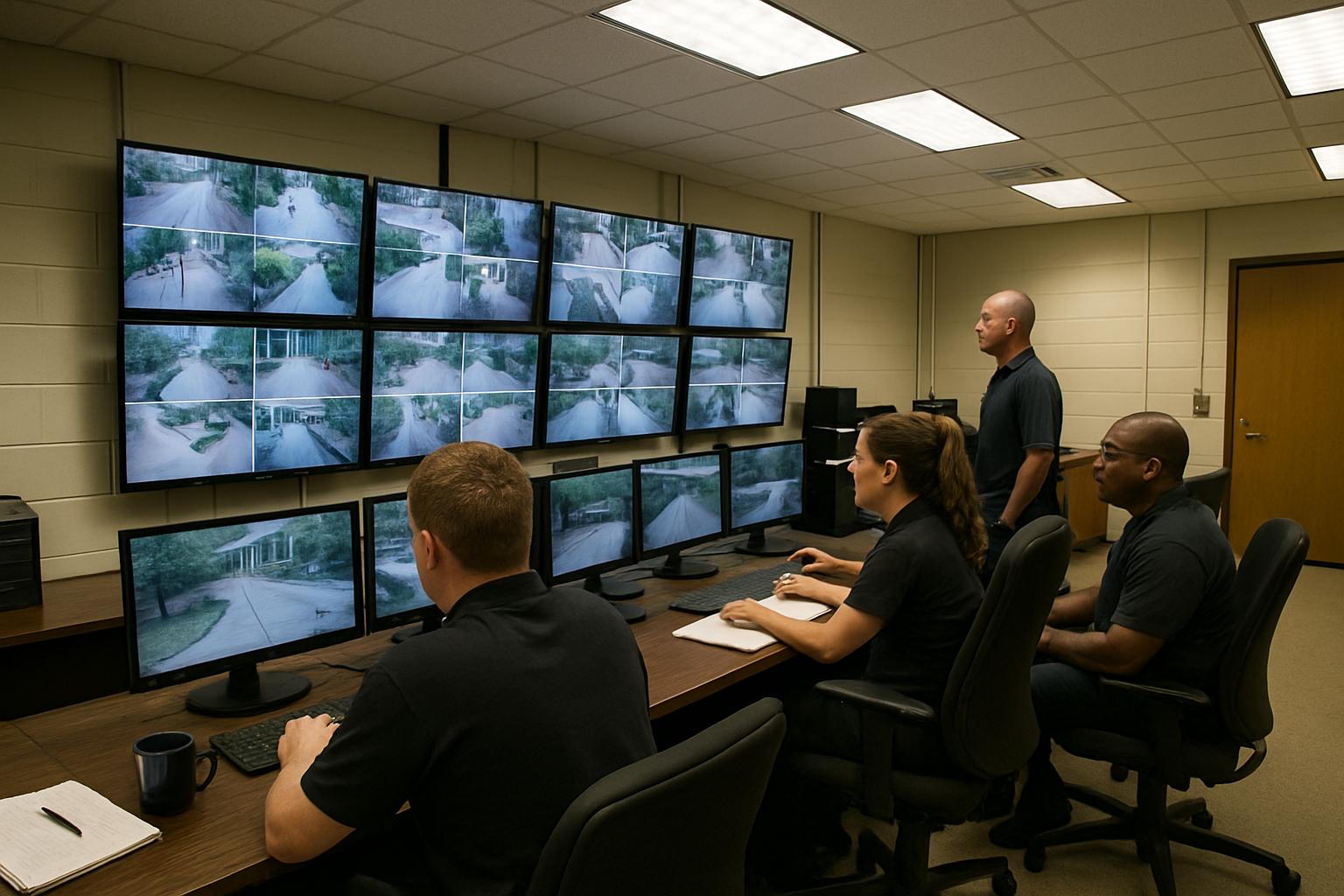
AI Technology Moves Mainstream
Adoption has shifted rapidly from pilots to full deployments within a single budget cycle. Moreover, Loudoun County secured a district-wide VOLT AI contract exceeding one million dollars. In higher education, universities are layering smart access control atop existing networks. Consequently, AI Surveillance now operates on thousands of campus cameras and endpoint devices.
Vendor marketing highlights predictive analytics, multimodal sensing, and edge processing for immediate Detection. In contrast, civil-liberties groups document chilling effects and frequent false positives. Nevertheless, many districts report shorter incident response times after deployment. Therefore, stakeholders face a nuanced cost-benefit equation during procurement.
Robust Campus Security now involves both analytics and trained responders. These adoption patterns demonstrate momentum yet expose unresolved tensions. However, understanding market size clarifies the financial stakes.
Object recognition models flag weapons, fights, or crowding by comparing live video to trained patterns. Additionally, acoustic sensors detect glass breaks or gunshots and enrich alerts. Edge devices filter data on-site, reducing bandwidth use and latency. Therefore, security teams receive near real-time notifications via dashboards or mobile applications.
Market Growth And Spend
Market reports place AI video analytics revenue between six and thirteen billion dollars this decade. Moreover, analysts forecast compound annual growth rates approaching thirty percent through 2030. Education spending represents a significant slice of that pie. ACLU estimated 3.1 billion dollars directed to campus safety products in 2021.
- Grand View: AI/video analytics CAGR 15-30%.
- Mordor Intelligence: market reaching $13B by 2030.
- ACLU: K–12 and college security spend $3.1B in 2021.
- Gaggle: 1,500 districts, six million students monitored.
- GoGuardian: 7,000 districts by 2021.
Consequently, procurement officers face crowded vendor landscapes and intense lobbying. Campus Security budgets continue expanding despite evidence gaps. Therefore, benefits and risks warrant balanced consideration. Next, we contrast promised gains with documented downsides.
Pricing models vary widely, ranging from per-camera licenses to bundled software subscriptions. Moreover, vendors package AI Surveillance modules alongside traditional video management systems. In contrast, some startups offer cloud-only analytics that integrate with existing hardware. Procurement officers must compare total cost of ownership over the contract lifespan.
Global investors view Campus Security as a resilient expenditure category.
Operational Pros And Cons
Proponents argue that AI Surveillance accelerates weapon Detection and medical alerts. Additionally, searchable metadata reduces investigator time reviewing footage. Moreover, administrators highlight examples of self-harm warnings that triggered counseling interventions. Campus Security teams praise these efficiencies under staffing constraints.
However, investigative reporting shows alert volumes often overwhelm staff. AP found two-thirds of 1,200 Gaggle flags were later dismissed. Furthermore, privacy breaches have exposed sensitive student documents online. In contrast, vendors frequently cite proprietary data to defend accuracy claims.
These mixed outcomes stress the importance of rigorous local evaluation. Consequently, governance must keep pace with technical deployment. Policy developments now shape permissible surveillance boundaries.
Student-device monitoring tools scan email subject lines, chat messages, and uploaded images. Furthermore, natural language models rate sentiment to prioritize alerts. Nevertheless, critics warn that always-on monitoring chills mental-health disclosures. Therefore, districts should pair monitoring with expanded counseling resources.
Policy Landscape And Litigation
Federal guidance released in July 2025 promotes responsible AI use and stakeholder consultation. Moreover, several states have restricted facial recognition in schools. Meanwhile, lawsuits challenge student monitoring contracts and data retention. Campus Security policies therefore vary greatly by jurisdiction.
Nevertheless, the Department of Education stops short of nationwide mandates. In contrast, local boards often approve purchases without independent evidence reviews. Subsequently, transparency advocates rely on public records requests to illuminate practices. Consequently, litigation may continue steering future regulations.
These policy shifts create compliance obligations for technology leaders. Next, we outline concrete steps for safer implementations.
Colorado extended its facial recognition moratorium for schools through 2028. Meanwhile, New York maintains a permanent ban unless future boards approve exceptions. Moreover, several states now require annual transparency reports on algorithm performance. Failure to comply can jeopardize grant eligibility.
Implementation Guidance For Leaders
Planning teams should map data flows before signing contracts. Additionally, negotiate service-level agreements specifying false-positive thresholds and human review requirements. Moreover, publish privacy impact assessments and invite community feedback. Professionals can enhance their expertise with the AI Security Compliance certification.
Consider the following checklist during procurement.
- Request alert accuracy logs covering Detection precision and recall.
- Verify encryption for video, audio, and log storage.
- Define retention periods aligned with state laws.
- Audit bias using demographic sampling.
- Establish disciplinary escalation protocols.
Consequently, systematic governance reduces operational surprises. Clear roles ensure Campus Security staff trust automated alerts. Nevertheless, evidence gaps persist. Therefore, future research priorities deserve attention.
Staff training remains crucial for interpreting alert dashboards. Additionally, scenario drills help responders correlate algorithmic signals with ground truth. Consequently, administrators budget hours for tabletop exercises each semester. Moreover, review boards should analyze missed Detection cases to refine configurations.
Looking Ahead And Gaps
Independent researchers stress the shortage of peer-reviewed outcome studies. Moreover, districts rarely publish pre- and post-deployment violence statistics. Therefore, measuring real impact remains difficult. Additional field trials must track Detection accuracy alongside student well-being.
Meanwhile, algorithm performance continues improving in controlled tests. Nevertheless, bias under poor lighting and occlusion still threatens reliability. Subsequently, campuses integrating AI Surveillance should budget for continuous auditing. Campus Security strategy must couple technology with transparent oversight.
These gaps show technology alone cannot guarantee safety. However, data driven governance can narrow the trust deficit. We now summarize key insights.
RAND plans a multi-year study tracking violence metrics across matched districts. Furthermore, NIST continues benchmarking object recognition against diverse demographic datasets. Therefore, open datasets will enable reproducible evaluations under real conditions. Stakeholders can contribute anonymized incidents to bolster evidence quality.
Conclusion And Action Steps
AI reshapes Campus Security through rapid adoption, expanding markets, and evolving policies. However, evidence of violence reduction remains limited and mixed. Moreover, privacy breaches and false positives carry tangible human costs. Consequently, leaders should demand transparent metrics, rigorous audits, and community engagement. Independent studies must validate Detection claims across diverse environments. Additionally, professionals may strengthen governance skills via the linked certification. Invest accordingly, yet prioritize measured, ethical deployment.


