

AI CERTs
6 months ago
Campaign Attribution Intelligence Platforms Boost Influencer ROI
Influencer budgets keep rising, yet many CFOs still ask a blunt question: did that creator generate revenue? Consequently, marketers now pivot toward models that prove causal impact, not vanity engagement. Campaign attribution intelligence platforms deliver that clarity by uniting first-party signals, server-side tracking, and incrementality tests. Moreover, these tools answer procurement’s call for standardized, revenue-first reporting at scale. This article unpacks the shift, technology, players, challenges, and next steps shaping influencer ROI measurement. Readers will learn why creator performance analytics matters and how brand lift AI complements attribution. Finally, professionals can boost skills through the linked certification.
Key Market Shift Drivers
U.S. creator ad spend will reach $37 billion by 2025, according to the IAB. Therefore, finance teams demand attribution models that tie every sponsored reel, TikTok, and live stream to sales. Simultaneously, privacy rules erode pixel accuracy, pushing brands toward server logs and experiment-based measurement.
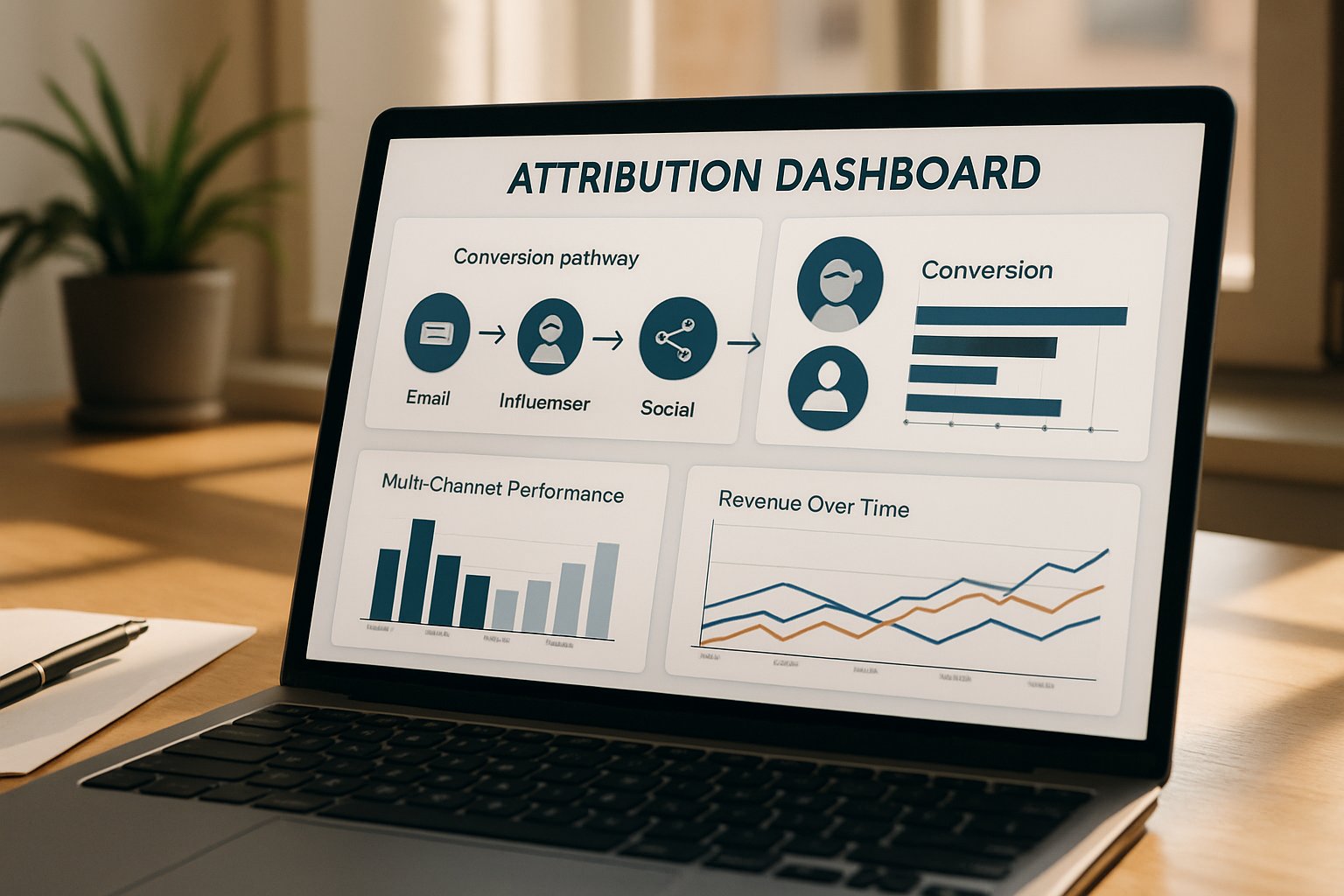
Meanwhile, ad platforms lowered incrementality test thresholds, making lift studies accessible to mid-tier budgets. Consequently, brands now expect campaign attribution intelligence platforms baked into influencer RFPs and procurement language. Standardized metrics such as incremental ROAS and creator LTV have replaced simple reach counts in executive decks.
Digiday reports show briefs increasingly ask vendors to export raw tables for in-house mix modeling. Additionally, RFPs now reference metrics like incremental lift and LTV window length in mandatory fields. Such procurement language reinforces the urgency for sophisticated measurement.
Spending growth and privacy shifts create urgent measurement pressure. Consequently, technology evolution answers that demand, as the next section explains.
Attribution Tech Evolution Pace
Technical progress accelerated across both platforms and specialist vendors during the past year. For example, impact.com launched creator conversion tracking that joins first-party coupon codes with cart data. Triple Whale extended clicks-plus-views models and post-purchase surveys to capture otherwise invisible assists.
Additionally, Google’s Meridian upgrade lowered spend thresholds for conversion-lift experiments, promoting causal discipline. Meta, Adobe, and Measured released similar lift dashboards, reducing experimental overhead. Furthermore, AI layers now explain model shifts, highlighting which creators drove incremental volume during a campaign.
These advances feed richer creator performance analytics, letting teams compare discount-code revenue against modeled lift. In contrast, legacy single-touch reports cannot reveal delayed impact or cross-device paths. Therefore, campaign attribution intelligence platforms now couple MTA with experiments to improve trust.
Brand lift AI modules also integrate sentiment tracking to contextualize hard-sale metrics with awareness measures. Meanwhile, some platforms feed those insights into automated budget rebalancing across creators mid-flight. That feedback loop widens the performance gap between agile and static programs.
Technology now links creator exposure to cash with unprecedented granularity. Next, we examine which vendors dominate that race.
Evolving Vendor Landscape Overview
First, vendors cluster into three broad camps. Enterprise partnership suites like impact.com, CreatorIQ, and Meltwater integrate discovery, contracting, and revenue dashboards. Secondly, ecommerce attribution stacks such as Triple Whale, Northbeam, and Hyros prioritize pixel joins and survey data. Finally, performance marketplaces like Creator.co align payouts with attributed sales through commission models.
Moreover, measurement incumbents Google and Meta supply lift metrics, while agencies operationalize the insights for brands. Consequently, many organizations blend platform reports with independent campaign attribution intelligence platforms for auditability.
- Data capture breadth—server events, coupons, surveys, and IDs
- Model variety—MTA, incremental lift, and predictive brand lift AI
- Workflow integration—exportable raw tables for warehouse analysis
Importantly, each vendor segment courts different stakeholders, from influencer managers to procurement analysts and finance leaders. Therefore, alignment across internal teams is essential before tool selection.
Vendor positioning shows campaign attribution intelligence platforms moving from marketing silo to finance mandate. Those gains matter only if they translate to value, as the next section details.
Benefits For Modern Brands
Revenue-first metrics unlock larger budgets because CFOs see direct contribution, not assumed influence. Moreover, creator performance analytics surfaces top performers early, allowing fast reallocation toward high LTV partners. Consequently, brands adopt performance-based compensation that rewards incremental revenue, reducing upfront risk.
Campaign attribution intelligence platforms also minimize payout disputes through deterministic conversion logs and fraud detection. Additionally, brand lift AI predicts long-term awareness impact, complementing short-term sales reports. Some vendors embed brand lift AI within dashboards to visualize cumulative awareness gains. This dual lens guides creative briefs, content cadence, and portfolio mix.
Key documented gains include:
- iROAS improvements between 15-40% after adopting incrementality testing
- 30-day repeat purchase lift for top creators versus baseline cohorts
- Reduced manual reconciliation time by up to 60%
Documented case studies from impact.com show operational savings when payouts tie automatically to verified conversions. Furthermore, survey respondents reported 60% faster reconciliation cycles after consolidating data streams. Time freed from spreadsheets now funds strategy and creative testing.
Quantified benefits build executive confidence and justify sustained investment. Yet measurement remains imperfect, and challenges persist.
Ongoing Attribution Challenges Ahead
Privacy regulation still limits deterministic joins, forcing probabilistic models that carry error margins. Nevertheless, holdout experiments help validate over-credited channels. Standardization gaps across vendors hinder apples-to-apples comparison of creator portfolios.
Furthermore, smaller advertisers may lack statistical power for expensive lift tests despite lower thresholds. In contrast, misconfigured experiments risk unstable results, eroding stakeholder trust. Therefore, cautious brands demand campaign attribution intelligence platforms with audit trails and experiment guidance. Fraud and fake engagement also threaten data integrity, demanding robust verification layers.
Google’s Privacy Sandbox will further limit cookie-based retargeting, raising reliance on first-party data. Moreover, server-side tracking investments may climb, increasing technical debt for resource-constrained teams. Agencies predict integration costs could rise 20% over the next budget cycle.
These obstacles highlight why measurement remains a journey, not a switch. The final section outlines future steps and learning opportunities.
Future Outlook And Actions
Industry observers expect faster convergence between attribution intelligence and generative guidance engines. Moreover, AI copilots will soon suggest optimal creator mix and spending caps in real time.
Trade bodies including the IAB push for exportable schemas, enabling independent MMM and brand lift AI calibrations. Consequently, open standards should reduce vendor lock-in and enhance comparability.
Professionals should establish a central data lake, blend model outputs, and run quarterly incrementality audits. Meanwhile, selecting campaign attribution intelligence platforms with transparent APIs eases that architecture. Teams can deepen skills via the AI Writer™ certification covering analytics storytelling.
Continuous learning and open architecture position brands for evolving measurement realities. Ultimately, campaign attribution intelligence platforms determine whose content deserves incremental dollars. Consequently, forward-thinking teams will capture full influencer value.
Analysts forecast double-digit CAGR for attribution software as budgets follow performance proof. Simultaneously, venture funding targets startups that fuse MTA, MMM, and causal AI under one roof. Consequently, consolidation waves may reshape the vendor map by 2027.
Influencer marketing now sits at a crossroads where proof trumps promise. Campaign attribution intelligence platforms connect that proof to revenue, brand lift AI, and long-term LTV. Consequently, brands that integrate first-party signals, incrementality tests, and creator performance analytics will outpace rivals. Nevertheless, success demands disciplined experimentation, routine audits, and careful vendor selection. Professionals should formalize those practices immediately. Additionally, deepening expertise through the linked certification accelerates career growth while improving organizational outcomes. Start evaluating your measurement stack today and unlock every attributable dollar tomorrow.
Disclaimer: Some content may be AI-generated or assisted and is provided ‘as is’ for informational purposes only, without warranties of accuracy or completeness, and does not imply endorsement or affiliation.


