

AI CERTS
1 day ago
California launches Energy usage study amid AI power boom
Governor Gavin Newsom framed the moment sharply. "We’re taking a clear-eyed, humble approach," he said when releasing Executive Order N-12-23. Furthermore, legislative follow-ups now bind agencies to publish actionable findings.
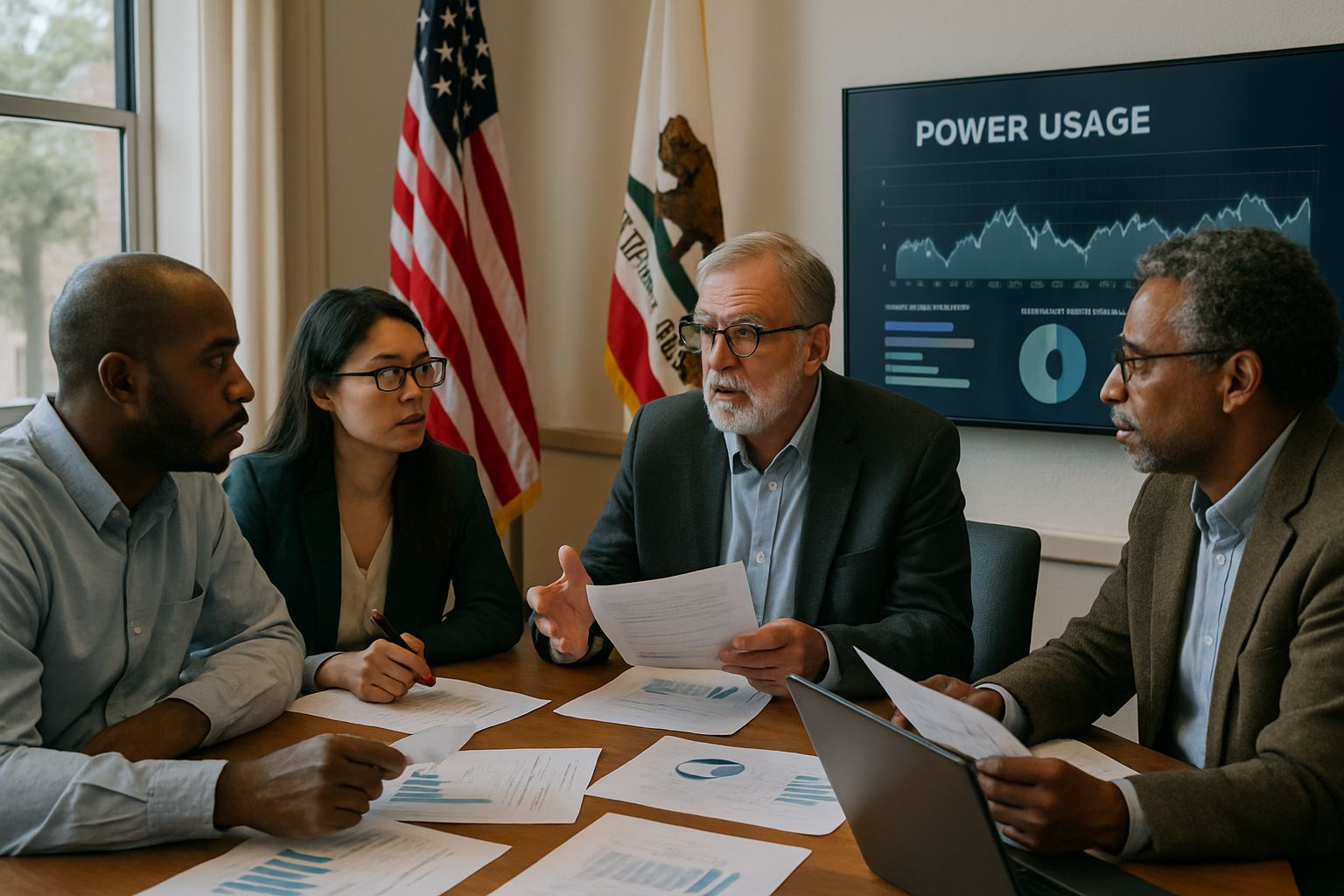
Industry leaders, utilities, and advocates await those results. Meanwhile, statewide demand projections continue rising faster than planners expected.
California Policy Catalyst Moment
Executive Order N-12-23 directed a sweeping Energy usage study across state agencies. Moreover, SB 896 codified risk analysis requirements, ensuring permanent oversight. Cal OES now convenes frontier model developers and grid experts.
Lawmakers view the study as a prerequisite for new Data center regulation. In contrast, companies welcome clarity that could accelerate siting decisions.
Two parallel concerns dominate. First, generative AI could exploit grid vulnerabilities. Second, rising loads could overwhelm transmission capacity.
These drivers explain the policy urgency. However, the study’s timeline remains tight, with interim findings expected this year.
Key takeaways: California embedded AI energy oversight in law, and agencies carry strict deadlines. Consequently, the next findings will shape every subsequent debate.
AI Surging Load Projections
Lawrence Berkeley National Laboratory’s 2024 assessment anchors the Energy usage study. The report showed U.S. data centers used 176 TWh in 2023. Additionally, researchers forecast 325–580 TWh by 2028. That jump would equal 6.7%–12% of national electricity.
PG&E offers a regional illustration. The utility logged a 40% surge in developer inquiries during 2025. Moreover, cluster studies revealed 4.1 GW of new interest atop 8.7 GW already queued.
List of pivotal statistics:
- Typical project size has ballooned from 100 MW to 500–1,000 MW.
- Data-center share of U.S. load could triple within five years.
- Northern California faces double-digit demand growth rates.
These numbers pressure planners to complete the Energy usage study quickly. Nevertheless, uncertainties persist around efficiency gains and behind-the-meter resources.
Section takeaway: Demand forecasts justify accelerated analysis. Therefore, stakeholders accept that robust scenarios are essential for sane investment decisions.
Key Regulatory Action Timeline
CPUC adopted interim Electric Rule 30 on July 24, 2025. Additionally, the rule streamlines transmission-level connections for hyperscale sites while deferring final cost allocation.
Senator Steve Padilla’s SB 57 pushes further Data center regulation. The bill instructs CPUC to craft special tariffs shielding households from infrastructure expenses.
Meanwhile, Cal OES continues its classified threat review. Subsequently, public recommendations should emerge once security-sensitive details are removed.
Each proceeding feeds the broader Energy usage study. Consequently, agencies coordinate timelines to avoid analytical gaps.
Key points: Rules and bills advance in lockstep with analysis. Moreover, overlapping deadlines demand disciplined inter-agency communication.
Intense Cost Equity Debates
Rapid load growth revives old questions about electricity rates. Consumer advocates warn that unchecked investment could inflate monthly bills.
Padilla argues residential customers must not underwrite private profits. Furthermore, his proposal mandates granular accounting of upgrade spending.
Industry groups counter that bespoke tariffs risk deterring investment. Nevertheless, most concede that transparent regulatory report requirements improve trust.
Cost concerns sit at the center of the Energy usage study. Therefore, analysts model scenarios where developers pre-pay grid upgrades or secure long-term clean contracts.
Takeaway: Balancing affordability and competitiveness remains critical. Subsequently, tariff design experiments will likely dominate future hearings.
Critical Grid Upgrade Pathways
Utilities identify three main strategies. First, accelerated interconnection queues reduce idle capacity. Secondly, flexible load programs allow data centers to modulate demand. Finally, onsite renewables paired with storage lessen peak impacts.
Moreover, PG&E plans applicant-funded transmission lines under Rule 30. Such projects shift upfront costs onto developers, limiting socialized investment.
DOE officials note that creative rate structures can incentivize participation. Consequently, the Energy usage study evaluates models like real-time pricing and congestion credits.
Professionals can enhance their expertise with the AI Ethics Strategist™ certification. Additionally, ethical training complements technical planning by aligning corporate choices with community goals.
Summary: Multiple pathways exist to match load and supply. In contrast, execution will hinge on financing details captured in forthcoming reports.
Practical Looking Ahead Recommendations
Preliminary interviews suggest five immediate steps:
- Publish a unified regulatory report tracking all CPUC dockets.
- Expand grid upgrades forecasting tools for 500 MW clusters.
- Mandate transparent electricity rates for large buyers.
- Require water-impact disclosures during permitting.
- Create incentive pools for zero-carbon backup power.
Moreover, agencies should synchronize completion dates to avoid fragmented data. Consequently, policymakers will base decisions on consistent evidence.
Takeaway: Coordinated governance accelerates responsible AI expansion. Therefore, cross-agency task forces may become a permanent fixture.
These practical steps close the analytical loop. However, implementation pace will determine California’s competitive edge.
Future Study Milestones
Analysts expect a draft Energy usage study by year-end. Additionally, Cal OES plans a public webinar once security clearance permits.
CPUC targets early 2026 for final tariff rulings. Meanwhile, LBNL will update national forecasts, reflecting real-time efficiency data.
Industry watchers suggest hosting regular workshops. Consequently, findings can inform corporate siting commitments and community negotiations.
Summary: The calendar remains crowded but concrete. Subsequently, close monitoring will reveal whether projections match realized load.
Overall, the roadmap shows structured momentum. Nevertheless, transparency must remain strong to maintain stakeholder confidence.
Investment Implications Overview
Capital markets view the Energy usage study as risk mitigation. Moreover, clearer permitting timelines de-risk billion-dollar data-center projects.
Rate certainty also helps utilities plan bond issuances for grid upgrades. Consequently, investors press for detailed regulatory report outputs.
Environmental, social, and governance funds want evidence that electricity rates stay fair. Additionally, clean-energy targets must remain intact.
Takeaway: Solid analysis translates into cheaper capital costs. Therefore, the study’s credibility carries financial weight beyond California.
The financial lens reinforces why timeliness matters. However, unanticipated delays could inflate borrowing costs.
Security Risk Dimension
Generative AI also introduces cyber and physical risks. Furthermore, automated tools may identify grid weaknesses faster than defenders adapt.
Cal OES evaluates such scenarios within the Energy usage study. Consequently, recommendations may include new mandatory standards for hyperscale operators.
Utilities already boost monitoring systems. Additionally, tabletop exercises test incident response under extreme load conditions.
Summary: Security intersects with capacity planning. Subsequently, resilience metrics will join cost and emissions indicators in final reports.
The combined lens delivers a comprehensive framework. Nevertheless, constant threat evolution demands iterative reviews.
Conclusion
California’s Energy usage study captures a pivotal inflection point. Moreover, explosive AI demand compels faster grid innovation, sharper Data center regulation, and stricter cost discipline.
Stakeholders agree that transparent regulatory report findings will support smart grid upgrades while stabilizing electricity rates. Consequently, collaboration across agencies, utilities, and developers remains vital.
Professionals who master ethical and technical nuances will shape the next chapter. Therefore, consider earning the AI Ethics Strategist™ credential to stay ahead.
California’s roadmap is ambitious yet achievable. Nevertheless, consistent follow-through will determine whether the state balances innovation with equitable benefits.


