

AI CERTs
5 days ago
Burger King’s Employee Surveillance AI Rollout
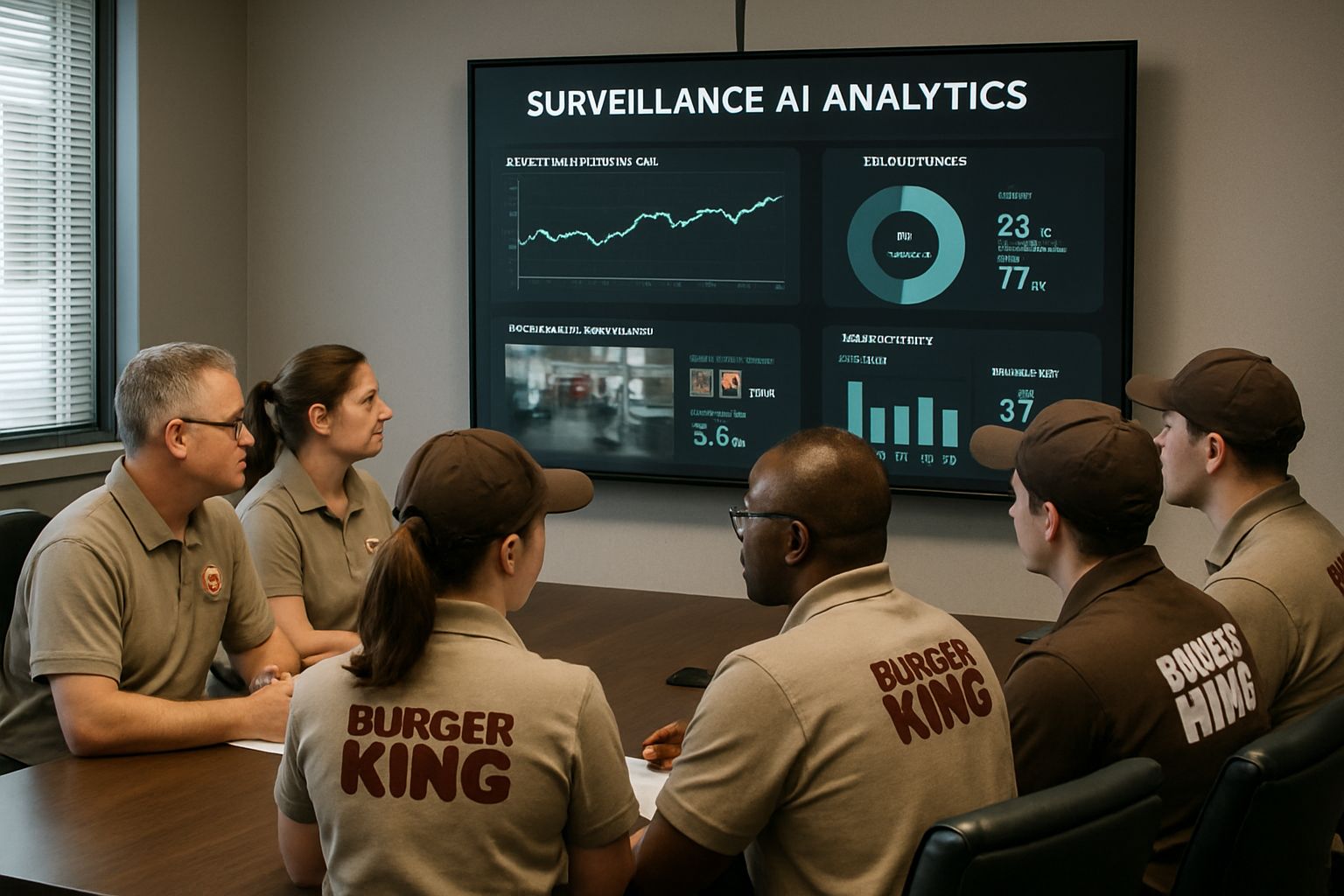
Burger King just raised the quick-service technology stakes with its newly revealed BK Assistant platform. The suite links point-of-sale, inventory, and equipment telemetry for nearly 7,000 United States restaurants. Patty, a voice enabled chatbot inside crew headsets, fronts the experience on the kitchen floor. Together, they aim to answer questions, flag supply gaps, and record aggregated friendliness signals for managers. Consequently, privacy advocates swiftly labeled the project an example of Employee Surveillance AI in everyday retail work. Burger King insists the data supports coaching rather than discipline, yet skepticism lingers after past industry missteps. Moreover, we compare the initiative with earlier fast-food pilots to draw practical lessons for technology management.
AI Rollout Context Today
Investor Day materials place BK Assistant in every US outlet by late 2026. Patty currently pilots in about 500 restaurants, while drive-thru automation tests sit under 100 sites. Meanwhile, parent company RBI touts global reach of 33,000 locations and $47 billion in system sales. The staged launch reflects caution learned from McDonald’s aborted IBM drive-thru experiment two years earlier. The headset combines generative guidance with Employee Surveillance AI dashboards unseen in earlier pilots. Consequently, Burger King frames the headset deployment as iterative, emphasizing feedback loops and optional franchise participation.
- Pilot restaurants: 500 Patty headsets
- Drive-thru AI tests: <100 locations
- Full US rollout goal: Q4 2026
- Menu update latency: ~15 minutes across channels
The timeline shows scale yet measured pacing. However, critics argue even pilots warrant strict safeguards. Next, we unpack the platform’s constituent features.
Core Features Explained Clearly
BK Assistant unifies cloud point-of-sale, inventory feeds, maintenance sensors, and analytics dashboards. Patty layers conversational access on top, built on an OpenAI large language model. Additionally, the headset answers recipe queries, schedules fryer cleans, and checks equipment temperatures hands-free. Friendliness detection leverages sentiment analytics to spot words like “welcome” or “thank you” in interactions. Consequently, aggregated scores appear in real-time dashboards so managers can praise positive shifts. That blend effectively embeds Employee Surveillance AI within daily workflows while masking complexity from staff.
Key capabilities include:
- Natural language guidance for new crew.
- Automatic menu synchronization after stock changes.
- Service sentiment scoring for coaching.
- Predictive maintenance alerts for equipment.
These features promise efficiency and consistency. Nevertheless, some functions blur into constant monitoring. The ethical debate now intensifies.
Surveillance Debate Intensifies Rapidly
Labor advocates describe Patty as a shiny guise for expanded workplace monitoring. In contrast, company leaders label the Employee Surveillance AI a supportive coach, not a digital disciplinarian. Thibault Roux told The Verge the system avoids scoring individuals or enforcing scripts. However, critics note that sentiment analytics still produce actionable data affecting staff morale. Historical patterns show algorithmic assessments often creep toward performance management uses over time. Furthermore, false negatives or accent misclassifications could punish multilingual teams unintentionally. The Guardian headlines already liken Patty to a politeness police. Some employees fear Employee Surveillance AI may eventually link politeness scores to scheduling.
Supporters cite recognition, while opponents warn surveillance creep. Consequently, transparent governance becomes indispensable. Operational gains also merit examination.
Operational Upsides Cited Widely
Restaurants crave speed, accuracy, and lower turnover. BK Assistant attacks each through data consolidation and real-time help. Moreover, Burger King claims unavailable items vanish from all apps within fifteen minutes, reducing guest frustration. Patty can shorten onboarding by answering recipe or sanitation questions without managers leaving positions. Analysts forecast meaningful cost savings if headset guidance trims seconds from every order. Additionally, predictive maintenance could avert fryer or broiler outages that cripple lunch rush revenue. For executives, these efficiencies translate into improved unit economics and happier franchisees. Store management gains unified dashboards without juggling fragmented systems. Executives counter that Employee Surveillance AI will spotlight top performers for recognition, not punishment.
- Lower remake rates from accurate orders
- Faster new-hire productivity
- Consistent service language across stores
- Reduced downtime through sensor alerts
Operational metrics suggest real, measurable upside. Nevertheless, benefits must outweigh surveillance concerns. Risk factors deserve equal scrutiny.
Technical And Legal Risks
Voice AI still struggles with ambient noise and varied accents. McDonald’s terminated a similar IBM project after social media mockery of wrong orders. Therefore, Burger King must monitor hallucination rates and escalate fallback procedures quickly. Accuracy shortfalls under pressure could erode consumer trust and frustrate crews. Meanwhile, privacy statutes in some states require explicit employee consent for audio monitoring. Legal ambiguity around real-time sentiment scoring could trigger future litigation or union bargaining demands. Furthermore, unknown data retention periods pose compliance questions with emerging AI security standards. Professionals can enhance diligence with the AI Security Compliance™ certification. Legal scholars warn Employee Surveillance AI could violate consent statutes if audio storage expands. A hallucinating chatbot could suggest unsafe cooking times.
Technical slipups meet escalating regulatory scrutiny. Consequently, proactive risk governance is mandatory. Peer benchmarks illuminate potential pitfalls.
Industry Comparisons Offer Lessons
McDonald’s drive-thru pilot highlights integration complexity when legacy systems meet generative models. In contrast, Yum Brands uses limited chatbots for scheduling, avoiding customer-facing blunders. Starbucks, meanwhile, employs predictive ordering algorithms yet steers clear of live headset surveillance. Therefore, Burger King occupies a middle path, blending real-time help with Employee Surveillance AI metrics. Analysts advise separating coaching dashboards from HR databases to reduce legal exposure. Furthermore, periodic third-party audits can confirm fairness across gender, accent, and tenure cohorts.
- Voice accuracy targets above 90% before scaling
- Clear opt-in policies for staff
- Independent model bias testing every quarter
Competitors illustrate both caution and creativity. Nevertheless, sound governance remains the differentiator. Stakeholders thus consider policy reforms.
Governance Steps Forward Suggested
Burger King has yet to publish a full privacy whitepaper. However, executives promise anonymization, limited retention, and no disciplinary scoring. Observers recommend a transparent data-flow map, regular impact assessments, and worker representation on oversight boards. Additionally, franchisee contracts should clarify opt-out mechanisms and dispute resolution channels. Consequently, continuous training on bias, safety, and security will fortify trust in the system. Management teams can validate safeguards through internal audits or external certifications. Meanwhile, regulators may soon demand algorithmic accountability reports similar to financial statements. Independent auditors should stress-test Employee Surveillance AI models for bias and drift. Ongoing monitoring audits should be shared with crews quarterly.
Robust governance can balance innovation and dignity. Therefore, concrete policy publication is urgent. We close by revisiting strategic takeaways.
Burger King’s BK Assistant shows how operational ambition meets ethical complexity in fast-food technology. Employee Surveillance AI remains the project’s lightning rod, despite promised coaching intentions. However, measured rollout, solid risk controls, and independent audits could reassure crews, franchisees, and regulators. Moreover, real productivity gains will decide whether Patty becomes indispensable or discarded like previous bots. Managers seeking expertise may pursue the linked AI Security Compliance certification for structured guidance. Consequently, organizations across retail should watch closely and craft their own human-first governance frameworks today.


