

AI CERTS
2 hours ago
Bridging the Higher-Ed Education AI Policy Gap
Meanwhile, students leverage chatbots daily yet lack institutional guidance. Faculty echo the confusion, according to a global staff survey. Consequently, institutions face reputational and operational risks. This article explores the numbers, the gaps, and pragmatic solutions for sustainable Education AI Policy. Additionally, vendors offer toolkits but adoption remains uneven. Therefore, governance teams must act decisively now.
Adoption Exceeds Policy Readiness
Ellucian’s 2024 staff survey found 84% of higher-ed professionals already use AI daily. Meanwhile, 93% expect work use to expand within two years. Similarly, the DEC student study reported 86% routine student usage. Nevertheless, only 23% of campuses held any AI acceptable-use rules in the 2024 EDUCAUSE study.
Consequently, technology use now outpaces institutional guardrails. Mark McCormack of EDUCAUSE warned that institutions still evaluate best use cases and risks. The imbalance underscores an urgent need for stronger Education AI Policy across all functions.
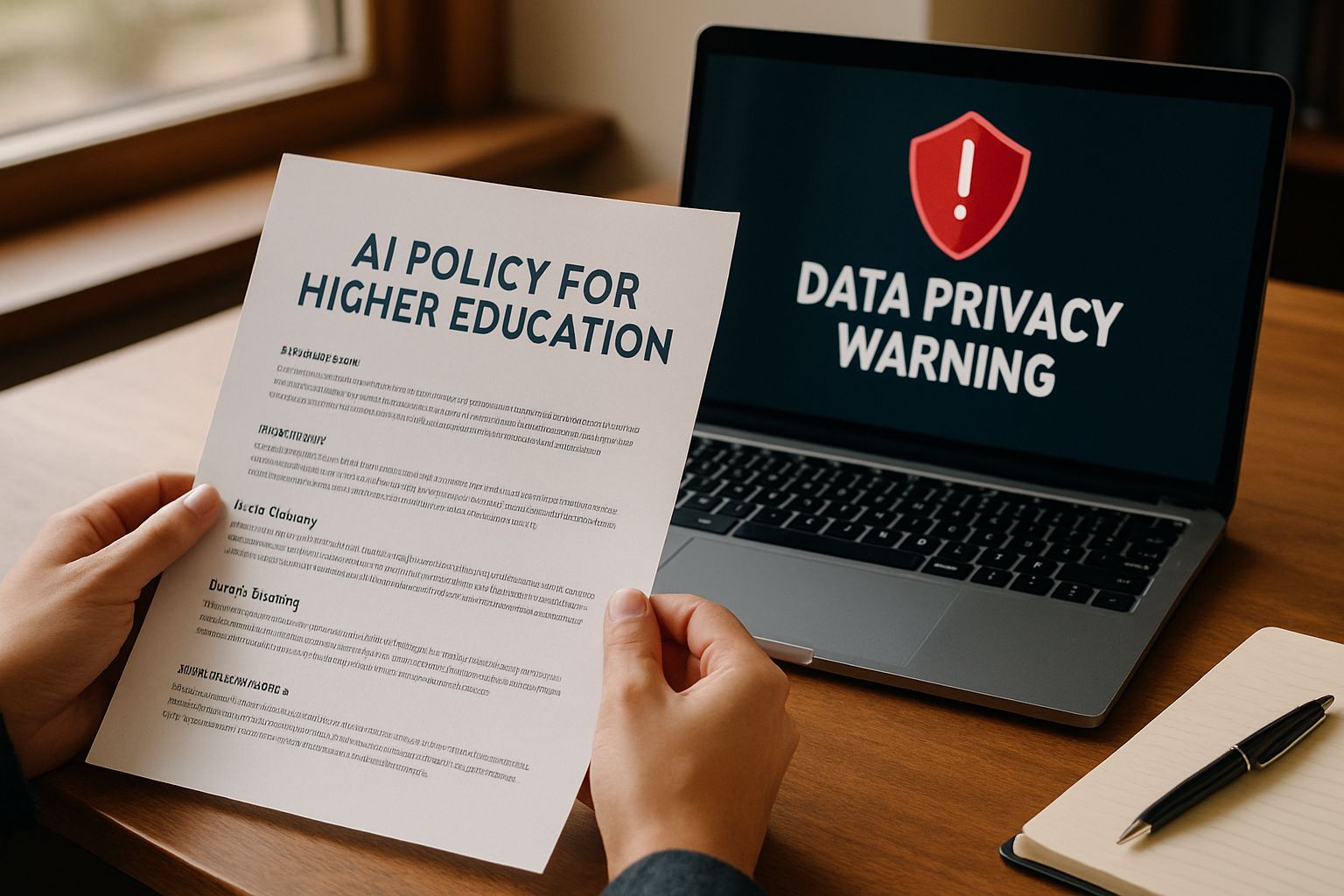
Adoption momentum is undeniable.
However, governance maturity remains shallow.
This reality leads directly to the awareness gap.
Awareness Gap Statistics
Multiple surveys quantify the communication shortfall. Below numbers reveal the distance between tool usage and policy clarity.
- 86% students use AI, yet most ignore institutional rules.
- 56% staff use unapproved AI tools for work.
- Under 40% institutions publish AI acceptable-use guidelines.
- Only 13% track AI return on investment.
- About 12% CTOs report comprehensive AI security policies.
- Only 23% institutions hold a holistic Education AI Policy.
Furthermore, WCET’s 2025 analysis showed limited student training opportunities. In contrast, pilot projects flourished across instruction. The data highlights persisting blind spots around Data privacy and integrity. Without consistent Education AI Policy, rule ambiguity fuels academic confusion.
Numbers deliver a stark message.
Awareness still trails adoption by several years.
These challenges highlight critical gaps.
However, emerging solutions are transforming the governance landscape.
Governance Building Blocks
Creating durable oversight demands clear structures, roles, and metrics. EDUCAUSE recommends cross-functional committees linking CIOs, provosts, and student affairs. Moreover, acceptable-use policies should specify permitted tools, disclosure rules, and Data privacy safeguards. Institutions must embed procurement review rubrics that evaluate vendor data handling. Consequently, contracts should reference confidentiality clauses and bias testing requirements.
Regular audits can feed a feedback loop into strategic dashboards. However, only 13% of institutions quantify ROI, according to the 2026 work report. Therefore, leaders should integrate ROI metrics into every Education AI Policy document. Professionals can deepen relevant skills through the AI Engineer™ certification.
Robust governance blends policy, procurement, and measurement.
These elements anchor institutional accountability.
Yet governance alone cannot solve the awareness crisis without communication.
Communication And Literacy
Once policies exist, communities still need comprehension. DEC’s global student survey showed most learners could not locate campus AI guidelines. Additionally, Ellucian’s 2024 staff survey revealed similar confusion among professional employees. Workshops, micro-courses, and peer mentoring improve AI literacy. Furthermore, transparency dashboards can surface policy updates, tool inventories, and Data privacy notices. Institutions should weave Education AI Policy language into syllabi and onboarding portals. Nevertheless, messaging must avoid jargon and highlight real examples. Subsequently, ongoing surveys will track understanding and reveal emerging gaps.
Awareness programs translate written rules into lived practice.
Continuous feedback sustains that translation.
Vendors and procurement processes also influence risk exposure.
Vendor Risk Oversight
Third-party AI tools raise unique compliance challenges. Sector quick polls indicate many campuses still bypass central procurement. Consequently, shadow IT weakens Data privacy controls and security posture. WCET’s 2025 toolkit recommends standardized vendor questionnaires and bias testing. In contrast, only 29% of CTOs reported instruction guidelines covering vendor tools. Institutions should embed procurement rubrics directly within Education AI Policy workflows. Moreover, contract clauses must address model updates and data retention periods. Regular penetration tests strengthen defenses against evolving threats.
Vendor governance protects sensitive records and reputations.
However, institutions require coordinated oversight to succeed.
The final section outlines actionable next steps.
Strategic Next Steps
Leaders can follow a phased roadmap. First, audit existing policies, syllabi, and procurement contracts. Second, form cross-unit committees empowered to approve updates within six months. Third, publish a unified Education AI Policy portal with plain-language guides. Fourth, launch mandatory micro-learning covering bias, Data privacy, and disclosure. Fifth, run an annual staff survey and student poll to measure awareness. Moreover, link survey data to ROI dashboards for governance improvement. Finally, benchmark progress against sector indicators annually. Consequently, institutions can shift from reactive posture to proactive stewardship.
A structured plan closes gaps methodically.
Sustained measurement keeps progress visible.
The journey demands urgency yet careful coordination.
Conclusion
Survey evidence paints a clear picture. AI adoption continues to soar, yet governance and communication lag. Consequently, institutions face heightened integrity, bias, and privacy risks. However, a phased roadmap can close the gap. Governance committees, transparent communication, and rigorous procurement all accelerate maturity. Moreover, professional development strengthens campus capacity.
Readers seeking deeper technical mastery can pursue the AI Engineer™ certification today. Subsequently, periodic staff survey cycles will verify progress against benchmarks. Ultimately, coordinated action protects learners and advances institutional missions. Therefore, stakeholders should begin drafting next-generation guidelines before the next academic year. Timely collaboration will transform emergent risks into strategic advantages.


