

AI CERTS
3 months ago
Bridging the Education Gap in AI-Driven Classrooms
Consequently, understanding nuance becomes essential for policymakers, administrators, and technology vendors. This article dissects evidence, explains definitions, and outlines solutions that can narrow the Education Gap. Furthermore, we highlight how coordinated training, smart policy, and innovative certifications empower both teachers and Students. Ultimately, bridging inequities today safeguards society’s Future workforce tomorrow. Read on for data-driven context, concise analysis, and actionable Preparation frameworks. The journey starts with clarifying survey ambiguity.
Teacher Survey Data Explained
Several 2024-25 studies mention the famous 44% figure, yet they measure different phenomena. Moreover, the Royal Society of Chemistry found 44% of teachers had actually used AI tools. In contrast, UK Money and Pensions polling used 44% to describe ideal ages for financial education. Meanwhile, Twinkl research showed 76% of educators lacked formal AI training.
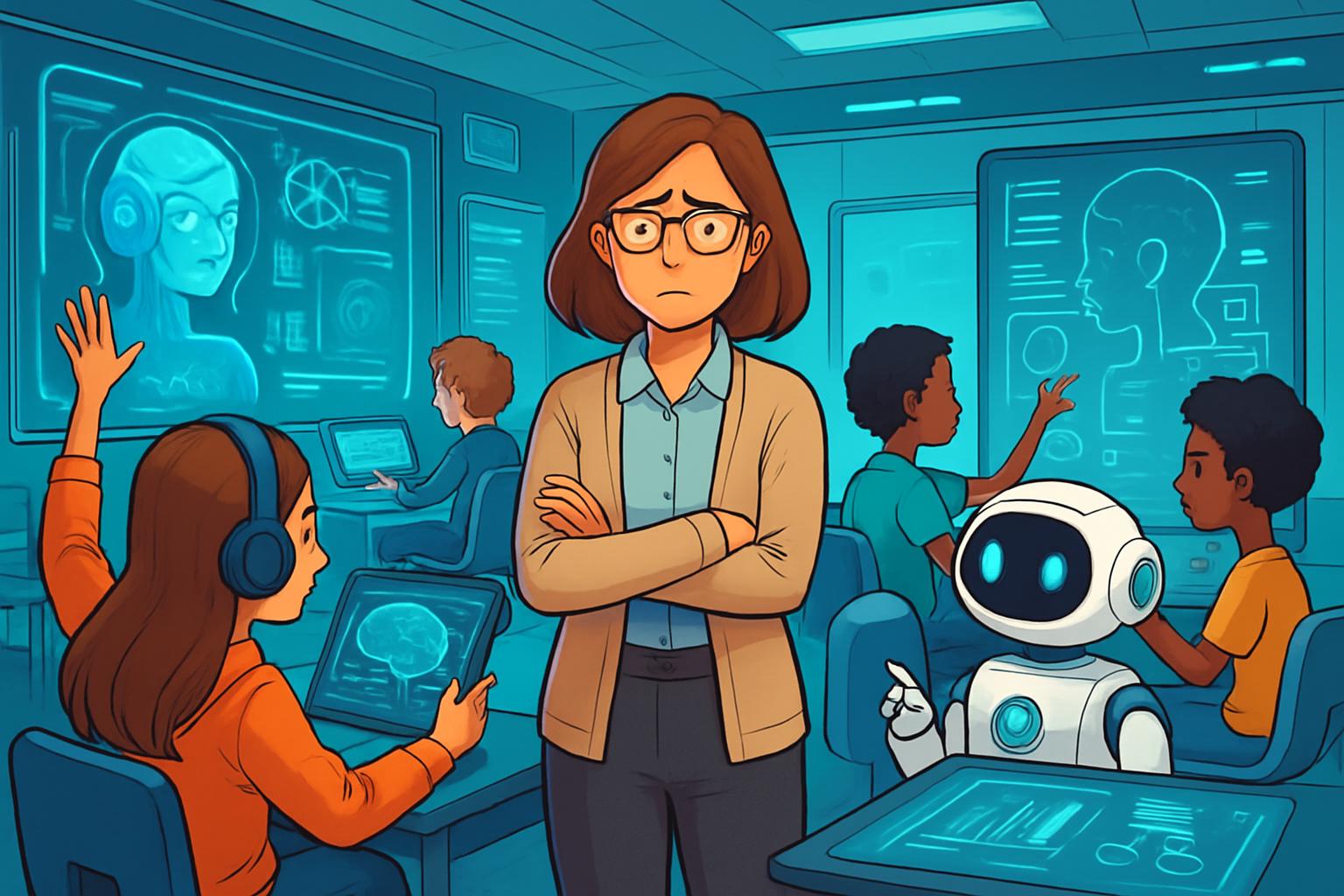
- 44% of UK chemistry teachers have used generative AI tools, RSC 2024 survey.
- 76% of educators report minimal AI training, Twinkl global study 2025.
- 62% of German teachers feel unequipped for classroom AI integration, School Barometer 2025.
Consequently, headlines citing 44% of teachers feeling Students unequipped risk oversimplification without specifying domain and geography. Accurate framing protects public Confidence and ensures interventions address real shortcomings. Therefore, analysts should reference surveys directly, disclose sample sizes, and state question wording. Doing so clarifies where the Education Gap actually lies. These comparisons show why context matters when citing statistics. However, definitions of unequipped require further exploration; the next section tackles that challenge.
Defining Unequipped Student Skillsets
Unequipped can reference digital literacy, soft skills, or subject mastery. Additionally, many reports focus specifically on AI fluency because generative systems dominate recent debates. Gallup polling reveals Students crave structured AI guidance yet rarely receive consistent curricula. Meanwhile, employers complain about graduates lacking problem-solving, collaboration, and entrepreneurial assurance. Therefore, the Education Gap spans both technical and socio-emotional domains. Secondary schools often silo these strands, leaving learners confused regarding relative importance. Consequently, teachers struggle to prioritize limited class time for holistic Preparation. Clarifying target competencies helps educators select appropriate tools and assessments. Identifying precise skills closes definition loopholes. Next, we examine structural forces widening achievement divides.
Drivers Of Education Gap
Multiple systemic factors converge to amplify disparity. Moreover, funding inequities leave Secondary schools with outdated hardware and scarce broadband access. Rural educators report slower connectivity, hindering real-time AI exploration during lessons. Urban districts face overcrowded classrooms, limiting individualized Preparation using adaptive software. Additionally, teacher professional development budgets often shrink first when economic pressures rise. Policy confusion around data privacy generates administrative hesitancy toward emerging platforms. Consequently, fragmented strategies deepen the Education Gap across socioeconomic lines. Meanwhile, inconsistent assessment frameworks make outcome benchmarking difficult. These drivers illustrate structural complexity behind readiness shortfalls. However, understanding effects on student Confidence provides sharper urgency.
Impacts On Student Confidence
Psychological research links perceived preparedness to academic persistence. In contrast, learners who feel behind often disengage and avoid challenging content. Gallup data indicate 52% of surveyed Students doubt their AI skills, dropping overall Confidence. Furthermore, Twinkl reports show teachers transmit anxiety when they lack adequate training. Such emotional contagion widens the Education Gap through reduced risk-taking and curiosity. Consequently, classroom innovation slows, harming Future workforce adaptability. Positive role models and structured practice can reverse discouragement. Therefore, boosting teacher self-belief is prerequisite to boosting learner belief. Confidence metrics reveal hidden costs of skill gaps. Next, we outline strategic interventions for rapid improvement.
Strategies For Rapid Preparation
Effective solutions blend curriculum redesign, professional development, and technology partnerships. Moreover, short micro-credential courses give busy teachers digestible learning bursts. The OECD recommends allocating dedicated hours weekly for hands-on AI experimentation. Schools can also launch peer mentoring circles to share Secondary classroom tactics. Additionally, industry sponsors may donate cloud credits or devices, accelerating student Preparation. Administrators should track outcome dashboards to maintain stakeholder trust. Consequently, transparency reinforces community support and secures Future funding. These tactics, when combined, shrink the Education Gap efficiently.
- Create short, scenario-based AI modules for Secondary educators.
- Reserve weekly experimentation periods for Students to test tools.
- Use shared analytics dashboards to track skill growth and bolster trust.
- Partner with industry for cloud resources and mentor networks.
Practical steps exist despite resource constraints. However, policy alignment remains essential, as the following section argues.
Policy And Funding Levers
National governments influence readiness through standards, grants, and accountability frameworks. In contrast, decentralized systems rely heavily on philanthropic initiatives to offset gaps. Moreover, many legislators debate AI guidance, leaving districts uncertain about procurement. Therefore, targeted stimulus funds for teacher upskilling could accelerate classroom readiness. Meanwhile, public-private consortia are experimenting with shared infrastructure models. Data transparency rules should accompany spending to protect Student privacy and build Confidence. Consequently, trust invites sustained investment, narrowing the Education Gap long term. Evaluations must report outcomes disaggregated by Secondary subpopulations to ensure equity. Aligned funding catalyzes scalable change. Next, we explore professional growth options that embed such policies.
Professional Upskilling Pathways Forward
Educators seeking rapid mastery increasingly pursue micro-credentials. Furthermore, creative disciplines now integrate AI design thinking into certification tracks. Professionals can enhance their expertise with the AI+ UX Designer™ certification. Such programs offer flexible modules aligned to classroom realities, boosting mastery without derailing schedules. Moreover, cohort forums foster peer support, sustaining assurance through shared wins. Graduates frequently mentor colleagues, multiplying impact across Secondary sites. Consequently, districts observe quicker closure of the Education Gap. Future expansion of stackable credentials could integrate cybersecurity, ethics, and data storytelling domains. Micro-credentials blend speed with rigor. Finally, we synthesize insights and propose next actions.
Bridging the Education Gap demands coordinated evidence-driven action across policy, pedagogy, and technology. Surveys reveal diverse readiness levels; understanding nuance prevents misleading headlines. Moreover, precise definitions expose targeted skill shortages affecting Students and teachers alike. Funding alignment, professional development, and modern infrastructure provide scalable remedies. Additionally, certifications such as AI+ UX Designer™ give educators practical, credentialed Confidence. Consequently, classrooms can deliver relevant Preparation for an AI-powered Future. Stakeholders must collaborate, measure progress, and iterate policies without delay. Start closing the gap today by investing in training, adopting data transparency, and championing certified excellence.


