

AI CERTs
3 months ago
Blockchain Crime Risk: Telegram Bots Fuel Darknet Escrows
Telegram bots used to schedule memes. However, new code now moves billions in illicit assets worldwide. Stablecoin escrow bots offer instant trust between strangers who never meet. Hacking forums now advertise plug-and-play escrow code.
Consequently, regulators scramble to map this shadow economy. Investigators call the phenomenon a rising Blockchain Crime Risk that merges automation with anonymous payments. This report explains how the bots work, who profits, and why enforcement still lags. Moreover, fresh data from Elliptic and TRM Labs reveals volumes rivaling traditional Finance hubs.
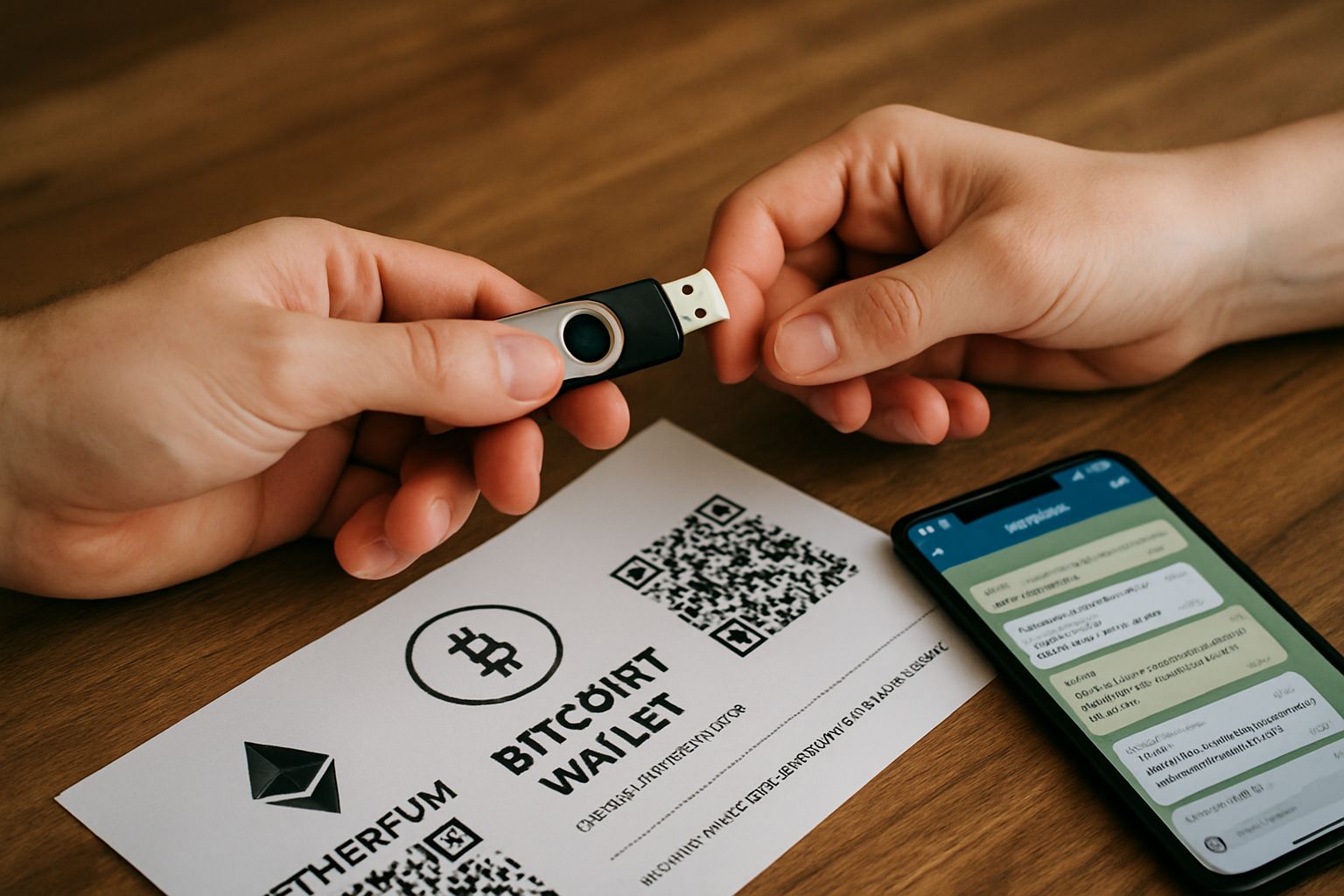
Telegram Bots Reshape Trade
Huione Guarantee became the poster child for this model in 2025. FinCEN estimated at least $4 billion laundered through its channels between 2021 and 2025.
Furthermore, Elliptic traced over $27 billion in USDT flows linked to the same ecosystem. Meanwhile, TRM Labs observed a 70× spike in daily transfers to successor service Tudou after Telegram banned Huione channels.
These numbers prove that automation scales illicit commerce. However, deeper mechanics show why bots remain hard to kill.
Escrow Automation Core Mechanics
Payment bots create unique deposit addresses and hold collateral pending delivery confirmation. Consequently, buyers trust unknown vendors because code enforces the deal.
Additionally, merchant-management bots update inventories, publish price lists, and settle disputes using preset rules. The entire workflow unfolds inside familiar chat windows. Therefore, each automated address expands overall Blockchain Crime Risk footprint.
Crypto liquidity and low fees entice vendors.
Moreover, operators embed scripted gambling games that mimic wash trading. These routines generate thousands of microtransactions that obscure real origin points.
Automation removes human friction and speeds laundering cycles. Consequently, tracing must target wallets, not chat accounts.
Laundering Flows At Scale
Chainalysis reports darknet vendors still push about $2.6 billion in Bitcoin yearly. In contrast, Telegram guarantee markets processed tens of billions in stablecoins during the same period.
Consequently, analysts warn that stablecoins have become the preferred rail for rapid cross-border laundering. Moreover, bots can programmatically split deposits across multiple chains, bridges, and DeFi pools. This migration amplifies regional Blockchain Crime Risk for emerging markets. Moreover, Hacking groups increasingly rely on stablecoins for instant settlement.
Such scale magnifies Blockchain Crime Risk for every exchange and wallet provider. Nevertheless, enforcement agencies have begun to adapt.
Enforcement Hits And Misses
FinCEN invoked Section 311 against Huione Group on 1 May 2025. Therefore, U.S. institutions must now treat the conglomerate as a primary laundering concern.
Additionally, Telegram purged thousands of channels tied to Huione and Xinbi on 13 May 2025. However, TRM Labs tracked immediate migration to Tudou, reusing identical bot code.
Moreover, analytics firms share wallet signatures with exchanges, prompting freezes on suspect addresses. Nevertheless, many flows reach non-compliant offshore venues before alerts propagate. Each surviving wallet sustains lingering Blockchain Crime Risk signals across networks.
Coordinated actions slow velocity, yet cannot stop code reuse. Consequently, businesses must assess their own exposure to Blockchain Crime Risk.
Industry Implications And Risk
Financial institutions face reputational damage if tainted stablecoins flow through their systems. Furthermore, compliance teams must now monitor Telegram bot traffic alongside on-chain heuristics.
Meanwhile, third-party vendors advertise turnkey escrow bots on freelancer sites for under $500. Consequently, entry barriers for cyber-enabled Hacking crews shrink rapidly.
Moreover, asset issuers grapple with calls to freeze sanctioned wallets. In contrast, privacy advocates argue such moves chill legitimate Crypto activity.
These debates underline persistent uncertainty and heighten Blockchain Crime Risk across Finance and Security domains. However, data-driven strategies can reduce exposure.
Key Darknet Data Points
- Elliptic traced over $27 billion USDT through Huione bots since 2021.
- FinCEN linked at least $4 billion to Huione laundering between 2021-2025.
- TRM Labs saw Tudou's daily volume jump 70× after May 2025 takedowns.
- Chainalysis estimates darknet Bitcoin revenues reached $2.6 billion in 2025.
Collectively, these figures dwarf many traditional Finance fraud cases. Subsequently, companies are reviewing internal screening thresholds.
Mitigation Strategies Ahead Now
Therefore, risk teams should expand blacklists to cover bot-controlled wallets, not just human accounts. Additionally, adopting on-chain analytics with machine-learning alerts shortens response times.
Moreover, exchanges can demand enhanced due diligence for stablecoin deposits originating from Telegram escrow clusters. In contrast, smaller VASPs may pool resources through industry consortiums.
Therefore, real-time Crypto monitoring APIs should integrate bot telemetry. Robust Security audits of smart contracts further deter exploit attempts.
Consequently, organizations that adopt layered controls cut exposure to Blockchain Crime Risk and reduce regulatory penalties.
Effective defenses hinge on cooperation and swift data sharing. Nevertheless, professional education remains equally vital.
Certification Pathways For Security
Practitioners can deepen their understanding of wallet forensics and incident response. Professionals can enhance their expertise with the Bitcoin Security Specialist™ certification.
Furthermore, structured curricula cover stablecoin tracing, Telegram bot pattern analysis, and Crypto compliance frameworks. Consequently, graduates return to employers ready to counter Blockchain Crime Risk.
Training converts policy ambition into operational capacity. Therefore, continuous learning should sit alongside technical investments.
Darknet traders now outsource trust to code, not cartels. However, blockchain transparency still offers defenders a fighting chance.
Moreover, joint action by analytics firms, regulators, and platforms slowed Huione but did not eradicate its bots. Consequently, every stakeholder must monitor evolving escrow networks and adapt controls.
Nevertheless, adopting layered analytics, proactive policies, and certified talent can tilt the balance. Explore emerging courses and fortify defenses against escalating Blockchain Crime Risk.
Disclaimer: Some content may be AI-generated or assisted and is provided ‘as is’ for informational purposes only, without warranties of accuracy or completeness, and does not imply endorsement or affiliation.


