

AI CERTs
3 months ago
Bias Audits Reshape Talent Screening Intelligence
Sudden interest in AI hiring tools has transformed corporate recruitment within two budget cycles. Consequently, regulators and courts now probe the algorithms sitting behind talent screening intelligence. New York City's landmark Local Law 144 set an early standard for bias audits in 2023. Meanwhile, federal lawsuits against Workday and ACLU complaints against HireVue underscore widening legal exposure. Market researchers still predict billion-dollar growth for recruitment AI despite intensifying hiring automation risk. This article unpacks emerging regulations, litigation patterns, audit requirements, and practical defenses for technical recruiters. Moreover, we examine vendor claims of efficiency alongside fairness assessment evidence from independent scholars. Readers will leave with actionable checklists and certification paths to harden compliance programs. Ultimately, understanding these dynamics is essential for sustainable AI hiring roadmaps. Therefore, organizations should review this guidance before their next procurement or model retraining cycle. In contrast, waiting exposes firms to reputational hits and financial penalties that can dwarf perceived efficiency gains. Subsequently, the cost-benefit calculus for unchecked automation looks increasingly unfavorable.
Regulatory Flashpoints Intensify Nationwide
July 2023 marked a pivotal shift. New York City began enforcing Local Law 144, demanding annual independent bias audits for automated employment decision tools. Furthermore, employers must post audit summaries online and notify candidates before using the systems. Other cities, including Seattle and Los Angeles, are studying similar ordinances.
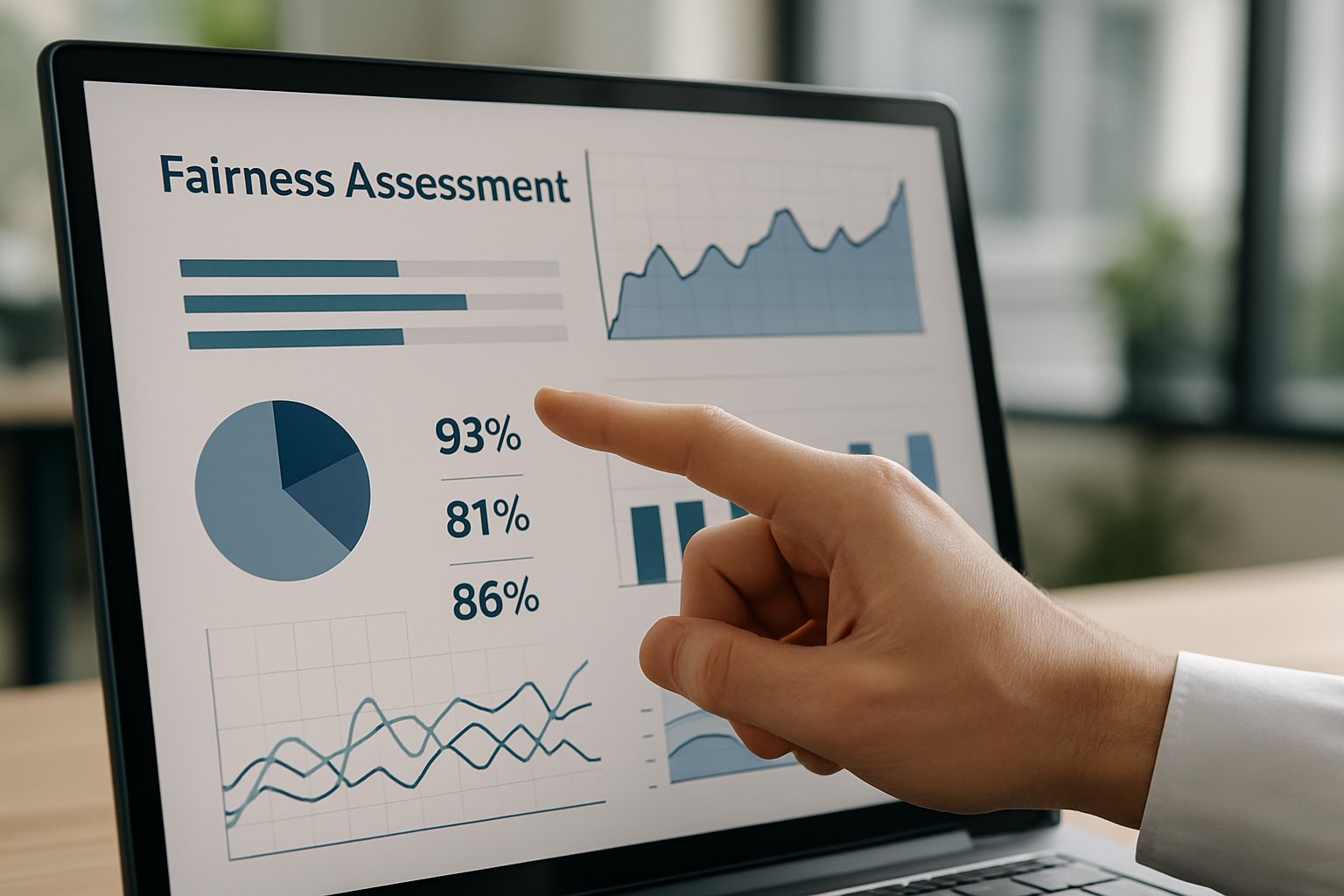
At the federal level, policy signals remain mixed. Nevertheless, EEOC guidance reiterates that disparate impact principles apply to algorithmic screening. Meanwhile, NIST’s AI Risk Management Framework offers voluntary technical guardrails adopted by several multinationals. Consequently, state regulators increasingly reference NIST language within draft bills.
Regulators face resource constraints, as illustrated by the December 2025 New York State Comptroller audit. The report criticized limited investigations and overreliance on complaints. Therefore, enforcement gaps persist even where strong laws exist. These gaps pressure employers to self-police standards proactively.
Overall, audit mandates around talent screening intelligence are expanding, yet enforcement remains uneven. However, litigation trends are rapidly filling that vacuum.
Litigation Shifts Liability Stakes
Courtrooms now test the limits of algorithmic liability. In July 2024, a federal judge allowed Mobley v. Workday to proceed on disparate impact grounds. Consequently, vendors may share responsibility alongside employers when tools drive screening decisions. Workday maintains that human oversight mitigates risk, yet discovery requests now target model inputs.
March 2025 brought fresh pressure from disability advocates. The ACLU filed an administrative complaint accusing Intuit and HireVue of disadvantaging Deaf and Indigenous applicants. Moreover, the filing argued inaccessible speech analysis violated the Americans with Disabilities Act. Subsequently, state civil-rights agencies initiated parallel reviews.
Legal scholars foresee more suits as audit disclosures provide fresh evidence. Therefore, maintaining outdated documentation or shallow audits increases exposure. Companies investing in robust fairness assessment now reduce future damages.
Litigation is moving quickly from theory to costly practice. Consequently, adoption decisions for talent screening intelligence must account for potential courtroom discovery.
Adoption Data Trends Surge
Despite risks, recruiters continue integrating talent screening intelligence aggressively. LinkedIn’s 2025 Future of Recruiting report found 37% of talent professionals experimenting with generative systems. Furthermore, survey respondents predicted AI would reshape most screening workflows within three years. Vendor studies cite time-to-hire reductions between 20 and 35 percent after deployment.
- 37% recruiters experimenting with generative AI (LinkedIn 2025).
- 20-35% reduction in time-to-hire post deployment (vendor studies).
- Market size nearing USD 1 billion with double-digit CAGR (Mordor Intelligence).
Market forecasts align with adoption momentum. Mordor Intelligence values the AI recruitment segment at nearly one billion dollars with double-digit CAGR. Moreover, investors continue funding niche startups targeting skills matching and interview analytics. Consequently, procurement teams face constant pitches promising transformative talent screening intelligence.
Candidate sentiment, however, remains cautious. SHRM polling shows many applicants worry about data privacy and algorithmic fairness. Nevertheless, transparency notices and appeal options improved trust when offered.
Adoption data reveals momentum that oversight teams cannot ignore. However, growth magnifies corresponding hiring automation risk.
Fairness Assessment Audit Steps
Effective audits for talent screening intelligence begin with independent expertise. NYC rules require auditors unconnected to tool vendors or employer HR teams. Additionally, auditors must document data provenance, sampling choices, and known gaps. Consequently, stakeholders gain baseline transparency before testing fairness metrics.
Metric selection influences legal defensibility. Most audits calculate adverse-impact ratios, false positives, and subgroup accuracy. Moreover, intersectional analysis captures compound harms across race, gender, and disability dimensions. Therefore, auditors often supplement numeric results with qualitative job-relatedness validation.
- Document data provenance thoroughly.
- Test adverse impact across protected groups.
- Validate job relevance statistically.
- Publish clear mitigation plans.
Mitigation planning transforms audit findings into action. Subsequently, teams set remediation timelines, monitor model drift, and schedule the next yearly evaluation. Professionals can deepen expertise via the AI Supply Chain™ certification.
Robust audits deliver credible fairness assessment and regulatory defensibility. Consequently, disciplined audit governance mitigates escalating liability.
Balancing Benefits And Risks
Vendors highlight impressive efficiency statistics. HireVue reports clients shortening time-to-hire by 30 percent after rolling out structured video interviews. Moreover, LinkedIn data suggests AI surfacing of nontraditional candidates boosts diversity pipelines. Therefore, well-designed talent screening intelligence can counter some human bias.
Critics counter that unrepresentative training data often erodes those gains. Joy Buolamwini warns of the coded gaze that embeds structural inequities. In contrast, disability advocates stress accessibility gaps in automated speech and facial analysis. Consequently, hiring automation risk rises when accommodations lag behind deployment speed.
Balanced programs embed human review checkpoints within talent screening intelligence pipelines and appeal mechanisms. Additionally, they document fairness assessment outcomes in public model cards. Subsequently, cross-functional governance boards oversee continuous improvement.
Efficiency stories remain persuasive, yet unmanaged externalities loom large. However, structured safeguards allow organizations to capture value responsibly.
Strategic Compliance Roadmap Ahead
Creating a roadmap starts with inventorying all automated employment decision tools. Additionally, teams should rate each tool’s hiring automation risk. Next, map jurisdictions, applicable laws, and enforcement dates. Furthermore, assign accountable owners for each system and associated documentation. Consequently, gaps become visible before auditors or plaintiffs highlight them.
Embed annual bias audits within the budget cycle. Moreover, publish plain-language summaries on company career portals. Include adverse-impact data and planned mitigations to strengthen candidate trust. Therefore, proactive transparency may ward off regulatory scrutiny.
Finally, integrate continuous monitoring dashboards. Subsequently, alert thresholds trigger retraining or feature removal before harm escalates. Talented governance leads should revisit roadmap milestones quarterly.
Structured roadmaps convert reactive compliance into strategic advantage. Consequently, executives can scale talent screening intelligence with confidence.
Conclusion And Next Steps
Bias audits, litigation, and regulation now shape every discussion of talent screening intelligence. However, disciplined governance, transparent reporting, and inclusive design can unlock genuine efficiency gains. Moreover, robust fairness assessment reduces costly surprises during discovery or press scrutiny. Therefore, organizations should operationalize the roadmap outlined above. Professionals committed to compliance can expand skills with the AI Supply Chain™ certification. Subsequently, their teams will deploy hiring innovations that scale, comply, and compete.


