

AI CERTS
2 months ago
Beeple’s Robot Dogs Deliver Cultural Critique at Art Basel
Consequently, collectors snapped up each Robotic unit for about $100,000 before the general public even entered. However, the true objective extends beyond retail success. Beeple frames the project as a Cultural Critique of platform power, celebrity worship, and algorithmic mediation.
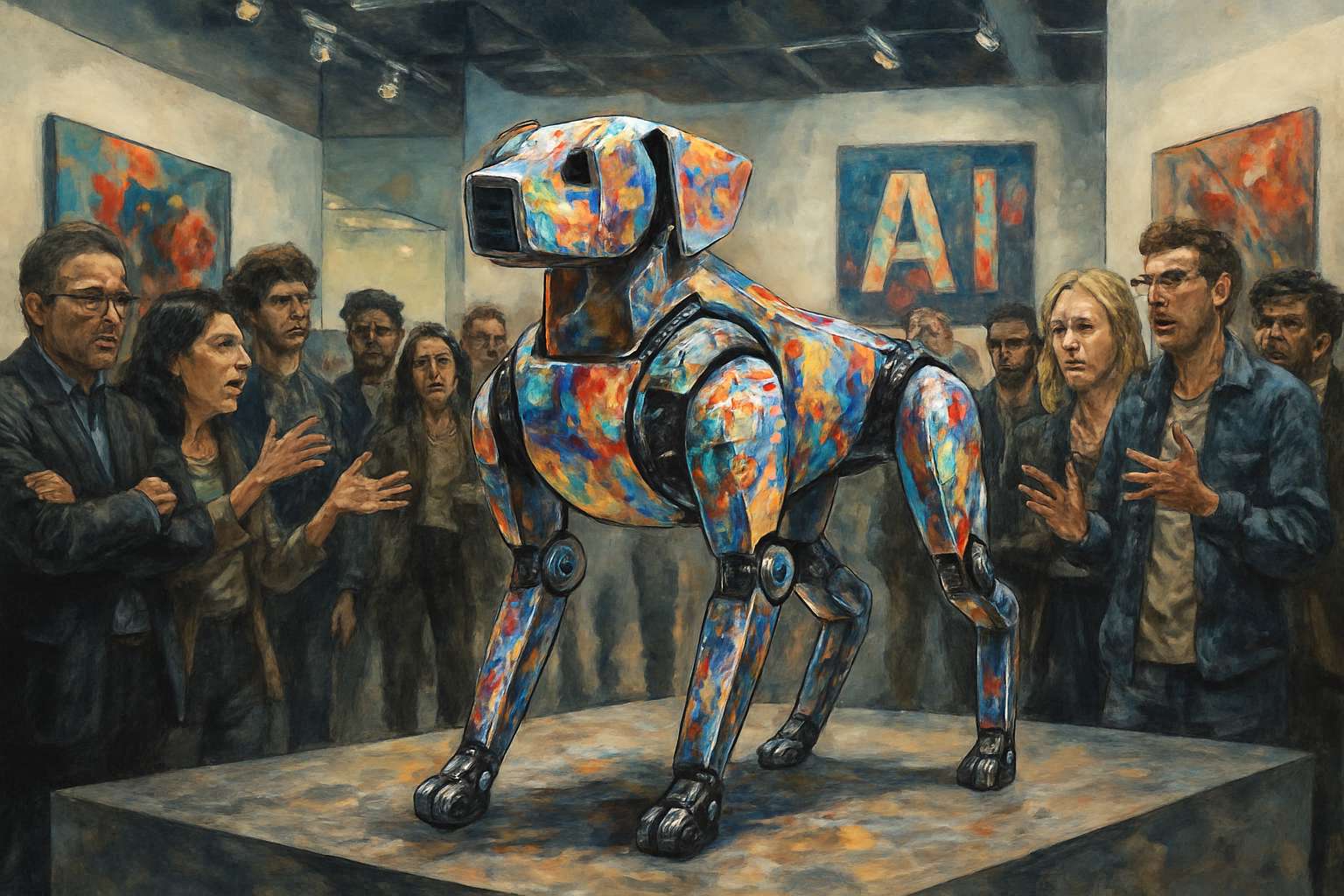
Meanwhile, industry observers are debating whether the hype masks deeper legal risks. Therefore, understanding its layered narrative helps professionals gauge emerging hybrid art markets.
Robot Dogs Grand Debut
Beeple unveiled the pack on three December 2025 during the Zero Ten sector’s VIP preview at Art Basel. Additionally, each quadruped bore a hyper-real silicone head depicting a tech titan or art legend. Audiences watched the Robotic creatures roam a transparent pen, avoiding collisions using LIDAR and depth sensors.
Furthermore, embedded cameras captured visitor faces in real time. The work immediately drew smartphone crowds, amplifying its message through viral reposts. These launch moments established the installation as the fair’s most documented attraction.
Consequently, market attention intensified ahead of official sales reports. The debut fused spectacle with technical sophistication. It framed a playful indictment within a carnival atmosphere. Nevertheless, sales data reveal an equally important storyline.
Hybrid Market Swift Response
Within hours, the limited editions were gone at roughly $100,000 per robot. Moreover, buyers reportedly agreed to keep the pieces touring for the exhibition’s duration. Art Basel staff said the rapid sell-through signaled confidence in hybrid physical-digital models.
Consequently, other digital booths noted heightened foot traffic following Beeple’s success. Dealers credited three factors:
- Scarce Robotic editions: two per head plus one artist proof
- Accessible price point compared with seven-figure sculptures
- Gamified NFT drops attracting younger collectors
Furthermore, more than 1,024 souvenir prints, including 256 NFT vouchers, incentivized repeat visits. The figures underline how scarcity and interaction drive new demand.
Sales velocity demonstrated liquidity for experiential works. Therefore, the market validated this Cultural Critique strategy. Next, the technical pipeline explains the dogs’ productive output.
Generative AI Imagery Pipeline
Each robot streamed video to an onboard processor running style-transfer algorithms. Subsequently, the code ranked frames according to movement, composition, and facial prominence. Then, bespoke models re-rendered selected frames in visual idioms linked to the silicone head.
For instance, the Picasso dog output jagged cubist fragments, while the Warhol unit delivered neon repeats. Meanwhile, the Elon Musk version favored exoskeleton fantasies and rocket silhouettes. Processed images emerged as glossy dye-sublimation prints shot from a rear slot, tongue-in-cheek labeled “Excrement Sample.”
Additionally, one quarter of these prints carried QR codes redeemable for an on-chain NFT. Consequently, visitors scrambled to collect freshly dropped pages before robots trampled them. The process embodies a performative Cultural Critique of data extraction and platform commodification.
In sum, algorithmic flair transformed surveillance into souvenirs. However, technology alone cannot silence looming legal questions.
Legal And Ethical Quandaries
Depicting living billionaires as house-trained beasts invites both Satire and scrutiny. Lawyers note U.S. parody protections, yet publicity rights vary internationally. Moreover, the robots’ planned three-year lifespan raises collector liability if injuries occur after wear.
Environmental critics also challenge ongoing NFT minting as energy-heavy despite newer eco chains. In contrast, curators argue the work’s shock aesthetics force essential policy conversations. Consequently, the installation doubles as a live case study for intellectual-property courses.
Professionals can enhance their expertise through the AI Learning Development™ certification. Such programs help navigate legal, technical, and market complexities.
These ethical debates underscore the work’s sustained Cultural Critique potency. Subsequently, attention shifts to voices of curators and collectors.
Collector And Curator Insights
Zero Ten curator Vincenzo de Bellis described the pen as “a considered context for digital practice.” Meanwhile, former Sotheby’s CEO Tad Smith was spotted finalizing paperwork near the plexiglass enclosure. Additionally, younger crypto-native visitors pursued prints rather than six-figure hardware.
Smith praised the accessible price and high meme index, calling it intelligent Satire. Curators echoed that sentiment, noting how Robotic motion kept booth dwell time unusually high. Moreover, the built-in camera feed offered a playful yet unsettling act of mutual surveillance.
They argue this participatory layer intensifies the Cultural Critique without heavy didactic text. Curatorial approval and celebrity purchases reinforce the work’s institutional legitimacy. Consequently, speculation turns to Beeple’s next move.
Future possibilities highlight wider trajectories for hybrid art tools.
Future Artistic Directions Ahead
Beeple hinted that replacement heads could update political topics as election cycles shift. Furthermore, he is exploring biodegradable chassis to temper criticism about waste. Developers within Beeple Studios also test longer-life batteries and solar charging for extended Robotic autonomy.
In contrast, some collectors favor shorter lifespans that heighten scarcity and performance urgency. Moreover, analysts expect branded licensing to emerge if legal barriers stay dormant. The broader lesson remains clear: ongoing Cultural Critique will likely rely on multisensory robotics and tokenized proof.
Hybrid forms let artists package code, sculpture, and commentary into cohesive experiences. Therefore, the next iteration may arrive sooner than collectors expect.
Strategic Takeaways And Outlook
Beeple’s robot dogs merge spectacle with sophisticated systems. Consequently, they broaden collector appetite for experiential art. Moreover, the installation mounts a persistent Cultural Critique of algorithmic intermediaries.
Legal ambiguities and energy concerns nevertheless temper pure enthusiasm. However, curatorial backing suggests institutional space for provocative Satire in coming seasons. Professionals tracking hybrid art should monitor lifespan engineering, licensing models, and secondary NFT performance.
Therefore, now is the moment to upskill via certifications and engage with the evolving discourse. Explore emerging programs and visit the robots before their batteries expire. Such engagement ensures the Cultural Critique remains active rather than archived.


