

AI CERTS
1 day ago
Baidu chip unit files confidential Hong Kong IPO for Kunlunxin
Consequently, analysts view the move as a bellwether for China's fast-growing AI semiconductors sector. Baidu's search engine heritage still defines its consumer brand, yet chips now anchor its infrastructure strategy. This article unpacks the Baidu chip unit filing, market backdrop, financial metrics, strategic rationale, and forthcoming milestones.
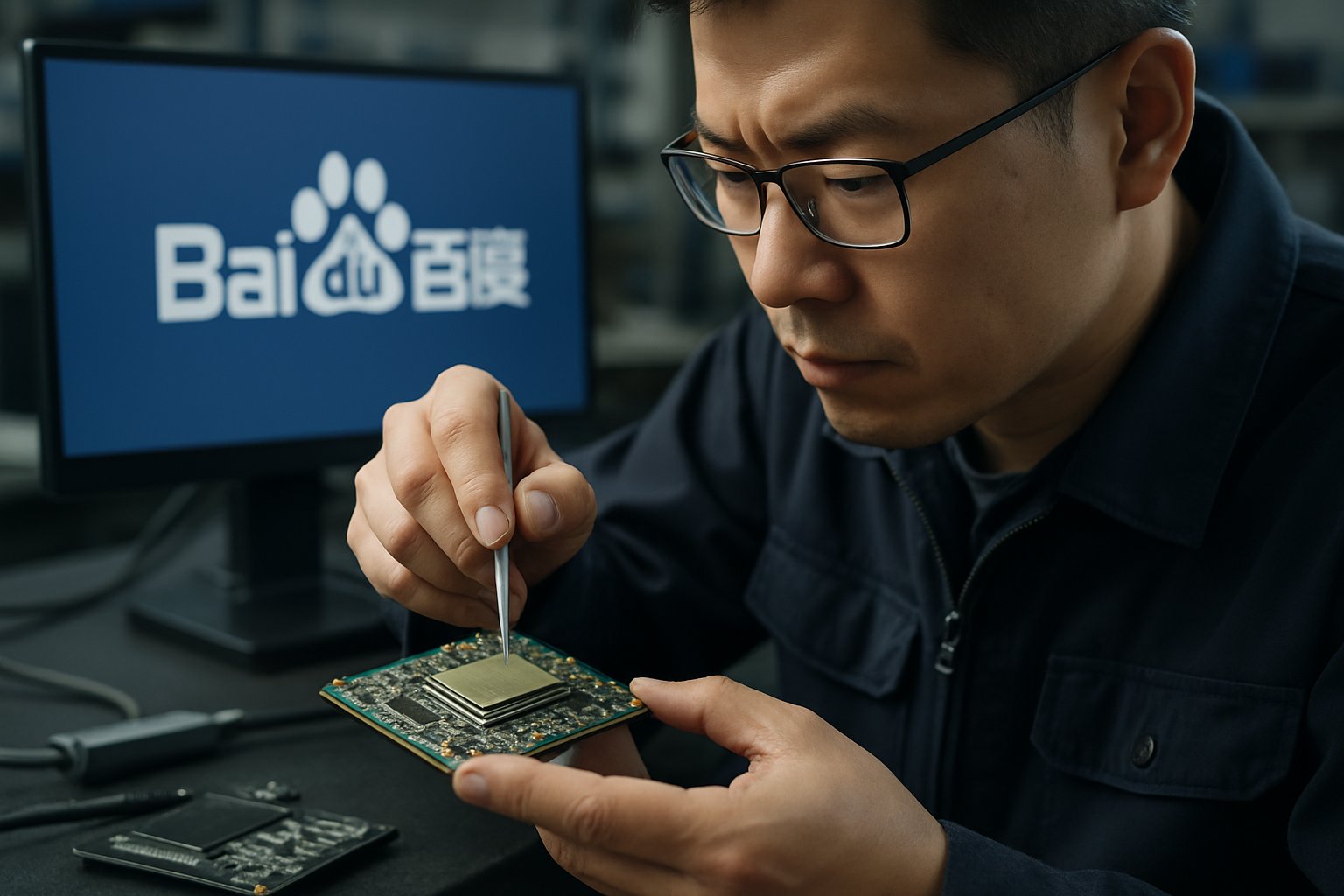
Additionally, it highlights potential risks and compares the subsidiary with domestic and global rivals. Readers will gain actionable intelligence for investment, partnership, and product planning. Meanwhile, professionals can sharpen competitive advantage with the AI Customer Service Strategist™ certification. The credential offers structured knowledge on deploying generative models in enterprise support teams.
Confidential Filing Details Explained
On the filing date, the Baidu chip unit submitted Form A1 to the Hong Kong Exchange. Furthermore, Baidu disclosed the move through an SEC Exhibit and a synchronized press release. The document labels the transaction a Global Offering that combines a public sale and institutional placing.
Consequently, the subsidiary's shares would trade as H shares while Baidu retains majority control. The company also requested a PN15 waiver, releasing Baidu from guaranteed entitlement duties. Nevertheless, completion still depends on approvals from the HKEX Listing Committee and China's securities regulator.
These procedural uncertainties keep the indicative timetable flexible. However, the confidential submission signals Baidu's confidence in the rebound of Hong Kong's primary market. In summary, the application marks the first formal step toward a potential Hong Kong listing by mid-2026.
The filing defines structural contours yet leaves valuation and size open. Consequently, investors now focus on market conditions that will shape final pricing. These factors link directly to the broader fundraising climate discussed below.
Hong Kong Market Snapshot
Hong Kong raised roughly US$36.5 billion across 114 IPOs during 2025, according to LSEG data. Furthermore, domestic chipmakers dominated deal flow as Beijing's self-reliance push met investor enthusiasm. In contrast, several internet groups shelved offerings due to regulatory heat.
Consequently, semiconductor names enjoyed scarcity value and stronger price momentum. The Baidu chip unit hopes its Hong Kong listing will ride this sentiment window. Moreover, the proposed Hong Kong listing offers easier foreign access than Shanghai's STAR Market. However, liquidity remains thinner than Nasdaq, demanding realistic valuations.
- 2025 Hong Kong IPO proceeds: US$36.5 billion
- Total 2025 listings: 114 deals
- Average first-day pop for chip issuers: 22%
- Subsidiary reported valuation: CNY21 billion
The data underline favorable momentum yet highlight execution risk if global risk appetite weakens. Therefore, market context will heavily influence offering timing and pricing. Those valuation mechanics become clearer when reviewing the subsidiary's own numbers next.
Kunlunxin Financial Metrics Preview
Reuters sources suggest 2024 revenue reached about CNY2 billion, with a roughly CNY200 million loss. Additionally, projections place 2025 revenue above CNY3.5 billion and forecast breakeven. The roadmap cites three chip lines: P800, M100, and M300.
M100, an inference accelerator, should sample in early 2026, according to leaked decks. Meanwhile, M300 targets unified training and inference workloads with a 2027 launch target. Analysts expect gross margins to improve as the design migrates to advanced process nodes.
- 2024 revenue: CNY2 billion
- 2024 net loss: CNY200 million
- 2025 projected revenue: CNY3.5 billion
- Valuation from last round: CNY21 billion
The Baidu chip unit uses internal demand from the search engine to validate performance and scale. In contrast, external sales remain modest but are expanding among Chinese cloud providers. Consequently, the disclosed numbers appear credible within the current AI semiconductors boom.
Altogether, the metrics portray a growth story approaching operational break-even. These figures set valuation expectations addressed in the strategic section ahead. We now examine why Baidu favors a separate listing route.
Spin-Off Strategic Rationale Examined
Baidu argues that independence will highlight the Baidu chip unit's intrinsic value to specialized investors. Moreover, standalone access to capital markets can accelerate taped-out designs and ecosystem partnerships. Baidu also retains upside because it will remain Kunlunxin's controlling shareholder.
Consequently, the group may unlock valuation without fully relinquishing core technology. Additionally, the public float can strengthen credibility with government customers prioritizing transparent governance. Meanwhile, investors gain cleaner financial disclosure compared with consolidated Baidu statements.
Management frames the listing as supportive to the wider search engine platform by improving chip availability. However, some analysts caution that separated entities may complicate resource allocation and talent retention. Nevertheless, most commentators agree the benefits outweigh the coordination costs.
In essence, Baidu seeks capital efficiency while preserving strategic control. The next section evaluates specific risk factors that could derail these ambitions.
Key Risks And Uncertainties
Regulatory approval remains the primary hurdle for the Baidu chip unit. Moreover, the HKEX Listing Committee could impose additional disclosure or governance requirements. CSRC clearance is also mandatory because of outbound share issuance rules.
Furthermore, geopolitical tensions might tighten export controls on advanced process equipment. In contrast, easing policies could broaden supply options but pressure pricing power. Market timing poses another uncertainty because AI semiconductors valuations remain volatile.
Consequently, a sharp tech sell-off could force Baidu to delay or resize the Hong Kong listing. Additionally, Kunlunxin faces intense competition from Huawei, Cambricon, Moore Threads, and Nvidia. Governance issues also attract scrutiny because Baidu holds weighted voting rights.
- Regulatory approval delays
- Export control tightening
- Market valuation swings
- Intense domestic competition
- Corporate governance disputes
These risks underline the delicate balance between opportunity and execution. Nevertheless, understanding the competitive landscape provides further clarity. The following section maps key rivals and differentiators.
China Competitive Landscape Overview
Domestic AI semiconductors champions proliferated after United States export restrictions tightened in 2023. Huawei's Ascend series leads training deployments within state clouds. Meanwhile, Cambricon captures inference workloads for edge devices.
In contrast, Moore Threads and Biren pursue GPU-style architectures aimed at gaming and general compute. Consequently, the subsidiary positions itself between training and inference niches, leveraging Baidu's search engine scale. The Baidu chip unit also markets integrated software toolchains, differentiating from pure hardware rivals.
Analysts note that IP ownership across nodes could serve as a long-term moat. However, sustained innovation budgets depend on successful capital raising via the Hong Kong listing. Therefore, performance in the secondary market will affect hiring and ecosystem adoption.
Overall, the landscape remains fragmented, offering room for differentiated strategies. The timeline section outlines forthcoming catalysts investors should monitor.
Upcoming Next Steps Timeline
Near term, the HKEX will vet the Form A1 materials for compliance. Subsequently, Kunlunxin must submit an updated prospectus with audited standalone financials. Baidu targets hearing approval before the second quarter for the Hong Kong listing.
Moreover, book-building could commence within two weeks after approval, subject to market conditions. Pricing and allocation would follow quickly, enabling trading by mid-2026. Meanwhile, analysts will scrutinize updated chip benchmarks, especially for the upcoming M100 inference part.
Consequently, performance disclosures could sway institutional demand before order books open. Investors should also watch comparable listings like Biren to gauge appetite.
In summary, critical milestones cluster within the next six months. Therefore, timely diligence remains essential for everyone tracking the Baidu chip unit.
Baidu's confidential filing signals mounting confidence in domestic capital markets. Moreover, the Baidu chip unit stands to benefit from heightened demand for AI semiconductors amid geopolitical realignment. Financial metrics show a maturing revenue base that investors can evaluate soon.
However, regulatory approval, market volatility, and fierce competition create meaningful headwinds. Consequently, stakeholders should monitor prospectus publication, benchmark results, and comparable Hong Kong listing performance. Additionally, professionals can upskill for this evolving domain through the AI Customer Service Strategist™ certification.
Stay informed and prepare to act as the forthcoming debut shapes China's next growth narrative.


