

AI CERTS
3 months ago
B2B Automation: Monq’s $3M Procurement Play
This story explores how the raise fits a wider B2B Automation surge, what Monq actually delivers, and why governance worries remain.
Funding Signals Market Momentum
Investors clearly see untapped opportunity. Outward VC led the $3 million round, with Cornerstone VC, Portfolio Ventures, Octopus Ventures, Endurance Ventures and Lakestar Halo also participating. Moreover, strategic angels joined to sharpen sector insight. The founders, Yasin Bostancı and Duygu Gözeler Porchet, combine fintech and banking experience, lending credibility. They position Monq within a $10 trillion enterprise purchasing arena, although independent market reports vary.
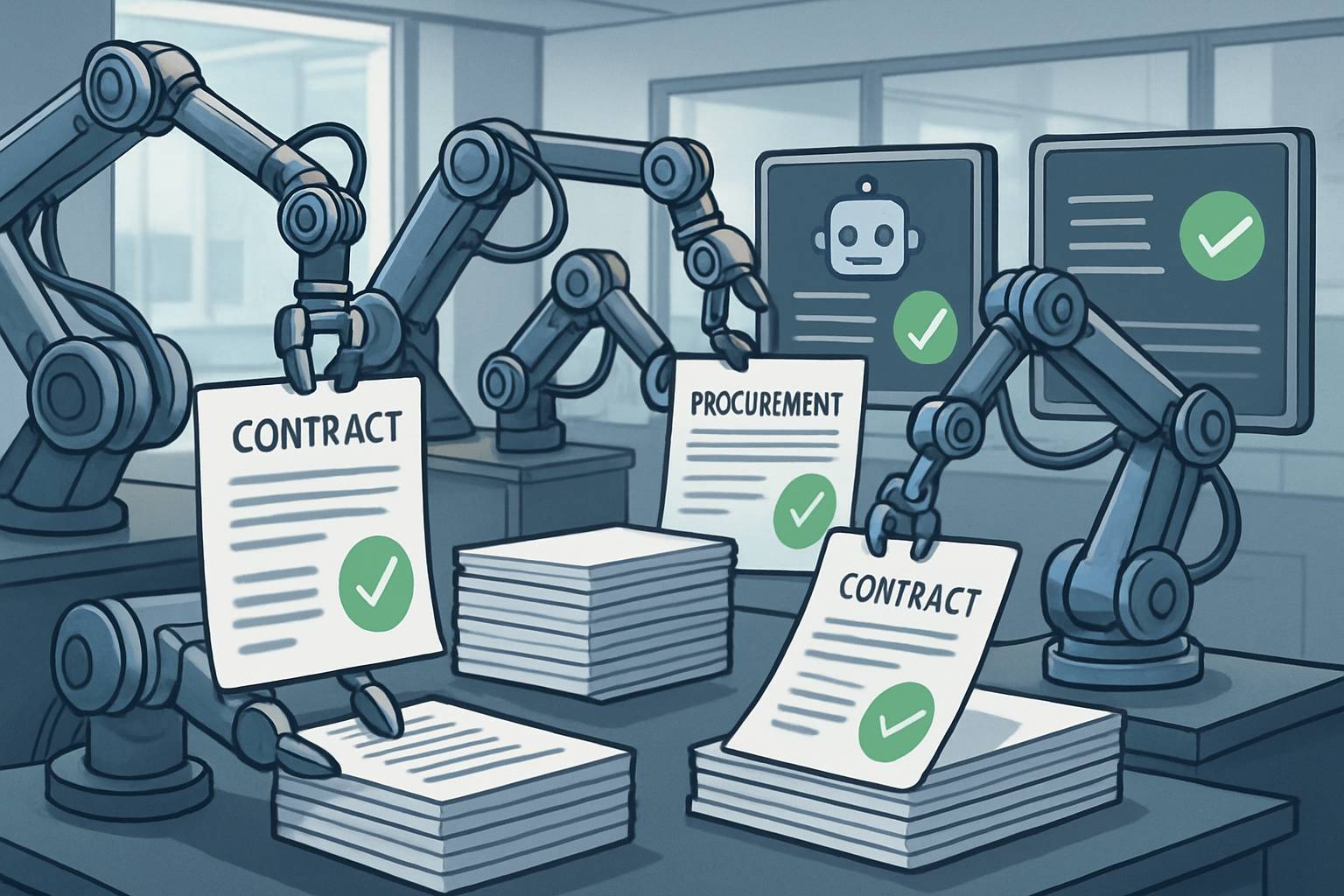
Media outlets from Tech.eu to EU-Startups echoed the news. Each repeated company pilot metrics while noting Monq’s U.K. headquarters and Turkish presence. Nevertheless, analysts advise caution until client audits surface. These investment signals demonstrate growing boardroom appetite for B2B Automation that targets complex Deal Negotiation.
Stronger capital allows Monq to scale pilots and harden its roadmap. Subsequently, procurement chiefs will assess whether promised 15–25 percent savings materialise. These early movements confirm investor belief. However, proof in live deployments will dictate adoption.
How Platform Really Works
Monq calls its product a multi-agent negotiation engine. Multiple specialised agents analyse spend data, extract clauses, model counterparties and draft messages. Furthermore, behavioural science insights steer optimal concession timing. Human approval gates remain configurable, preserving oversight.
Large language models perform contextual reasoning while deterministic extractors handle contract specifics. Therefore, hallucination risk stays constrained. Additionally, Monq claims embedded secure audit logs satisfy compliance teams. The company expects subscription pricing first and may later add performance-based billing.
Professionals can deepen related skills through the AI Data Robotics™ certification. That coursework covers agent orchestration, data engineering and governance — all critical for any B2B Automation rollout.
This architecture promises speed. Yet, integration with ERP and CLM systems decides real-world traction. In contrast, many legacy stacks hold fragmented data, challenging clean ingestion. Those integration hurdles segue to pilot claims.
Multi Agent Engine Approach
Each agent handles a defined task. One ingests supplier performance data. Another benchmarks clauses against risk policies. Meanwhile, a third simulates bargaining outcomes to suggest levers. Consequently, purchasing teams receive scenario dashboards within minutes, not weeks.
When delegation thresholds permit, the platform can autonomously send counteroffers. Nevertheless, users can force manual review before any binding step. This layered approach aligns with legal teams that mistrust unchecked AI.
The modular design also lets Monq swap models as better options appear. Therefore, continuous optimisation becomes feasible without major rewrites. These technical choices underpin the ambitious savings claims highlighted next.
Company Pilot Results Claimed
Monq reports pilots with FTSE manufacturers and global healthcare groups. Claimed outcomes include up to 40 percent cost reduction and cycles five times faster. Moreover, the website advertises average 15–25 percent savings on contracts exceeding $1 million.
Early partner Ennovi allegedly unlocked millions through faster Deal Negotiation. However, journalists note that figures remain company-reported. Independent audits or customer interviews have not yet verified the data. Consequently, cautious procurement leaders will demand third-party validation before large-scale rollouts.
- 40 % possible cost cuts (company claim)
- 5× faster negotiations (company claim)
- 15–25 % average savings on $1 M+ deals
- 75 % faster overall cycle times
These numbers appear attractive, especially under budget pressure. Nevertheless, missing context about baselines and measurement methods limits reliability. The next section explores broader market forces that could temper enthusiasm.
Broader Market Context Risks
Analyst houses such as Ardent Partners highlight persistent data quality gaps. Nearly a quarter of procurement time still goes into low-value tasks because of poor integration. Therefore, even cutting-edge B2B Automation can stall when source systems remain dirty.
Security expectations intensify the challenge. EU regulations and sustainability disclosures push for detailed supplier records. Consequently, AI vendors must deliver explainable decision trails. Any opaque agent action might breach audit standards.
Model hallucination represents another hurdle. Although Monq uses deterministic clause extractors, language models can still fabricate. Governance frameworks must catch those errors before costly commitments. Furthermore, suppliers may reject automated counterparties unless trust and clarity exist.
These risks underscore why tight human-in-the-loop controls matter. Still, when mitigated, benefits can be significant. The conversation now shifts to governance specifics.
Governance And Trust Issues
Procurement lawyers demand clear authority matrices. Monq responds with configurable approval gates and immutable logs. Additionally, role-based access restricts agent permissions. Consequently, teams can grant low-risk items more autonomy while reserving strategic clauses for review.
Auditability extends to conversation history. Every draft, counteroffer and concession receives a timestamp and user attribution. Moreover, encrypted storage and SOC-aligned processes aim to satisfy security audits. Nevertheless, customers will likely request independent certifications before signing.
Such governance considerations may slow adoption yet also build confidence. Therefore, vendors that prioritise compliance often secure longer-term wins. Competitive forces illustrate why speed and trust must balance.
Competitive Landscape Snapshot Today
Monq competes with Mercanis, Procure AI, Magentic and incumbents like Zycus. Each vendor tackles aspects of spend intelligence or autonomous Deal Negotiation. However, Monq differentiates by focusing on high-value, low-volume contracts where savings per deal justify deeper analysis.
Many rivals target supplier discovery or automated RFx generation. In contrast, Monq emphasises negotiation levers and behavioural tactics. Additionally, its founders’ fintech credentials resonate with CFOs prioritising measurable return.
Investor interest spans the segment. Octopus Ventures and Lakestar Halo fund several ProcureTech bets, signalling a broader push. Consequently, buyers expect rapid innovation cycles. Continuous feature delivery will therefore decide who leads.
These competitive dynamics stress the value of transparent performance tracking. The final section distils strategic lessons for executives considering next steps.
Strategic Takeaways Moving Forward
Enterprise buyers should adopt a structured evaluation framework. Firstly, confirm data readiness across ERP, CLM and supplier portals. Secondly, insist on audited pilot metrics before scaling. Thirdly, verify governance controls align with corporate risk appetites.
Certification programs can help teams prepare. The earlier mentioned AI Data Robotics™ course strengthens analytical, integration and oversight skills essential for B2B Automation success.
- Assess integration depth and timelines
- Demand transparent ROI baselines
- Establish clear approval matrices
- Monitor supplier feedback continuously
Following these steps secures value while containing risk. Consequently, procurement leaders can pursue innovation responsibly.
Effective rollouts will blend technology, process and culture. Moreover, early collaboration with finance and legal teams ensures smooth adoption. These practices will shape the future of automated enterprise negotiation.
Conclusion
Monq’s $3 million raise spotlights accelerating interest in B2B Automation for strategic Procurement. The company touts impressive pilot savings and faster Deal Negotiation, yet independent verification remains pending. However, its multi-agent approach, governance focus and experienced backers provide credible momentum. Executives evaluating similar platforms must scrutinise data quality, security controls and supplier acceptance. Additionally, upskilling teams through the linked certification strengthens readiness. Forward-looking leaders should monitor Monq’s next milestones, pilot outcomes and competitive responses. Consequently, those who balance innovation with diligence will unlock sustainable negotiation advantages. Explore the certification to deepen expertise and drive responsible automation today.


