

AI CERTs
4 hours ago
AWS Update Drives AI Infrastructure Optimization Gains
Generative models thrive only when infrastructure keeps pace with their soaring computational appetite. However, many production teams battle spiraling costs and stubborn delays during large model inference. Consequently, Amazon Web Services has refreshed its Large Model Inference container with several decisive upgrades. The release targets faster response times, streamlined operations, and lower spending for enterprise deployments. Most importantly, the update advances AI Infrastructure Optimization across every layer of the serving stack. New features span caching, speculative decoding, adapter handling, and multimodal acceleration. Meanwhile, AWS claims eye-catching benchmarks, including more than two-times speedups on Qwen workloads. Industry engineers now weigh these promises against real-world constraints and integration overhead. This article dissects the technical additions, performance numbers, and operational trade-offs driving the conversation. Moreover, it outlines concrete next steps for leaders planning production rollouts this quarter.
Container Update Overview Brief
AWS shipped the updated container on 26 February 2026 through the SageMaker marketplace. Additionally, the image bundles vLLM, CUDA enhancements, and reworked orchestration scripts. Built-in LMCache support headlines the release, allowing transparent transformer key-value reuse. EAGLE speculative decoding appears next, pairing a draft model with the primary network. Furthermore, adapter handling now uses lazy loading to cut startup delay for multi-adapter fleets. Expanded multimodal paths add FlashAttention optimizations for vision-language checkpoints such as DeepSeek v3.2. AWS positions these gains as cumulative, building on v15 throughput achievements from April 2025. Benchmarks cited later show meaningful response improvements and better GPU utilization. In short, the update bundles several forward-looking accelerators under one maintained container. Consequently, teams can adopt innovations without curating patches themselves, as the next section explains.
LMCache Gains Explained Clearly
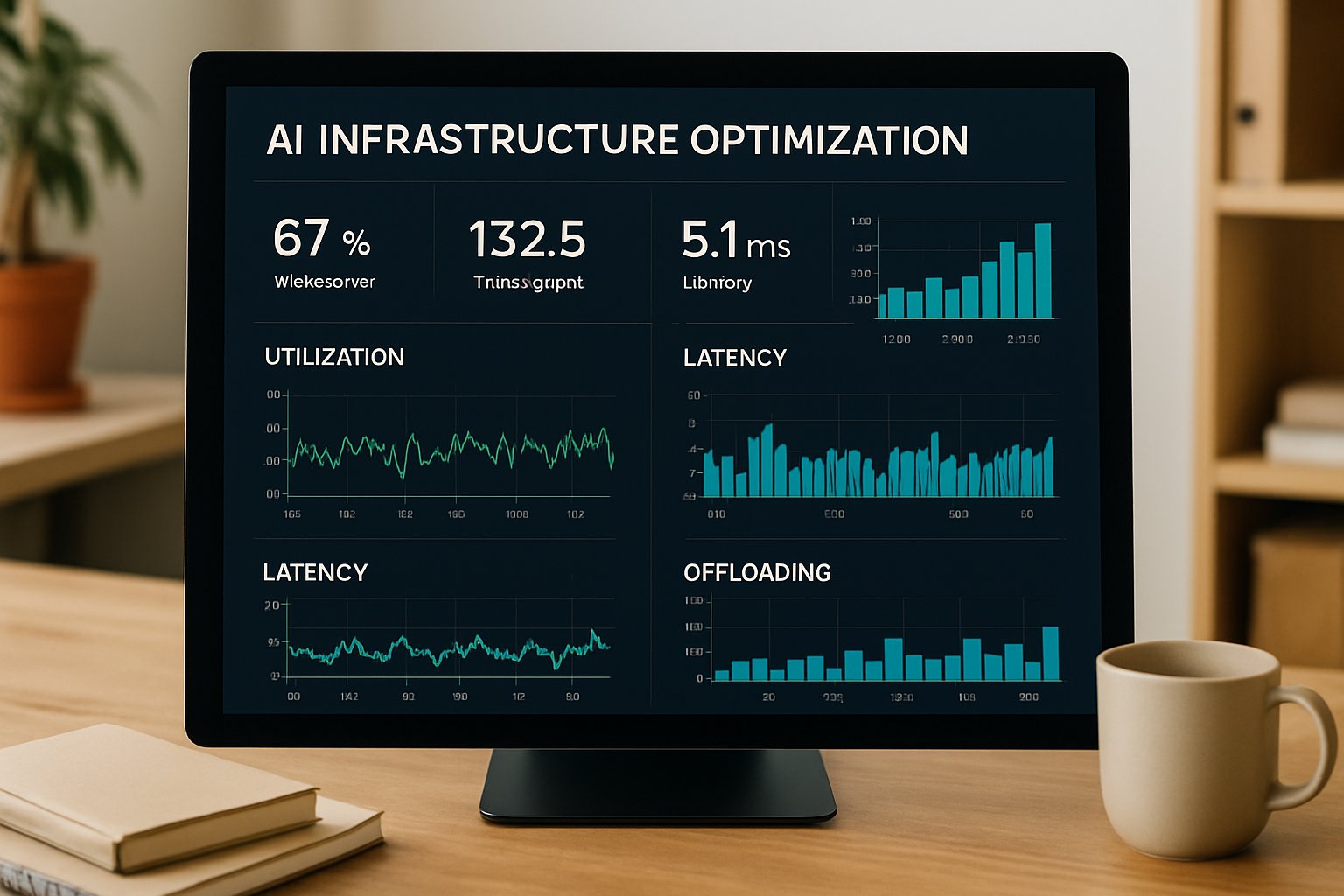
LMCache focuses on transformer prefill, the costliest stage for extended prompts. It serializes key-value tensors and reuses them across requests that share textual segments. Therefore, repeated introductions, system prompts, or retrieved documents avoid fresh GPU passes. AWS offers an auto-configuration flag that activates the store with sane defaults. Manual tuning remains possible for advanced sharding, eviction, or NVMe tiers supporting CPU offloading. Benchmark data on p4de.24xlarge shows 2.65× faster first token and 54% lower overall latency. Moreover, NVMe backends with O_DIRECT neared CPU results in the published tests. Importantly, LMCache tiers memory across GPU, CPU, and disk to sustain long contexts.
Key numerical highlights include:
- 62% reduction in Time-To-First-Token
- 2.18× faster end-to-end processing
- Cache hit rates exceeding 80% on repetitive chat workloads
Nevertheless, benefits drop sharply if cache hits fall below fifty percent. Architects should profile prompt patterns before enabling aggressive persistence. These data points illustrate tangible wins when workloads feature redundancy. LMCache can slash compute bills and wait times in high-reuse environments. However, alternative accelerators may matter more when context repetition is low, leading into speculative decoding.
Speculative Decoding Impact Analysis
Speculative decoding accelerates generation by sharing work between two cooperating models. AWS selected the EAGLE algorithm, which predicts hidden features rather than final tokens. Consequently, the main network validates multiple drafted tokens in a single forward pass. Academic runs on LLaMA2-Chat 70B showed 2.7× to 3.5× lower latency using EAGLE. AWS mirrors those gains in preliminary container tests, citing doubled throughput on some prompts. Configuration proves simple; operators supply a draft checkpoint path and select draft token counts. In contrast, drafting effectiveness depends on acceptance rates, which vary by domain and prompt style. Community issues also document correctness bugs when draft and target models diverge widely. Therefore, thorough evaluation remains essential before flipping the production switch. EAGLE delivers impressive speedups when acceptance rates stay high and models align closely. Subsequently, infrastructure leaders must balance risk and reward as they consider adapter advances next.
Adapters And Multimodal Boosts
LoRA adapters let teams personalize giant models without retraining billions of parameters. The container now loads adapters lazily, deferring heavy disk transfers until first invocation. Consequently, cold-start duration drops for services shipping dozens of branded adapters. FlashAttention improvements also trim latency for vision transformers inside composite multimodal systems. Moreover, prefix caching extends LMCache techniques to image and text sequences simultaneously. AWS highlights that adapter-specific preprocessors allow different tokenization rules inside one hosted fleet. Meanwhile, adapters may live on cheaper storage through CPU offloading when demand dips. That pattern cuts active GPU footprint without sacrificing availability for niche clients. Adapter and multimodal tweaks unlock flexible branding and richer input modalities with moderate engineering overhead. Therefore, the next section weighs operational trade-offs for AI Infrastructure Optimization investments.
Operational Pros And Cons
Performance gains translate directly into cost relief and user satisfaction. However, each feature introduces additional components that can fail under pressure. LMCache needs index persistence, eviction policies, and observability hooks to protect hit ratios. Speculative decoding complicates debugging because two models contribute to every token. Additionally, CPU offloading saves memory yet may throttle bandwidth on contention heavy hosts. Nevertheless, quantified benchmarks help decision makers prioritise efforts.
Consider these headline impacts:
- Throughput uplift up to 111% versus older LMI versions
- Latency reductions exceeding 60% on repeated context prompts
- Adapter deployment time cut from minutes to seconds
In contrast, benefits collapse if workloads lack repetition or draft acceptance. Therefore, staged rollouts with A/B metrics remain best practice. Overall, the features deliver strong upside when workloads align with their design assumptions. Subsequently, the playbook below guides practical adoption toward measurable AI Infrastructure Optimization returns.
Actionable Deployment Playbook
Begin with a small canary service mirroring production traffic patterns. Furthermore, capture baseline latency, throughput, and GPU utilization metrics for two weeks. Next, enable the cache auto mode and track hit distribution over several representative days. If hits exceed sixty percent, persist tiers on NVMe and enable CPU offloading. Meanwhile, assign a lightweight draft model and measure EAGLE acceptance rates across domains. Adjust draft token counts to balance speed and wasted compute. Moreover, prewarm adapters predicted to serve first requests during daily peak. Subsequently, compare new metrics with the baseline and compute ledger level savings. Professionals can enhance understanding through the AI Cloud Infrastructure Specialist™ certification. These process steps create evidence-driven confidence before enterprise-wide rollout. Disciplined experimentation protects uptime while clarifying true performance benefits. Consequently, leaders complete their AI Infrastructure Optimization roadmap prepared for production scale.
AWS has bundled cutting-edge techniques into a single maintained container. Consequently, early users report smoother scaling and healthier margins. Effective AI Infrastructure Optimization hinges on matching features to actual workload patterns. LMCache, speculative decoding, and adapter advances each target distinct performance pain points. Moreover, CPU offloading lets teams stretch GPU memory without large compromises. Nevertheless, every accelerator demands disciplined measurement before full adoption. Teams pursuing AI Infrastructure Optimization should baseline metrics, activate one feature, and track deltas rigorously. Professionals seeking structured guidance can validate skills through the linked certification program. Therefore, start small, observe carefully, and evolve your AI Infrastructure Optimization strategy with confidence. Continual AI Infrastructure Optimization keeps response times low and budgets predictable as models grow larger.


