

AI CERTS
3 months ago
AWS Trn3: Next-Gen AI Training Hardware for Enterprise Scale
Launch Context And Overview
On 2 December 2025, AWS announced general availability of Amazon EC2 Trn3 UltraServers. Therefore, the launch adds a flagship accelerator tier to the public cloud portfolio. Trainium3 represents the third generation of AWS custom silicon, designed entirely by Annapurna Labs.
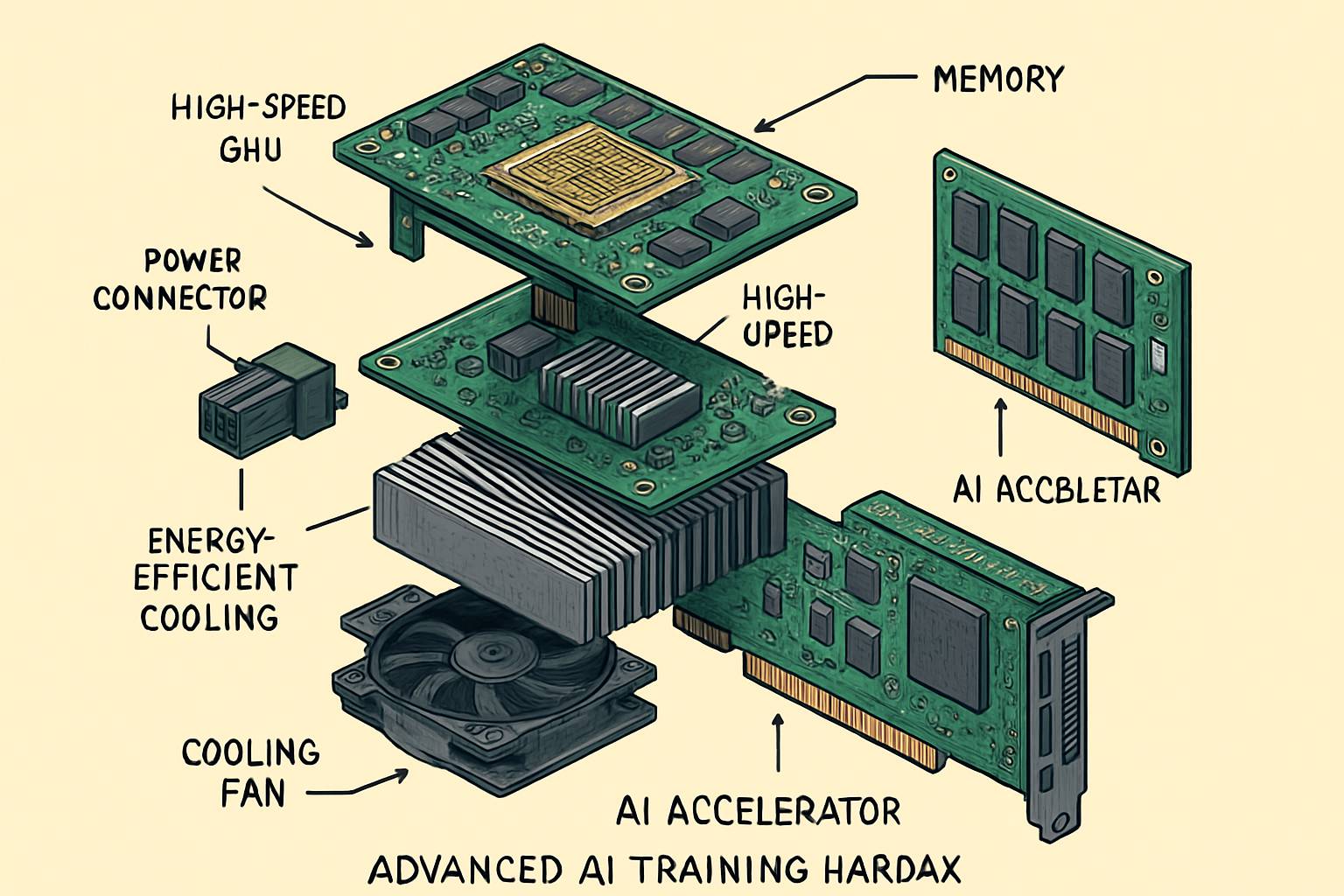
Unlike its predecessor, Trn3 moves to a 3-nanometer process, enabling higher transistor density and energy efficiency. Additionally, AWS positions the platform for frontier-scale generative, reasoning, and video models that demand vast tokens. Reuters noted AWS touts four-times raw throughput with forty-percent lower power versus prior instances.
Most importantly, the company claims the new AI Training Hardware lowers cost per token substantially. Industry analysts frame the release as an attempt to hedge reliance on GPU vendors amid component shortages. In contrast, AWS promotes price-performance advantages as its main differentiator. These strategic motivations set the tone for technical evaluation.
Trn3’s debut signals AWS’s deeper vertical integration. However, technical proof points decide adoption in the next sections.
Core Chip Specifications Explained
Each Trainium3 chip delivers 2.52 petaFLOPS of FP8 compute, according to AWS documentation. Furthermore, the device integrates 144 GB of HBM3e memory offering 4.9 TB per-second bandwidth. That combination targets dense transformer layers and mixture-of-experts routing requiring sharp bandwidth.
Key per-chip numbers appear below:
- Peak throughput: 2.52 PFLOPS FP8
- HBM capacity: 144 GB
- HBM bandwidth: ~4.9 TB/s
- Network fabric: 2 TB/s NeuronLink
- Data types: FP32, BF16, MXFP8, MXFP4
Moreover, the NeuronSwitch fabric supplies 2 TB per-second chip bandwidth, sustaining all-to-all traffic inside servers. Consequently, latency stays under ten microseconds for neighboring devices during collective operations. Real-world performance will depend on pipeline balance and host orchestration. Such specs define the heart of AWS’s AI Training Hardware portfolio.
These raw figures confirm serious compute and bandwidth resources on a single package. Therefore, practitioners should map workloads to these limits before clustering chips.
Server Scale Numbers Matter
Scaling beyond single chips, the Gen2 UltraServer houses up to 144 Trainium3 devices. Consequently, aggregate compute rises to 362 PFLOPS FP8 within one enclosure. Total HBM3e memory reaches 20.7 TB, while bandwidth peaks at 706 TB per second.
Hosting resources include roughly 2,304 vCPUs and 27,648 GiB of system RAM for orchestration tasks. Meanwhile, the Nitro abstraction offloads storage and security without taxing accelerator lanes. Practitioners can knit multiple UltraServers into UltraClusters using Elastic Fabric Adapter with sub-microsecond network hops.
Dave Brown told Reuters the design offers over four-times raw throughput with forty-percent lower power than Trn2 units. Moreover, AWS advertises roughly four-times better performance per watt, aiding data-center sustainability metrics. At this tier, AI Training Hardware must balance thermals and airflow across densely packed blades.
UltraServer density redefines what one rack can deliver. Nevertheless, distributed training still depends on efficient network topologies discussed next.
Software And Ecosystem Growth
Hardware alone fails without mature toolchains. Modern AI Training Hardware thrives only when software removes friction. Therefore, AWS pushes the Neuron SDK, which compiles PyTorch and JAX graphs directly for Trainium3. Additionally, Hugging Face Optimum, SageMaker, EKS, and Batch integrations promise smoother migrations.
Developers gain automatic graph partitioning, mixed precision kernels, and runtime profiling inside one environment. Nevertheless, CUDA libraries still dominate third-party optimizations, meaning some kernels demand manual tuning on Trainium3. In contrast, AWS supplies Neuron Explorer and Kernel Interface for performance engineers needing deeper control.
Migration studies report meaningful wins yet note week-long optimization cycles for complex sequence models. Consequently, organizations should factor staffing time into total adoption cost. Performance profiling tools inside Neuron help locate tensor bottlenecks quickly.
The ecosystem shows rapid progress but trails GPU maturity. Subsequently, buyers must weigh software risk against hardware gains in the competitive landscape.
Competitive Landscape Analysis Today
NVIDIA still tops many MLPerf charts with H100 and emerging Blackwell GPUs. Meanwhile, Google markets TPU v5e for cost-efficient large-model work. Analysts view Trainium3 as AWS’s bid to reduce dependence on external silicon suppliers.
In independent tests, GPUs retain an edge on convolutional tasks, yet Trainium3 impresses on transformer throughput. Moreover, AWS claims five-times more output tokens per megawatt on Bedrock relative to Trainium2. These figures lack peer-reviewed confirmation, so caution remains prudent. Enterprises shopping for AI Training Hardware will compare price locks across multi-year commitments.
Price competition intensifies as hyperscalers chase enterprise training budgets. Consequently, contract terms, region availability, and reservation discounts influence real performance-per-dollar.
The field grows crowded with differentiated strengths. Therefore, guidance and caveats follow for decision makers.
Adoption Guidance And Caveats
Technical leaders should start with representative workload profiling. Next, compare GPU and Trainium3 runs under identical batch, sequence, and precision settings. Additionally, monitor memory headroom because HBM capacity impacts sequence length and expert sharding.
Plan for Neuron SDK learning curves and potential kernel rewrites for custom operators. Nevertheless, AWS support and community forums have grown since the Trn2 era. Capacity planning also requires checking regional UltraCluster quotas and network topology constraints.
Finally, marry sustainable goals with procurement strategy. Trainium3’s energy profile may align with corporate carbon targets if measured correctly. Professionals can enhance their expertise with the Chief AI Officer™ certification. Selecting AI Training Hardware also involves long-term vendor road-map confidence.
Successful deployments blend benchmarking, staffing, and capacity diligence. Consequently, the next section recaps key lessons and future steps.
Conclusion And Next Steps
Trainium3 and its UltraServer present formidable AI Training Hardware with eye-catching compute and capacity statistics. Moreover, AWS markets compelling performance per watt and network latency gains, though independent validation remains pending. Nevertheless, early adopters may reap price advantages if workloads align with FP8 precision and Neuron tooling. Additionally, monitoring MLPerf submissions will provide clearer cross-vendor comparisons over time. In summary, evaluate performance, memory, compute, network, and software readiness before committing resources. Investing in AI Training Hardware without due diligence risks stranded capital. Consequently, informed choices will maximize return as cloud accelerators evolve.


