

AI CERTS
3 months ago
AWS Supply Chain AI: Data Lake Powering Real-Time Planning
Moreover, machine-learning modules surface risks, optimize inventory, and automate planning. This introduction unpacks why the offering matters, how it works, and what professionals should watch next.
Market Forces Accelerating Adoption
Supply disruptions, tariffs, and sustainability mandates are intensifying. Gartner values supply-chain software revenue at $33.4 billion in 2024, growing 12% yearly. Meanwhile, AI spending inside planning suites is rising sharply. Reuters notes manufacturers funding predictive tools to weather demand swings. Therefore, AWS positions its Supply Chain AI platform as a rapid on-ramp for advanced analytics without heavy infrastructure builds.
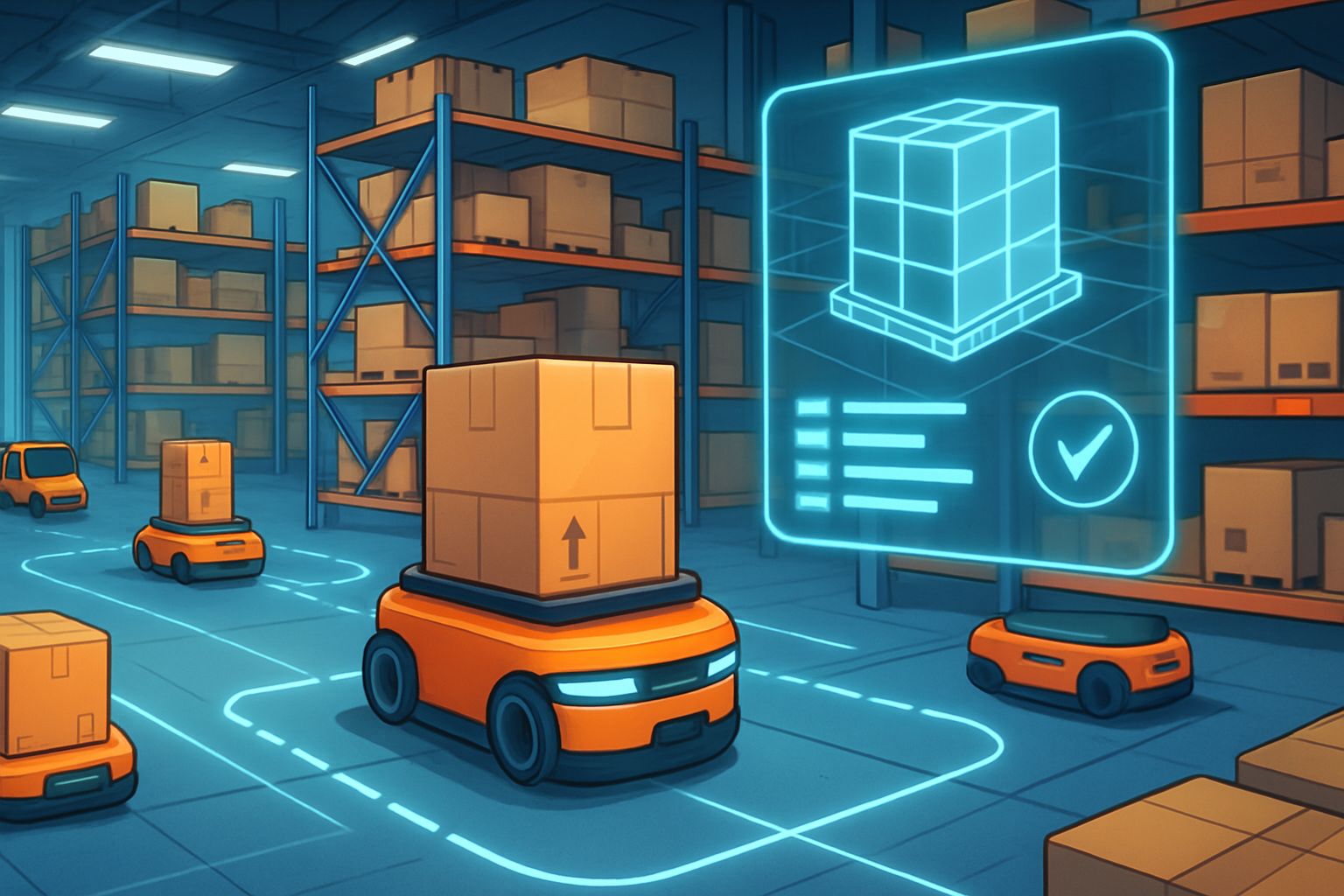
Industry voices reinforce the urgency. AWS CEO Adam Selipsky claims the service “surfaces the best actionable insights.” Analysts agree, yet they caution about cost and change management. These market pressures explain robust interest in AWS Supply Chain Data Lake, especially among firms juggling complex logistics networks.
The numbers underline momentum. However, escalating expectations also raise scrutiny regarding maturity and ROI. These dynamics set the stage for deeper technical exploration.
Building the Data Lake
Implementation begins with data onboarding. Customers connect SAP OData feeds, upload CSV or X12 EDI 850 files, or call ingestion APIs. Generative mapping then aligns fields to the canonical data model. Consequently, manual data integration effort drops significantly. Supported entities cover products, inventory, vendors, and bills of material.
Quality checks run automatically. Additionally, downloadable reports highlight mapping errors for remediation. Lineage metadata tracks source provenance, satisfying governance teams. Data remains in the customer account, secured by IAM policies. Therefore, security controls mirror existing enterprise standards.
These foundations enable unified analytics. In contrast, traditional projects often require bespoke ETL and months of schema wrangling. The streamlined approach frees staff to focus on higher-value forecasting tasks. Such efficiency transitions smoothly to the next innovation layer.
GenAI Transforms Decision Making
Announced in October 2024, Amazon Q embeds a conversational assistant directly within dashboards. Users ask natural-language questions like “Show inventory risk for Q3 smartphones.” The model queries the Supply Chain Data Lake and visualizes trade-offs instantly. Moreover, embedded QuickSight offers self-service charts on the same datasets.
Practitioners report faster scenario planning. For example, planners can test lead-time shocks and receive alternative sourcing recommendations. Furthermore, Amazon Q respects user permissions, ensuring sensitive logistics data remains protected. These features illustrate why Supply Chain AI adoption is accelerating in daily operations.
Nevertheless, experts warn about hallucinations in complex what-if queries. AWS publishes guardrails, yet teams should validate outputs before execution. The assistant’s speed is compelling, but disciplined governance preserves reliability. This balance leads directly into integration and security considerations.
Integration Security Governance Essentials
Enterprises seldom rip and replace core systems. Instead, they extend capability through managed services. AWS exposes CreateDataLakeDataset and related APIs to automate dataset creation. Consequently, DevOps teams embed ingestion jobs into existing pipelines.
Access control leverages IAM roles, while encryption defaults to SSE-S3. Data quality dashboards surface within the web console and export to S3 for audit trails. Additionally, sustainability and N-tier visibility modules read the same lake, avoiding duplicate data integration.
Governance officers appreciate clear lineage views introduced in 2025 updates. However, they still recommend master-data cleanup upstream. These practices mitigate downstream surprises and support reliable forecasting outputs. Robust governance paves the way to evaluate economic impacts.
Pricing And ROI Metrics
Cost models stay PAYG. The data-lake instance runs $0.28 per hour for the first 10 GB, then $0.25 per extra GB monthly. Demand and Supply Planning carry per-SKU-location charges. Furthermore, AWS offers a 30-day trial supporting limited logistics scenarios.
Early customers cite quick wins: 5–10% inventory reduction, improved forecast accuracy, and shorter planner cycle times. Nevertheless, companies with millions of SKUs should model location granularity carefully. AWS provides a pricing calculator to avoid bill shocks.
Professionals seeking credentials can validate skills through the AI+ Data Robotics™ certification. This external proof enhances credibility when justifying ROI internally. Clear economics guide competitive comparisons.
Competitive Landscape Rapidly Shifting
Legacy leaders like SAP, Oracle, and Blue Yonder are adding their own generative tools. However, AWS differentiates by storing customer data in their own accounts, reducing lock-in. Accenture, HERE Technologies, and FarEye already hold AWS Supply Chain competencies, supplying domain extensions.
Independent analysts foresee coopetition tensions. Partners welcome improved data integration, yet some fear AWS climbing higher on the application stack. Consequently, clients must weigh ecosystem breadth against vendor overlap.
This shifting landscape emphasizes the need for open architectures. Therefore, organizations should prioritize platforms that expose robust APIs and avoid proprietary schemas. Competitive agility supports future-proof planning, which brings us toward likely next steps.
Future Outlook And Actions
Roadmaps indicate continuous expansion. 2025 documentation shows deeper Supply Planning logic and expanded chain lineage. Moreover, embedded analytics now ships in additional regions, broadening global logistics support.
Looking forward, AWS will likely tie Bedrock services tightly into scenario simulations. Consequently, Supply Chain AI could automate corrective actions rather than only highlight issues. Enterprises preparing today should:
- Benchmark current forecasting accuracy and inventory turns.
- Pilot the 30-day trial with a focused SKU subset.
- Assess data integration readiness and cleanse critical master data.
- Certify staff through recognized programs such as AI+ Data Robotics™.
These steps establish a measurable baseline. Subsequently, teams can scale confident that data, cost, and talent gaps are addressed.
The future remains dynamic. Nevertheless, disciplined preparation positions firms to capitalize on coming automation waves.
Supply Chain AI has matured from buzzword to operational advantage. AWS combines canonical modeling, fast data integration, and GenAI interfaces to cut latency in logistics decisions. Embedded security and transparent pricing further strengthen the case. However, leaders must maintain rigorous governance and cost modeling. Ultimately, proactive certification and phased rollouts will ensure sustainable success.
Conclusion
Companies face relentless volatility, yet modern tools offer relief. AWS Supply Chain AI links unified data, embedded analytics, and conversational planning in one managed stack. Moreover, pay-as-you-go pricing and open APIs accelerate adoption while preserving control. Independent experts still urge diligence around data quality, governance, and total cost.
Nevertheless, early results show tangible gains in forecasting accuracy, logistics agility, and inventory efficiency. Professionals should explore targeted pilots, pursue the AI+ Data Robotics™ certification, and prepare organizational change programs. Taking these steps today will secure a resilient, insight-driven supply chain for tomorrow.


