

AI CERTs
2 months ago
Autonomous Workplace Assistants Reshape Task Coordination
Manual task coordination drains precious hours inside every large enterprise. Consequently, executives now search for scalable cures. Amid tightening budgets, one technology dominates boardroom conversations. Autonomous Workplace Assistants promise end-to-end orchestration without constant human nudges. Furthermore, analysts link these agents to sharp jumps in operational velocity. The following report examines market momentum, vendor moves, adoption data, and governance tactics. It draws on Gartner, PwC, and multiple platform announcements through January 2026. Readers will gain actionable insights for evaluating and deploying this emerging capability safely. Moreover, the article highlights certification paths for teams preparing for autonomous support roles.
Enterprise Momentum Accelerates Rapidly
Spending on AI systems has exploded during 2024 and 2025. Meanwhile, MarketsandMarkets pegs the overall AI market at USD 371.7 billion for 2025. They forecast USD 2.4 trillion by 2032, a 30.6% compound annual growth rate. Much of that surge flows toward agentic capabilities embedded inside productivity suites. In contrast, older robotic-process tools capture shrinking mindshare. Industry conversations now circle around Autonomous Workplace Assistants that plan and act across applications. Consultants label the shift a generational move from macros to reasoning engines. Growth indicators underscore an irreversible trajectory toward autonomy. However, vendor differentiation and risk concerns shape the next stage. Consequently, examining recent platform launches clarifies competitive dynamics.
Major Platform Launches Overview
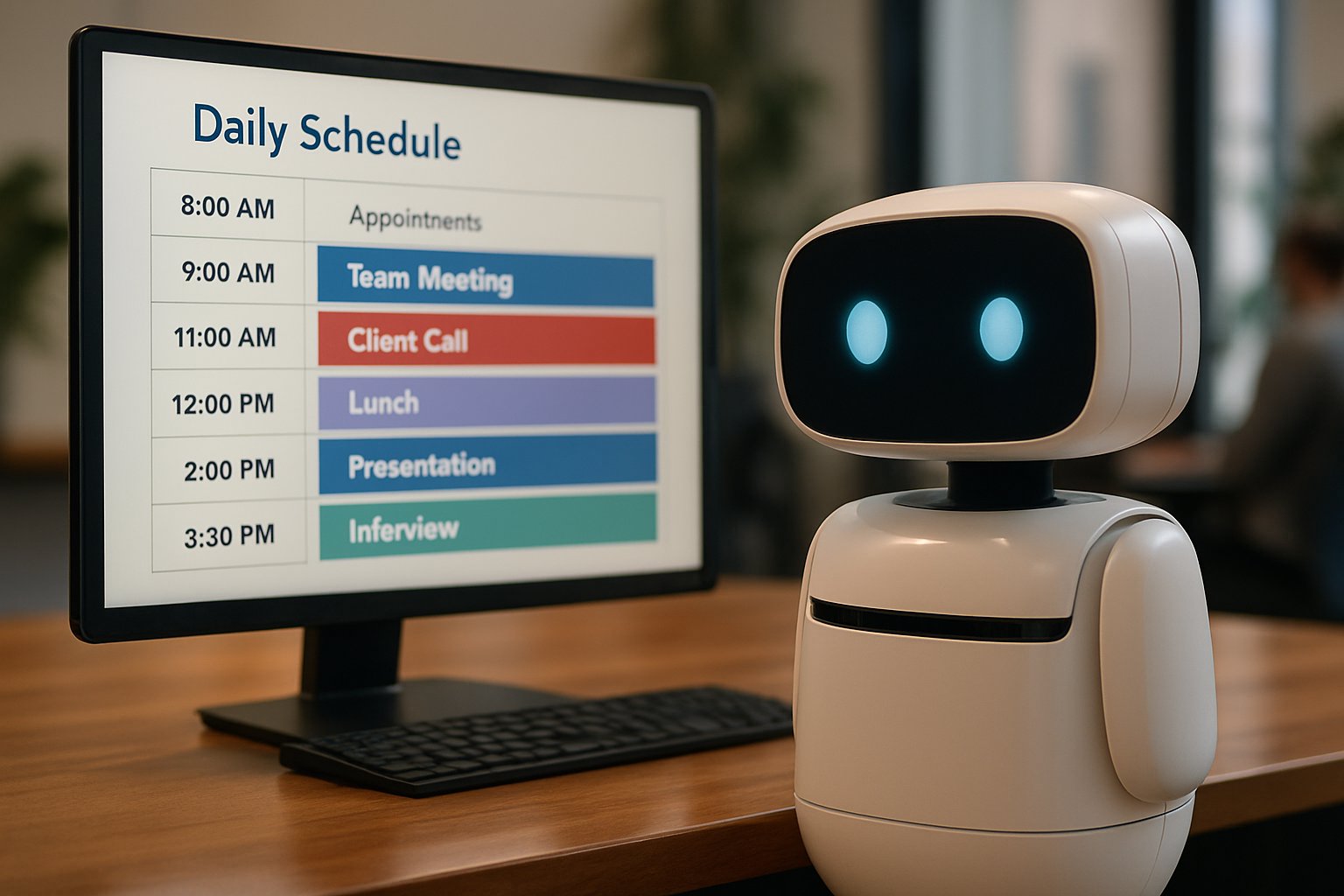
Microsoft, Google, OpenAI, Salesforce, and Zapier each shipped agent stacks within eighteen months. For instance, Microsoft Copilot Studio lets builders assemble multi-agent flows inside the familiar 365 canvas. OpenAI’s Operator and AgentKit extend similar power to developers targeting browser actions and deep research. Additionally, Google’s Workspace Studio pairs Gemini models with workflow blueprints for coding, scheduling, and file governance. Zapier Agents focus on cross-SaaS orchestration, while Salesforce Agentforce integrates natively with CRM objects. Moreover, open-source communities replicate many features through frameworks such as LangGraph and CrewAI. These moves push Autonomous Workplace Assistants deeper into daily collaboration channels. However, real adoption depends on measurable outcomes and trust signals. Platform breadth shows rapid innovation, yet numbers reveal tempered confidence. Therefore, adoption data offers critical perspective.
Adoption And Data Insights
Gartner surveyed 360 IT application leaders during mid-2025. Surprisingly, 75% reported pilots or deployments of some agent capability. Nevertheless, only 15% contemplated fully autonomous execution without human checkpoints. Moreover, a mere 13% felt governance structures were ready, and 74% flagged new attack vectors.
- 75% piloting or deploying agents
- 15% evaluating full autonomy
- 13% confident in governance
- 74% see increased security risk
PwC’s 2025 Jobs Barometer adds workforce nuance. Consequently, AI-exposed sectors enjoyed a 27% revenue-per-employee uplift and 56% wage premiums for advanced skills. Consultants link these gains partly to enterprise productivity AI improvements delivered by agents. Autonomous Workplace Assistants thus signal both opportunity and accountability. These numbers illustrate cautious enthusiasm tempered by risk. Subsequently, benefits and drivers deserve closer review.
Key Benefits And Drivers
Organizations implement agents for clear operational wins. For sales teams, lead qualification agents draft personalized outreach and route prospects automatically. Support groups use agents to triage tickets and suggest knowledge replies, lifting first-contact resolution. Furthermore, IT operations agents provision accounts, enforce policy, and trigger task automation across procurement systems.
- Cycle times drop by up to 60% in pilot domains
- 24/7 coverage eliminates after-hours backlogs
- Cross-app integration reduces swivel-chair effort
- Research agents cut synthesis hours by 80%
McKinsey studies cite productivity boosts nearing 60% in narrowly scoped processes. Moreover, enterprise productivity AI exposes these results through dashboards tied to business metrics. Autonomous Workplace Assistants deliver these gains while freeing skilled staff for higher-value analysis. Nevertheless, benefits materialize only when designs prioritize reliability. These drivers validate investment, yet barriers remain stark. Consequently, risk analysis is essential.
Critical Barriers And Risks
Enterprises hesitate to grant agents unchecked authority. Gartner lists hallucination avoidance, security exposure, and agent sprawl as primary obstacles. Security chiefs treat agents as new privileged users demanding identity governance and monitoring. In contrast, many early pilots relied on broad API keys, inviting shadow AI incidents. Integration fragility also looms because brittle screen scraping fails whenever UIs change. Moreover, cultural resistance surfaces as staff fear job disruption despite data showing augmentation. Autonomous Workplace Assistants will stall without transparent governance and robust observability. Risks remain significant, yet manageable with structured controls. Therefore, governance best practices deserve focused attention.
Governance And Best Practices
Successful programs start with a clear inventory of every active agent. Subsequently, teams apply role-based access control and least-privilege credentials. Central logging captures prompts, tool calls, and outcomes for audit and rollback. Furthermore, approval checkpoints remain for transactions carrying legal or financial impact. Gartner urges enterprises to avoid single-vendor lock-in by standardizing governance across platforms. Moreover, security platforms such as CrowdStrike now surface agent behavior inside existing SIEM dashboards. Autonomous Workplace Assistants operating under such guardrails achieve higher trust and wider scale. Enterprise productivity AI metrics should track cycle time, error rates, and user satisfaction continuously. Consequently, organizations can tune models and workflows based on concrete evidence. Professionals can deepen governance skills with the AI Customer Service™ certification. These practices transform caution into confidence. Meanwhile, leaders still need a strategic roadmap.
Strategic Next Steps Forward
Executives should target narrow, high-value journeys first. For example, start with procurement approvals or simple ticket triage using task automation agents. Pilot results must compare baseline metrics against autonomous outcomes. Moreover, involve legal and compliance early to align agent authority with policy. Once reliability exceeds agreed thresholds, gradually widen scope or add additional Autonomous Workplace Assistants. Subsequently, integrate insights into workforce planning and reskilling programs. Companies offering enterprise productivity AI dashboards simplify this measurement loop. Autonomous Workplace Assistants then pivot from novelty to indispensable digital coworkers. A phased roadmap preserves control while accelerating ROI. Consequently, the conclusion distills final guidance.
Ultimately, the agent revolution is entering its pragmatic phase. Enterprises that balance ambition with rigorous governance will capture outsized returns. Autonomous Workplace Assistants reduce coordination drag, elevate decision quality, and unlock scalable task automation. However, unchecked rollouts risk security gaps and reputational harm. Therefore, start small, instrument heavily, and iterate toward greater autonomy. Professionals should pursue continuous learning to stay ahead of evolving agent capabilities. Furthermore, certifications provide structured pathways for that growth. Take the next step today by exploring the linked program and positioning your team for autonomous success.


