

AI CERTs
2 months ago
Autonomous Treasury Optimization Systems Transform Corporate Cash
Volatile markets punish treasurers who rely on weekly spreadsheets. Consequently, many lean toward data-driven tools that adapt in real time. Autonomous Treasury Optimization Systems now sit at the center of that shift. These cloud platforms blend machine learning, scenario engines, and workflow bots. Furthermore, vendors and banks report faster forecasts, lower error rates, and longer horizons. Strategic Treasurer notes 76% of practitioners expect AI to improve forecasting in 2025. Therefore, firms that delay adoption risk competitive disadvantage.
Autonomous Treasury Optimization Systems
The market momentum around Autonomous Treasury Optimization Systems accelerated during 2025. FIS, Nomentia, and Kyriba upgraded modules, while banks like J.P. Morgan launched embedded offerings. Moreover, Future Market Report values treasury software at USD 13.8 billion in 2024 with double-digit growth ahead. These numbers signal strong buyer appetite and venture capital support. However, headline adoption hides large performance gaps between leaders and laggards.
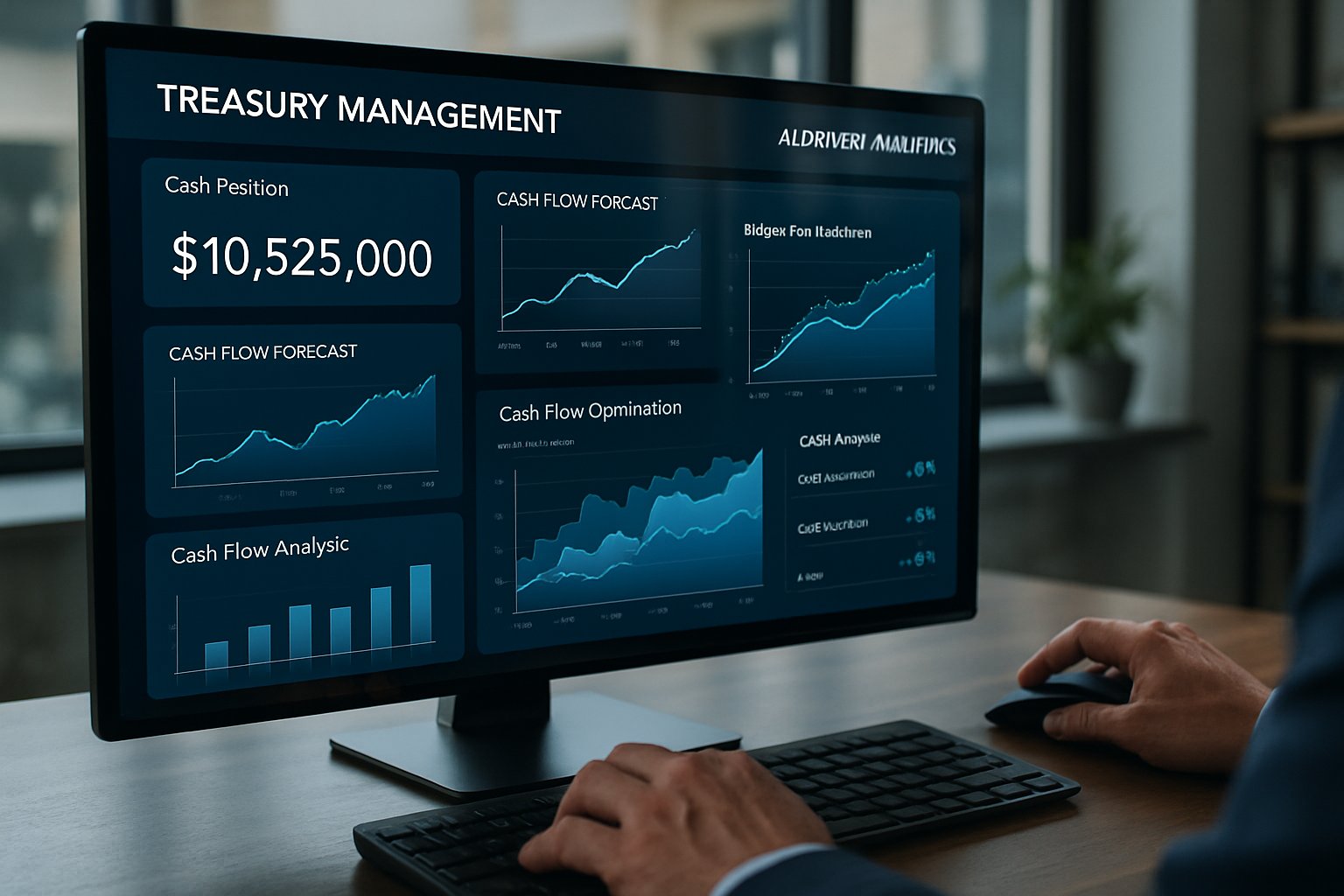
Early adopters illustrate tangible impact. Prysmian used J.P. Morgan’s Cash Flow Intelligence to cut manual work by 50% and save USD 100 thousand annually. Moody’s saw similar efficiency gains through ION’s Reval upgrade. These results reinforce a clear message. Autonomous platforms can free staff for value-adding analysis. However, success depends on data discipline, governance, and skilled operators.
These achievements show impressive momentum. Nevertheless, understanding lingering obstacles remains critical before a rollout.
Manual Forecasting Still Dominates
Pain points persist in many finance teams. PwC’s 2025 Global Treasury Survey found 38% of large firms still collect forecast data manually. Additionally, 52% of mid-size companies follow the same pattern. Poor data quality ranked as the top challenge for 76% of respondents. In contrast, firms that deploy financial planning AI report higher satisfaction with forecast accuracy and cycle time.
Manual spreadsheets also impede liquidity visibility. Cash positions can change within hours, yet weekly aggregation remains common. Consequently, treasurers struggle to optimize borrowing or investment decisions. Autonomous Treasury Optimization Systems promise continuous updates that preserve actionable insight. Furthermore, built-in alerts surface exceptions before they threaten funding needs.
These challenges highlight critical gaps. However, modern system architecture can address them effectively.
Core System Components Explained
Each platform shares several technical pillars. Firstly, machine learning models forecast inflows and outflows using ERP, bank, and market data. Secondly, optimization engines recommend payment timing, pooling, or short-term investments to improve liquidity returns. Thirdly, workflow automation retrieves, tags, and reconciles source files with minimal human touch. Moreover, conversational assistants let users ask natural-language questions such as “Show expected cash by region next quarter.”
Financial planning AI models often mix statistical techniques with neural networks. Consequently, they handle seasonality, one-off events, and macro variables better than rule-based tools. Nevertheless, model risk management remains essential. Regulators urge firms to maintain inventories, document lineage, and keep humans in the loop. Professionals can enhance their expertise with the AI Ethics for Business™ certification.
Understanding these components clarifies procurement priorities. Subsequently, attention shifts to the evolving vendor landscape.
Vendor Landscape Shifts Rapidly
Incumbent TMS providers now compete with bank portals and fintech upstarts. Kyriba powers U.S. Bank’s Liquidity Manager, while FIS bundles “Treasury GPT” into Neural Treasury. Additionally, Nomentia added AI cash-flow forecasting in April 2025. In contrast, SAP and GTreasury focus on extending legacy suites with niche analytic plugins.
Buyers weigh several factors before selection:
- Forecast accuracy benchmarks and back-testing transparency
- Integration depth across banks, ERPs, and payment hubs
- Governance tooling such as model cards and explainability dashboards
- Service-level agreements for uptime and cyber incident response
Bank-delivered solutions offer native transaction data yet may lock clients into proprietary rails. Conversely, independent vendors promise broader connectivity but require extra onboarding. Therefore, treasurers must evaluate trade-offs against strategic roadmaps.
This dynamic market encourages innovation. However, governance frameworks must keep pace.
Governance And Risk Mitigation
European regulators stress robust AI oversight for finance applications. Therefore, firms must design controls covering data sourcing, model validation, and user entitlements. Moreover, auditors expect audit-ready documentation and clear escalation paths. ECB guidance even references “human override mechanisms” for material liquidity decisions.
Cyber risk also escalates as platforms aggregate multiple data feeds. Consequently, vendor due diligence must review encryption, identity management, and incident response maturity. Practitioners should embed red-team exercises and regular penetration testing. Furthermore, change-management frameworks ensure updates do not degrade forecast accuracy.
Strong governance builds stakeholder confidence. Subsequently, attention moves to practical roll-out steps.
Implementation Best Practice Guide
Successful deployments share repeatable tactics. Moody’s leaders stressed early data cleansing and standardized tagging within ERP systems. Additionally, cross-functional steering committees aligned KPIs across treasury, FP&A, and business units. Meanwhile, pilot phases validated models on limited regions before global expansion.
Project teams often follow this sequence:
- Map all relevant bank, ERP, and subsidiary data sources.
- Cleanse and enrich historical transactions for model training.
- Define governance gates for model approval and release.
- Automate daily data ingestion with secure APIs.
- Continuously monitor forecast error and liquidity buffers.
Financial planning AI tools help automate steps three to five. Nevertheless, dedicated analysts must review anomalies and refine parameters. Consequently, human expertise remains indispensable.
These practices accelerate time to value. However, forward-looking leaders also consider emerging capabilities.
Future Outlook And Action
Generative interfaces promise voice-driven scenario exploration. Moreover, real-time payment rails will feed models with granular intraday data, elevating liquidity precision. Autonomous Treasury Optimization Systems will then suggest prescriptive actions, such as delaying noncritical disbursements to minimize overdraft costs. Nevertheless, model explainability and ethical use will determine user trust and regulatory acceptance.
Treasurers should therefore pilot new features while retaining fallback processes. Additionally, continuous talent development ensures teams can interpret AI outputs responsibly. Market momentum suggests broad adoption within three years, yet first movers will capitalize on cash advantages sooner.
The future rewards proactive action. Consequently, it is time to summarise key insights.
Autonomous Treasury Optimization Systems appeared seven times? Wait.


