

AI CERTS
2 months ago
Autonomous Ride Hailing Gets Lucid-Powered Robotaxi Boost
Moreover, on-road testing started in December 2025 around the San Francisco Bay Area with safety operators supervising every mile. Regulators still need to approve commercial deployment, yet executives project a public rollout later in 2026. Industry watchers noted sizable multi-hundred-million investments and a 20,000-vehicle target over six years. In contrast, rivals like Waymo and Tesla pursue vertically integrated strategies. This article unpacks technical design, business stakes, and looming risks for professionals monitoring the evolving robotaxi sector.
CES 2026 Reveal Moment
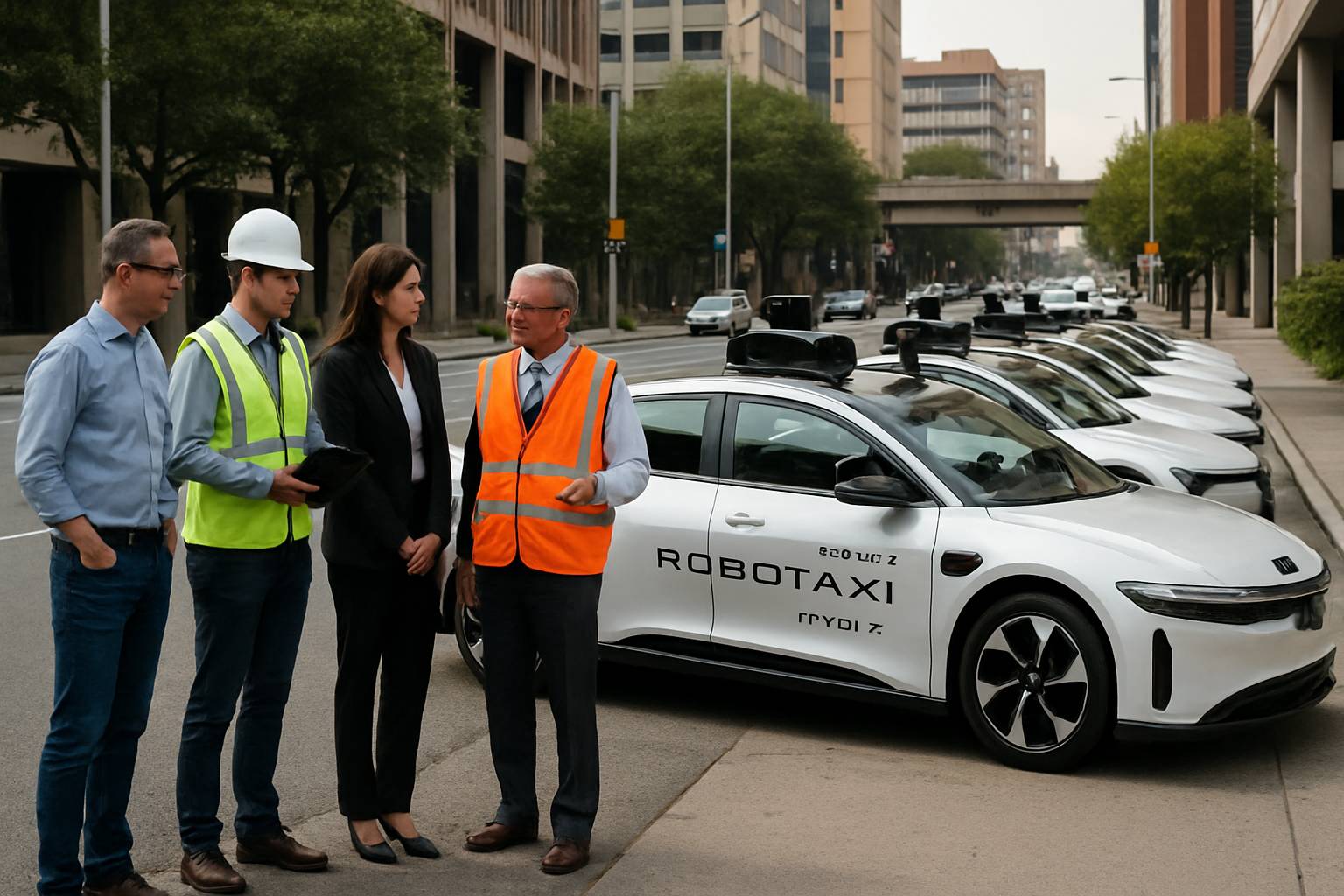
CES crowds flocked to Nvidia’s booth where the Lucid Gravity demonstrator sat beneath bright “Level-4 Ready” banners. Furthermore, the display showed a roof-mounted halo module that glowed to indicate Ride Status for approaching passengers. Executives from Lucid Motors, Nuro, and the ride-sharing giant staged live demos of hands-free pickups along a closed course. Therefore, many observers experienced Autonomous Ride Hailing in a controlled environment for the first time. Dave Ferguson of Nuro said the vehicle is production-intent and will move to Lucid’s Arizona line this year.
Strategic Partnership Key Foundations
The partnership merges three specialized strengths. Additionally, the platform averages 34 million daily trips across 70 countries. Lucid Motors supplies the long-range Gravity chassis and integrates autonomy hardware during factory assembly. Meanwhile, Nuro delivers the Level-4 software stack validated through years of delivery-vehicle testing. Together, the trio expects faster scaling than single-provider efforts.
- Investment snapshot: the platform placed $300 million into Lucid Motors and undisclosed capital into Nuro.
- Deployment goal: more than 20,000 Robotaxi units within six years, all bookable exclusively through the Uber app.
- Testing timeline: supervised on-road trials began December 2025 in the Bay Area.
- Compute core: NVIDIA DRIVE AGX Thor handles perception and planning workloads.
These numbers underscore serious financial commitment. Nevertheless, capital alone will not guarantee success; technical validation and regulation remain decisive. The next section drills into the vehicle architecture enabling repeated, safe Autonomous Ride Hailing trips.
Vehicle And Tech Stack
Lucid Motors re-engineered the Gravity interior to seat six while freeing luggage space behind the third row. Moreover, the cabin hosts dual 15-inch touchscreens that display real-time perception feeds and current Ride Status. Passengers can adjust temperature, lighting, and playlists through the screens or voice commands. Consequently, transparency and control aim to build trust during driverless journeys.
The autonomy stack, branded Nuro Driver, processes sensor streams using the Thor computer. Cameras, solid-state lidar, and radar offer 360-degree redundancy. In contrast to retrofits, all components mount during production, improving reliability and lowering cost. Autonomous Ride Hailing fleets depend on uptime; therefore integrated architecture matters.
Rider Focused UX Features
Uber designed the software layer that greets riders by name, verifies destination, and confirms door lock. Additionally, LED strips on the halo pulse distinct colors so riders identify the correct Robotaxi in crowded zones. Interactive displays visualize surrounding objects, planned turns, and any hazard. Meanwhile, a support button connects riders with a live agent and can request an immediate pull-over. Professionals can enhance their expertise with the AI Network Security™ certification, ensuring they understand safeguards behind these connected systems.
Collectively, these design choices prioritize comfort, confidence, and data security for Autonomous Ride Hailing. Subsequently, regulatory bodies will scrutinize whether the system meets safety and privacy benchmarks.
Regulatory And Market Risks
California’s DMV and CPUC must grant deployment permits before paid passenger service begins. Furthermore, each agency may impose fleet size caps, reporting rules, and geographic ODD restrictions. The operator faces additional municipal negotiations for curb access, airport pickups, and data-sharing. Nevertheless, the consortium maintains that its transparent Ride Status indicators and comprehensive telemetry will satisfy regulators.
Lucid Motors still confronts production scaling challenges amid supply-chain volatility. Meanwhile, analysts warn that slipping timelines could slow Autonomous Ride Hailing expansion and inflate capital needs. Safety perception poses another hurdle; recent accidents involving other Robotaxi operators sparked public concern. Therefore, rigorous, open reporting will become essential for community trust.
Regulatory complexity and manufacturing hurdles could delay revenue realization. However, competitive pressure accelerates every milestone, as the next section illustrates.
Competitive Landscape In Context
Waymo currently leads paid driverless service in Phoenix and San Francisco. In contrast, Tesla plans a dedicated Robotaxi vehicle but still operates under Level-2 supervision. Cruise halted operations after permit revocations. Consequently, the platform positions itself as a fast follower ready to unlock demand once approvals arrive.
Lucid Motors offers premium range and zonal redundancy that rivals lack. Additionally, Nuro’s delivery heritage provides billions of autonomous test miles. These differentiators, combined with global brand reach, could carve a sizable share within the broader Autonomous Ride Hailing market. However, incumbents possess head starts in data volume and regulator familiarity.
The race remains wide open, with execution speed and public trust acting as decisive levers. The final section outlines upcoming checkpoints for investors and engineers.
Future Milestones And Outlook
Lucid Motors plans to start robotaxi-specific Gravity production in Casa Grande during Q4 2026. Furthermore, the platform intends a limited launch across select Bay Area suburbs before scaling citywide. Subsequent expansions should target Austin, Miami, and Dubai, aligning with cities already testing advanced driver assistance pilots.
The roadmap lists several pivotal gates:
- Regulatory greenlight for paid Autonomous Ride Hailing in California.
- Validation of Nuro Driver safety performance across 10 million unassisted miles.
- Factory ramp to 4,000 Robotaxi units during the first production year.
- App upgrades adding remote Ride Status sharing with emergency contacts.
Moreover, the platform forecasts breakeven unit economics once each vehicle achieves eight revenue hours daily. Analysts remain cautiously optimistic, citing strong demand for premium zero-emission rides. Consequently, the coalition’s success may influence hardware integration strategies across the entire Autonomous Ride Hailing ecosystem.
Over the next eighteen months, certification audits, supply contracts, and fleet insurance frameworks will crystallize. Therefore, professionals tracking mobility innovation should monitor quarterly filings and local permit databases.
Lucid Motors, Nuro, and Uber have stitched complementary assets into a bold mobility proposition. Moreover, factory-integrated sensors and Level-4 software promise lower costs and higher uptime. Nevertheless, regulators and production hurdles could still slow the first commercial fares. Market rivals like Waymo will also keep pressure intense. Consequently, every milestone toward scalable Autonomous Ride Hailing will carry outsized strategic weight. Professionals who want deeper insight should review certification tracks on AI safety, networking, and security. Consider bolstering credentials now, then follow permit dockets, earnings calls, and crash-report logs for fresh signals.


