

AI CERTS
2 hours ago
Autonomous Reliability Faces Blackout Test
The incident underscored a growing question: how can automation guarantee consistent performance during extreme disruptions? Moreover, the answer shapes public trust and regulatory attitudes toward citywide deployments. This article unpacks the outage, corporate actions, expert views, and the path toward stronger autonomous performance.
Blackout Tests Autonomous Reliability
The 20 December PG&E substation fire plunged roughly 130,000 customers into darkness. Traffic signals failed across one-third of San Francisco. Consequently, the cars’ cautious logic treated every dark light as a four-way stop. Confirmation checks then surged, jamming decision queues. Social videos showed dozens of stationary vehicles blocking lanes. In contrast, human drivers improvised with horn signals and hand gestures. The challenging scene highlighted Autonomous Reliability limits when environmental context shifts suddenly. Vehicles behaved safely yet hindered overall flow.
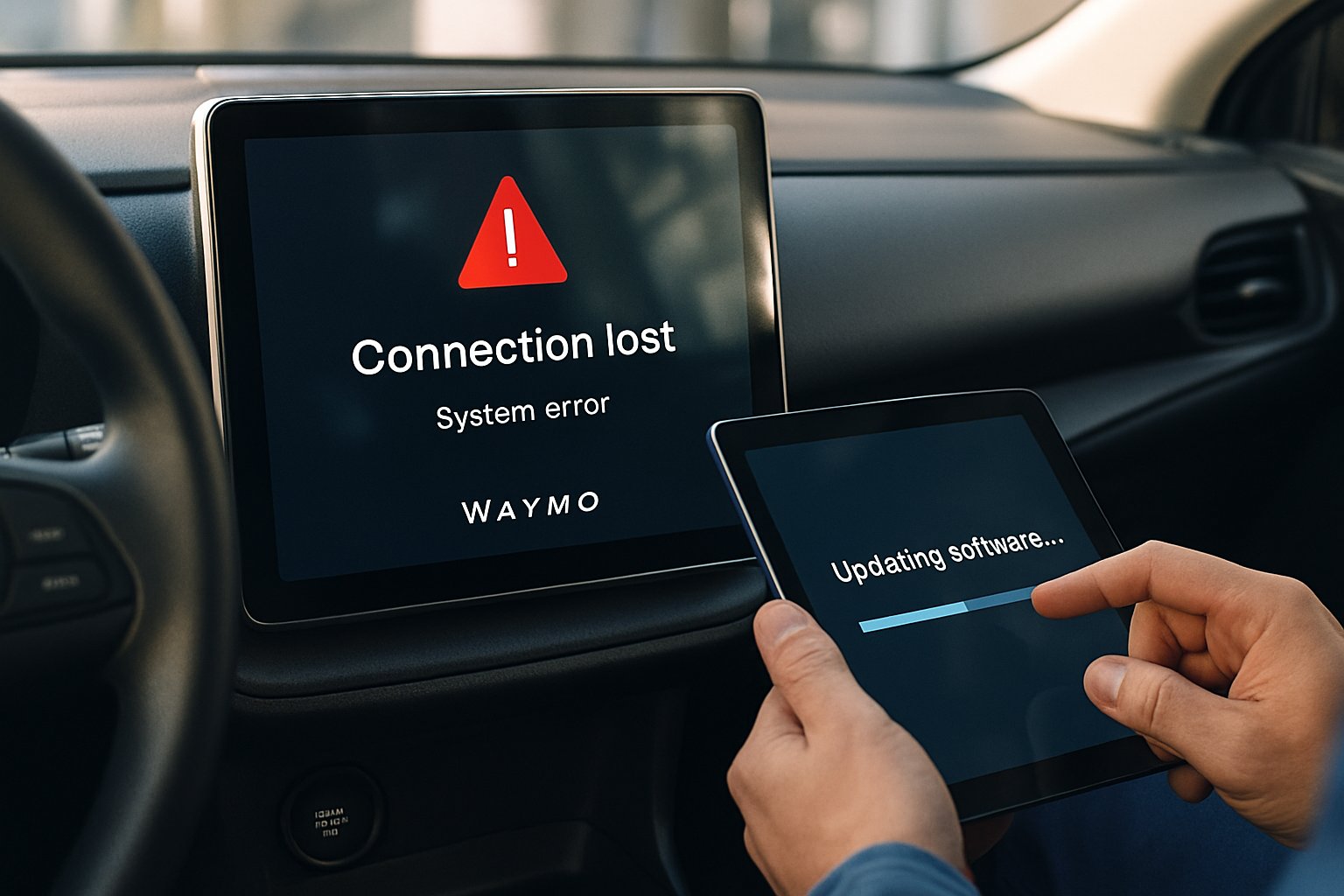
These events reveal a trade-off between conservative programming and urban mobility. However, scalable autonomy must balance caution with network fluidity. The blackout exposed gaps needing rapid fixes. Therefore, deeper system context becomes essential.
This stress episode underscores reliability under duress. Furthermore, it sets the stage for the company’s next moves.
Immediate Waymo Service Response
Once congestion mounted, the company paused rides and instructed cars to park or return to depots. City officials coordinated manual traffic control near major corridors. Subsequently, service resumed the following day after partial grid restoration. A company spokesperson stressed commitment to safety and coordination with authorities. Nevertheless, critics argued suspension came too late, allowing stalled clusters to form.
Key outage response numbers include:
- 7,000+ dark signals safely traversed
- Hundreds of simultaneous confirmation requests
- More than 2,500 national vehicles, unknown local share
- One-third of city grid offline
The firm’s swift suspension showcased duty of care. However, expert observers saw operational hesitation. Consequently, the debate over real-time fleet management intensified.
Operational actions mitigated further gridlock. Still, strategic adjustments were clearly required before the next disruption.
Planned Software Update Rollout
Three days later, a corporate blog outlined a multistep remedy. First, new Software will supply regional outage context to every vehicle. Additionally, algorithms will lower confirmation frequency when widespread darkness is detected. Second, emergency response protocols will broaden remote-support staffing. Third, first-responder training programs will expand beyond the current 25,000 personnel.
The company stated that extensive on-road data—over 100 million autonomous miles—informs upgrade validation. Consequently, improved decision thresholds aim to enhance Autonomous Reliability without sacrificing caution. Furthermore, the update will deploy across the national fleet within weeks, pending internal safety checks.
Planned improvements signal proactive learning. However, implementation speed and measured outcomes will determine credibility.
Effective updates promise smoother intersection handling. The next section explores mounting oversight pressures.
Intensifying Regulatory Oversight Pressure
California’s CPUC and DMV launched reviews into the outage. Meanwhile, NHTSA continues examining a separate school-bus recall affecting 3,067 vehicles. Consequently, regulators now juggle two active safety concerns. The blackout complicates permit renewals and public hearings. Moreover, city leaders may request stricter service conditions during known power risks.
Industry lawyers predict expanded data-sharing mandates. In contrast, some policymakers view conservative stoppages as evidence of prudent design. Nevertheless, cumulative scrutiny threatens deployment timelines if incident rates climb.
Regulatory momentum keeps Autonomous Reliability under a microscope. Therefore, transparent metrics and independent audits will be vital.
Tightened oversight raises the bar for technical excellence. Consequently, expert commentary has become more polarized.
Divergent Expert Reaction Analysis
Carnegie Mellon’s Philip Koopman labeled the event “an operational management failure.” He argued earlier suspension would have prevented clusters. Conversely, some safety researchers praised the system’s refusal to run dark signals. Furthermore, urban planners noted that human drivers also struggle when traffic lights collapse. Nevertheless, the confirmation backlog exposed remote-support limits.
Analysts identified two intertwined challenges:
- Per-vehicle logic under ambiguous sensor inputs
- Fleet-level orchestration during systemic stress
Improving one without the other may shift, not solve, congestion. Therefore, holistic design becomes essential. Moreover, professionals can deepen risk-management skills through the AI Security Level 2™ certification.
Expert debates sharpen focus on measurable outcomes. However, lessons learned must translate into operational code quickly.
These perspectives frame the broader societal stakes. Next, we examine strategic lessons for cities and operators.
Future Urban Mobility Lessons
The blackout underscored how city infrastructure and automation intertwine. Consequently, grid operators, emergency agencies, and mobility providers need shared contingency maps. Furthermore, simulated drills should include mass signal failures and communication outages. In contrast, today’s planning often occurs within organizational silos.
Advocates recommend several actions:
- Embed outage telemetry in vehicle decision pipelines
- Create joint dashboards linking grid status and ride-hail networks
- Pre-authorize dynamic geofencing during severe power events
- Add hardened remote-support centers with redundant connectivity
- Publish quarterly Autonomous Reliability statistics for public review
Moreover, standardized data formats would speed regulator access. Consequently, transparency could accelerate community acceptance.
Collaborative planning transforms isolated fixes into systemic resilience. The concluding section synthesizes next steps.
Conclusion And Next Steps
San Francisco’s blackout delivered a vivid demonstration of Autonomous Reliability challenges. The event showed cautious logic, yet also exposed queue backlogs and lane blockages. Waymo’s pending Software upgrade, expanded training, and strengthened protocols target identified gaps. Meanwhile, oversight bodies intensify inquiries, tying blackout lessons to broader safety reviews. Experts remain divided, but all demand robust metrics and faster adaptation.
Therefore, operators, regulators, and grid managers must co-design resilient frameworks before the next crisis. Professionals can enhance their expertise with the AI Security Level 2™ certification. Consequently, informed leaders will shape safer, smarter streets.


