

AI CERTs
2 hours ago
Autonomous Meeting Intelligence Platforms Reshape Enterprise Work
Few workplace rituals waste more collective time than marathon status meetings. However, manual note-taking still consumes attention even during shorter sessions. Consequently, leaders are rushing toward Autonomous Meeting Intelligence Platforms.
These agentic tools, powered by collaboration AI, record, summarise, and trigger follow-up tasks with minimal effort. Moreover, they now speak during meetings, update CRMs, and even run sales demos. In contrast, privacy lawyers warn that constant recording creates thorny legal obligations.
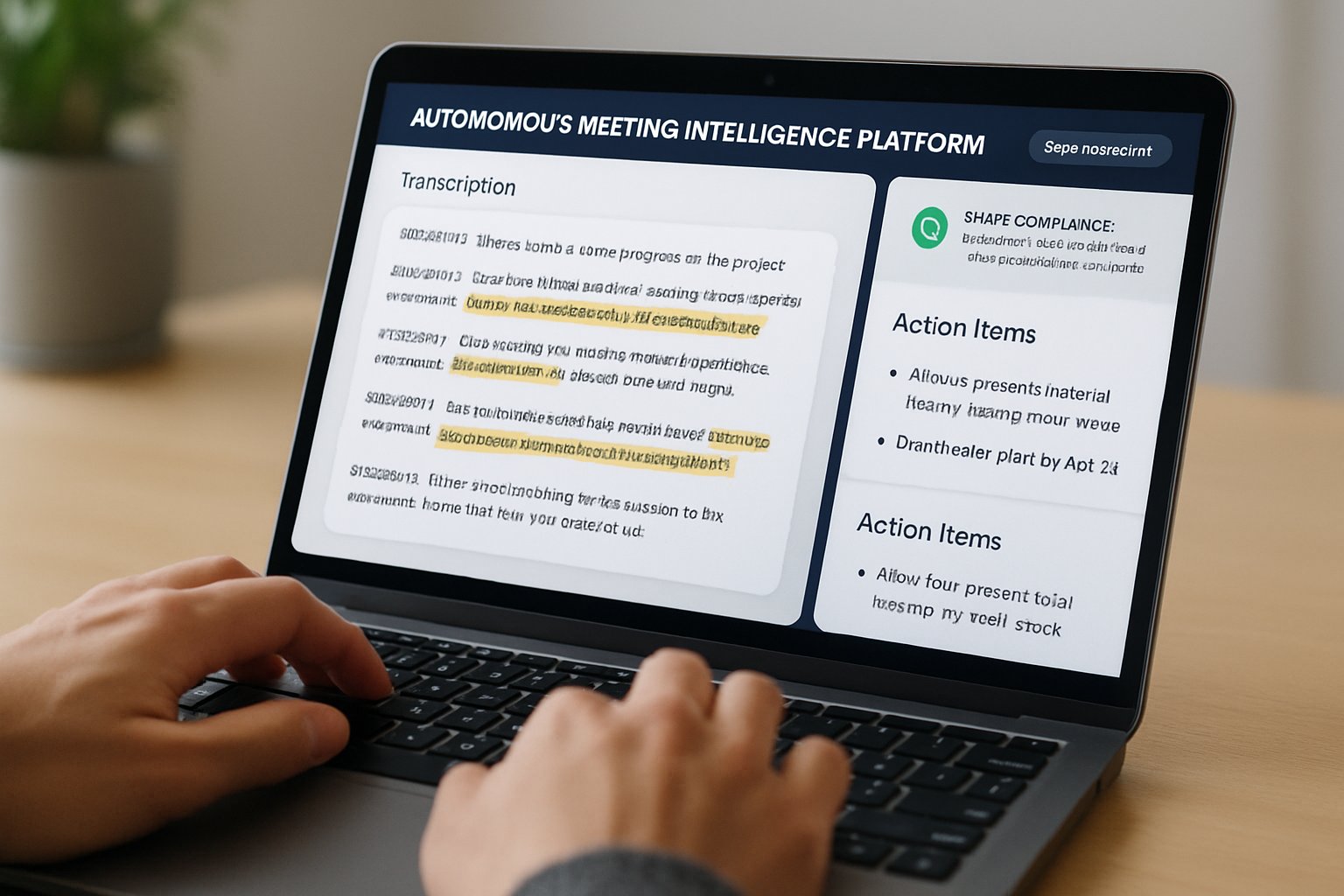
This article unpacks the market surge, technical gains, benefits, and emerging compliance frameworks. Readers will leave with practical insights and certification resources for next-step expertise.
Rapid Market Momentum Builds
Market analysts now track double-digit compound growth across meeting assistant categories. Market.us expects revenue to jump from USD 2.68 billion in 2024 to 24.6 billion by 2034 for these productivity tools. Moreover, The Business Research Company cites similar momentum through 2029. Vendor performance mirrors these forecasts.
Otter.ai disclosed 25 million users and USD 100 million ARR during March 2025. Board briefings increasingly reference Autonomous Meeting Intelligence Platforms as a strategic budget line. The numbers confirm surging demand rather than hype. Consequently, competitive pressures intensify, leading to rapid feature releases.
User Adoption Data Highlights
Software Finder surveyed 1,000 employees in October 2025. Furthermore, 19% reported frequent AI note-taking usage, while 29% skipped meetings entirely. Participants citing heavy usage enjoyed promotion rates of 28% versus 15% for nonusers.
Nevertheless, 41% admitted missing important context after relying solely on summaries. These mixed signals illustrate both enthusiasm and caution among frontline staff. Overall, adoption statistics underscore tangible impact on careers yet reveal perception gaps. Therefore, platforms are expanding capabilities to offset perceived shortcomings.
Agent Features Expand Fast
The early era focused on transcription and static summaries. Subsequently, major vendors layered conversational intelligence and workflow integrations, positioning the suites as indispensable productivity tools. Otter.ai’s new Sales Agent can answer live questions, log CRM entries, and schedule follow-ups autonomously.
Meanwhile, Microsoft Teams Copilot identifies disagreements, assigns tasks, and offers audio recaps during calls. Google Meet now embeds Gemini to draft notes and sharable summaries. Such leaps shift Autonomous Meeting Intelligence Platforms from passive recorders to active collaborators. Functionality breadth pushes Autonomous Meeting Intelligence Platforms deeper into daily operations. Next, we examine why users find these advancements irresistible.
From Notes To Actions
Action-oriented design distinguishes the latest generation. Consequently, agents listen for commitments and immediately generate tasks in Asana, Jira, or Salesforce. They email absent stakeholders, populate knowledge bases, and even launch slide decks for forthcoming reviews.
Therefore, the manual follow-up burden shrinks dramatically, driving measurable productivity gains. Still, benefits extend beyond pure efficiency, as the next section reveals.
Key Benefits Drive Adoption
Surveys and case studies showcase clear upside for teams embracing Autonomous Meeting Intelligence Platforms. Additionally, users reclaim between 60 and 90 minutes weekly once transcription and summarisation run automatically. Better searchable archives reduce decision disputes and speed onboarding for new hires. Moreover, CRM synchronisation closes sales loops faster, boosting revenue visibility.
- Reduced administrative workload during and after meetings
- Improved action-item accountability through automatic task assignment
- Higher meeting engagement because participants no longer type notes
- Immediate shareable insights for absent colleagues and executives
- Centralised, searchable knowledge base supporting faster audits
Collectively, these advantages frame the technology as essential productivity tools. Consequently, boards often include deployment metrics in quarterly efficiency reports. However, tangible gains coexist with material risks. Stakeholders view Autonomous Meeting Intelligence Platforms as foundational collaboration AI enablers.
Risks Prompt Closer Scrutiny
Accuracy Remains Core Challenge
Accuracy remains an unresolved challenge despite impressive language models. Software Finder found 48% citing missing nuance or misquotes in AI summaries. In contrast, the Washington Post highlighted cultural fatigue when bots attend in place of humans.
Furthermore, some users over-trust generated action items, introducing operational errors. Privacy also tops enterprise concerns. Eleven U.S. states require all-party consent for recordings, complicating unannounced bot participation.
Therefore, legal teams mandate signage, verbal disclosure, or transcript redaction depending on jurisdiction. These obstacles underscore the need for robust governance frameworks. The next section outlines practical compliance steps and certifications. Regulatory clarity will determine how Autonomous Meeting Intelligence Platforms scale responsibly.
Governance And Compliance Essentials
Robust policies mitigate many liabilities linked to Autonomous Meeting Intelligence Platforms. Firstly, enterprises map consent laws across operational states using Justia or similar references. Secondly, administrators enforce recording banners and explicit opt-in prompts within collaboration AI environments.
Thirdly, data residency rules guide selection of vendors offering in-region processing and encryption. Moreover, companies demand SOC 2, HIPAA, and Data Privacy Framework attestations before enterprise rollout.
Consent Laws Vary Widely
United States consent statutes differ by state, requiring granular policy design. Consequently, legal counsel often drafts templated disclaimers for meeting invites and recordings. Professionals can deepen expertise through the AI Legal™ certification.
The program covers consent law, data governance, and risk mitigation for meeting automation. Effective compliance unlocks confident scaling of meeting automation. Next, we assess the strategic outlook.
Strategic Future Outlook Summary
Analysts anticipate further convergence between Autonomous Meeting Intelligence Platforms and broader collaboration AI stacks. Future agents will manage calendar negotiations, draft project briefs, and generate customer follow-ups without supervision.
Meanwhile, interoperability standards such as OpenAI function-calling APIs simplify integrations with legacy productivity tools. Nevertheless, human oversight will remain essential for high-stakes negotiations and sensitive leadership discussions.
The trajectory suggests coexistence, not replacement, of human collaboration. Therefore, leaders should pilot deliberately while upskilling staff on governance fundamentals.
Conclusion And Next Steps
Autonomous Meeting Intelligence Platforms will not kill meetings, yet they will redefine their purpose. Consequently, time once wasted on documentation shifts toward decision making and relationship building. Moreover, collaboration AI will continue weaving transcripts, tasks, and knowledge articles into unified workspaces.
Nevertheless, success demands rigorous consent policies, regular accuracy audits, and workforce upskilling. Leaders should explore reputable productivity tools and governance credentials before enterprise rollout. Therefore, start with a focused pilot team. Follow up by pursuing the AI Legal™ certification for structured compliance guidance. With informed governance, businesses can unlock faster growth and smarter collaboration.


