

AI CERTs
2 hours ago
Autonomous Fraud Pattern Discovery Systems Counter Emerging Scams
Global fraud losses keep climbing despite steady report volumes. Consequently, risk teams confront attackers who automate, iterate, and migrate attacks faster than defenses adapt. Generative AI now forges documents, voices, and chat personas with unsettling ease. Meanwhile, multi-step operations stitch identity theft, account takeover, and money laundering across channels. Static, rule-based engines miss these fast-evolving signals. Therefore, enterprises explore autonomous fraud pattern discovery systems that learn continuously from live data. These architectures promise earlier alerts, lower manual workload, and stronger regulatory alignment. However, autonomous adaptation introduces new challenges around explainability, privacy, and adversarial robustness. This article examines the shifting threat landscape, technical foundations, and operational realities behind the movement. It provides actionable insights for data, risk, and product leaders planning next-generation defenses. Ultimately, informed decisions will separate resilient institutions from expensive headlines.
Fraud Landscape Shifts Rapidly
2024 saw U.S. consumers lose a record $12.5 billion, a 25 percent leap, per FTC data. Moreover, Chainalysis estimates crypto scams collected up to $17 billion on-chain during 2025. Average scam payments tripled to $2,764, signaling better organized criminal funnels. In contrast, Sumsub reports sophisticated multi-step identity fraud grew 180 percent year-over-year, becoming 28 percent of samples. Furthermore, payment card fraud remained near $34 billion globally, underlining cross-channel pressure. Together, these numbers confirm an escalating, professional threat environment. Consequently, defenders need detection that evolves at comparable speed.
Rising Multi-Step Threats Today
Attackers now chain phishing, synthetic IDs, and mule networks to bypass single-channel guards. Additionally, agentic AI tools coordinate document forgery, live impersonation, and withdrawal scheduling automatically. Regulators warn that deepfake voice scams already target call centers and wealth managers. Consequently, behavioral signals drift rapidly, undermining pre-trained static models. The shift toward orchestrated chains intensifies demand for adaptive analytics. Therefore, many organizations now pilot streaming AI pipelines.
Escalating loss figures and multi-step tactics highlight critical detection gaps. However, autonomous fraud pattern discovery systems are already changing the response calculus.
Autonomous Fraud Pattern Discovery Systems
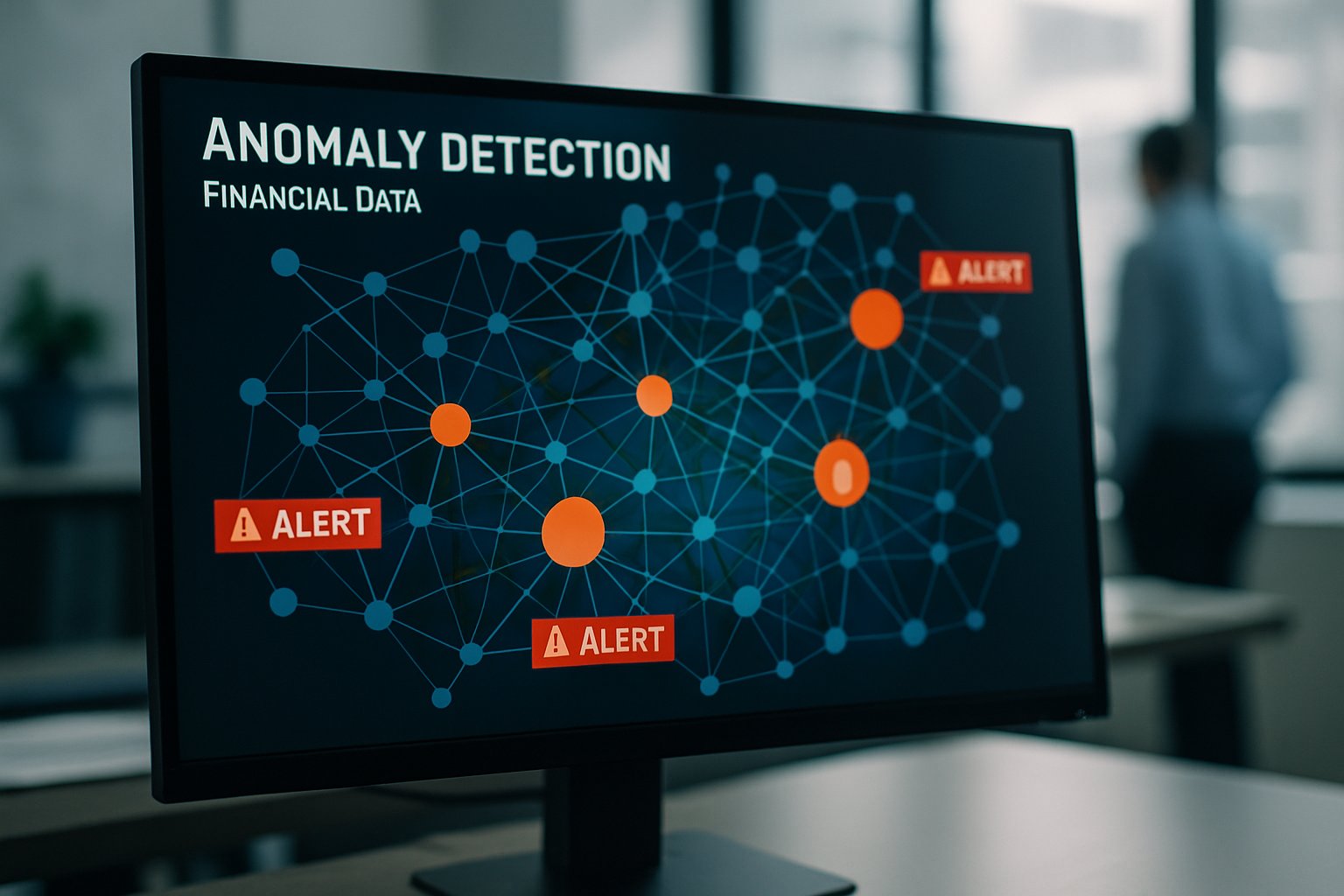
At the core, these systems pair streaming data ingestion with online learning engines. Moreover, they monitor concept drift, retraining models when fraudulent behavior shifts statistically. Graph machine learning nodes track accounts, devices, and merchants, surfacing hidden rings quickly. Subsequently, autonomous agents orchestrate scoring, policy checks, and human escalation without manual routing. Retrieval-augmented LLMs add contextual policy knowledge, reducing hallucinations and development overhead. Therefore, autonomous fraud pattern discovery systems reduce time-to-detect from days to minutes. Early adopters report double-digit drops in false negatives while holding false positives steady.
Importantly, streaming pipelines also feed transaction anomaly detection modules that flag never-seen events. Consequently, previously unseen scam vectors enter analyst queues before losses escalate. Meanwhile, mixture-of-experts ensembles route voice, image, and tabular inputs to specialized sub-models. Such modularity allows rapid patching of a single expert without retraining the entire stack. Nevertheless, governance teams demand visibility into autonomous decision logic. Explainability layers therefore log feature contributions, rule hits, and agent calls for auditors.
Autonomous engines cut latency and boost coverage through constant learning. However, their value materializes only when robust architectures support rapid yet trustworthy changes.
Key Architectural Patterns Emerging
Industry engineers increasingly deploy three complementary designs. First, streaming scorelines with sliding windows track live metrics and detect abrupt drift. Secondly, graph reconstruction layers correlate entities across channels, unveiling coordinated mule clusters. Thirdly, policy-aware agent orchestrators trigger automatic locks, recoveries, or human reviews. Consequently, each layer mitigates a distinct failure mode. For example, graph learning compensates when anomaly detectors miss low-variance insider fraud. Autonomous fraud pattern discovery systems underpin each pattern, ensuring timely adaptation.
Cutting-Edge Research Highlights Now
Recent benchmarks illustrate tangible performance gains.
- Mixture-of-experts credit card model improved recall by 14 percent on 2025 benchmark.
- Adaptive GNN achieved 9 percent higher precision against mule rings in public dataset.
- Streaming drift detector reduced detection delay to 45 seconds during live rollout.
Moreover, cloud vendors now expose managed vector search, streaming features, and fraud APIs to accelerate adoption. AWS Marketplace lists over twenty agentic offerings, while Google showcases graph identity prototypes. Integration with transaction anomaly detection further improves early warning accuracy. These patterns deliver modular, scalable, and resilient detection backbones. Nevertheless, deployment teams must navigate operational and regulatory hurdles next.
Deployment Hurdles And Remedies
Real-time models face adversarial evasion as criminals probe feedback signals. Consequently, experts recommend canary releases and ensemble diversity to limit single-point failure. Privacy regulations also restrict cross-border telemetry that feeds transaction anomaly detection. Therefore, some firms adopt federated learning or pseudonymization to share insights safely. Meanwhile, false positives still hurt customer experience and revenue. Explainable rule layers mitigate disputes by clarifying why a transaction was blocked. Without rigorous monitoring, autonomous fraud pattern discovery systems risk drift and costly false positives.
Operational reality also demands human-in-the-loop governance for high-value actions. Additionally, regulators increasingly ask for auditable model change logs. Autonomous fraud pattern discovery systems now export signed manifests whenever weights shift materially. Cloud teams integrate those manifests with CI/CD pipelines to satisfy compliance checklists automatically. Subsequently, red-team simulations stress test live models using agentic adversaries. Results feed hardening sprints and defensive rule updates.
Strategic Recommendations Moving Forward
Based on field evidence, three priorities stand out for 2026 planning. First, invest in unified telemetry covering devices, payments, and communications. Second, deploy adaptive pipelines with shadow testing before production flips. Third, bake explainability and signed change management into every release. Furthermore, staff should build cross-disciplinary skills blending ML, risk, and compliance. Professionals can deepen commercial acumen through the AI Sales™ certification. Consequently, teams understand both algorithmic nuances and business impact. Autonomous fraud pattern discovery systems succeed when culture, process, and tooling mature together.
Firms that align data, people, and governance will unlock sustainable fraud defense advantages. Meanwhile, laggards will face mounting losses and regulatory scrutiny.
Deployment Hurdles And Remedies
Conclusion
Evolving fraud will not wait for yearly model retrains. Therefore, banks and fintechs must embrace autonomous fraud pattern discovery systems that learn in production. Moreover, coupling those engines with transaction anomaly detection and graph analytics exposes hidden coordination. Nevertheless, success demands robust governance, explainability, and privacy by design. Organizations that act now will shrink losses, protect customers, and strengthen brand trust. Consequently, leaders should evaluate tooling roadmaps, perform pilot sprints, and invest in skilled talent. Take the next step by reviewing certifications and piloting autonomous fraud pattern discovery systems within controlled sandboxes. Future resilience depends on decisions made today.


