

AI CERTS
3 hours ago
Australia Search Crackdown: eSafety Eyes AI Gatekeepers
The admonition arrives just days before stricter code provisions become enforceable on 9 March. Consequently, technology firms face the most expansive child-protection obligations since the 2021 Online Safety Act. The stakes include civil penalties up to A$49.5 million and possible service blocking powers. Industry spokespersons insist they support safety, yet widespread non-compliance persists, Reuters auditors conclude.
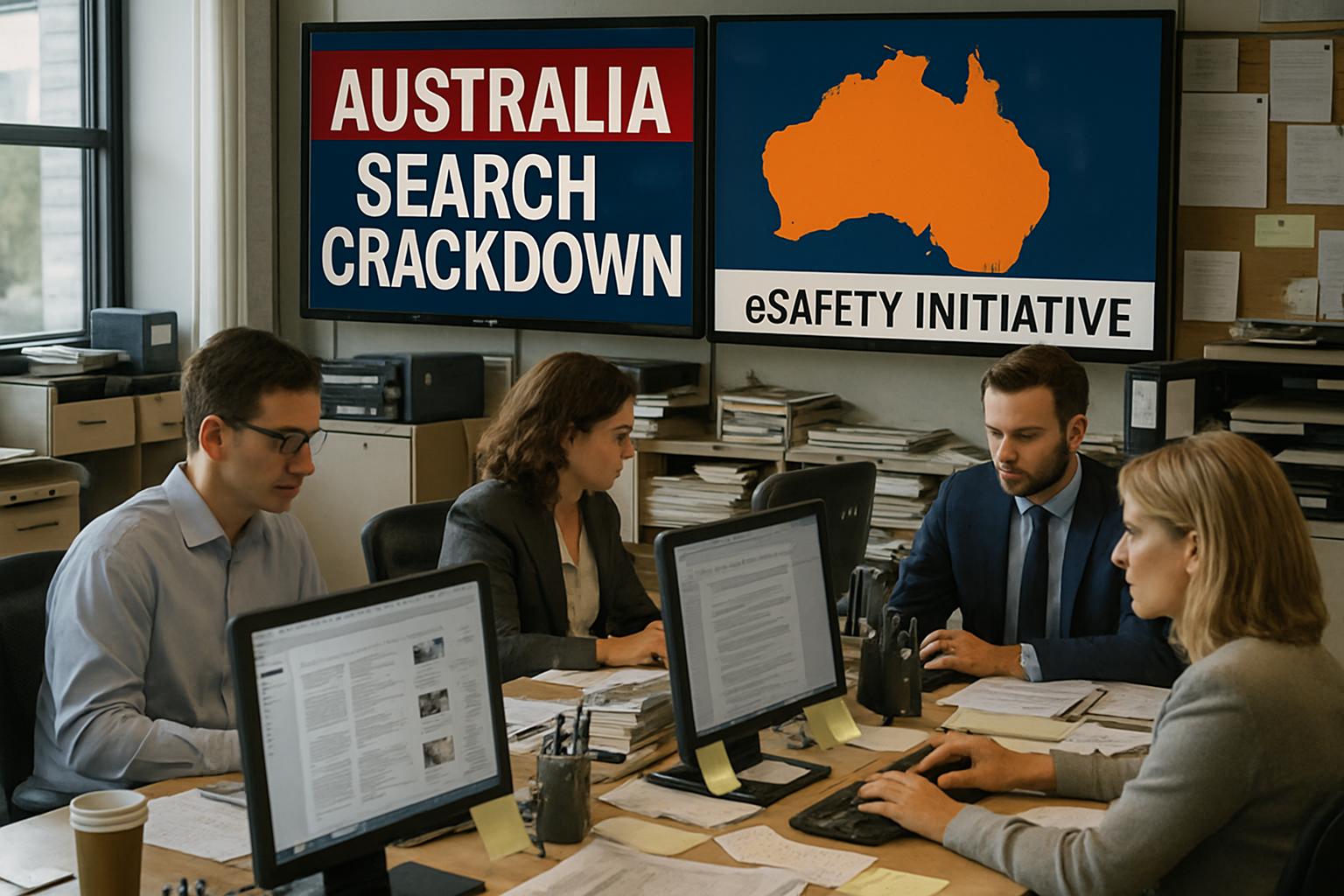
Meanwhile, headlines shout one phrase repeatedly: Australia Search crackdown. That tagline reflects how search platforms sit at the center of the unfolding enforcement storm.
Experts argue the regulator picked search because Google controls over 90% of Australian queries. Therefore, a single directive to Google could instantly filter or redirect almost every youth query nationwide. Nevertheless, smaller engines and voice assistants remain within scope, preventing an easy loophole.
Civil society groups welcome tougher protections, yet privacy advocates caution against intrusive age checks. In contrast, academics fear blanket filtering could degrade legitimate research access and hamper innovation. These tensions frame the months ahead as a critical stress test for online governance.
Regulator Raises New Pressure
The eSafety Commissioner, Julie Inman Grant, registered eight industry codes over the past year. Subsequently, parts covering search, hosting, and carriage services took effect on 27 December 2025. Further provisions for designated internet services, social features, and app stores commence on 9 March 2026. Consequently, the Commissioner has warned of rapid enforcement against lingering non-compliance.
Those warnings explicitly reference Australia Search platforms and other gatekeeper services controlling user discovery. If companies ignore directions, the agency can seek civil penalties or invoke blocking powers through the courts. Therefore, leadership teams now map technical responses and legal contingencies with unusual urgency. The timetable leaves little margin for experimentation. However, readiness across the sector tells a different story, as the next section reveals.
Industry Readiness Snapshot Now
Reuters surveyed 50 leading text AI products during early March. Only nine had rolled out age-assurance features or published timelines. Eleven chose blanket filtering or planned to block every Australian user. Meanwhile, roughly thirty documented no safety approach whatsoever.
- 9/50 services: age checks live
- 11/50 services: full Australian block
- 30/50 services: apparent rule breaches
Consequently, the snapshot suggests widespread rule breaches despite looming deadlines. Australia Search volumes keep feeding these tools, yet user safeguards lag. In contrast, larger platforms such as OpenAI and Anthropic have piloted document checks or face estimation. Apple told Reuters its app stores already use reasonable age gates for R18+ downloads. Google declined comment, deepening speculation about its compliance strategy. These figures expose critical gaps today. Therefore, attention now shifts to the platforms controlling discovery pathways.
Gatekeeper Services Under Scrutiny
Search engines and mobile marketplaces act as classic gatekeeper services under the Online Safety Act. Because they direct user traffic, regulators view them as leverage points. Australia Search regulation therefore concentrates on entities like Google, Bing, and DuckDuckGo. Furthermore, app stores represent parallel choke points for AI companions distributed as mobile software. If those gateways receive a blocking powers direction, unverified chatbots vanish from mainstream discovery overnight.
Consequently, investors now calculate compliance risk before funding emerging conversational startups. DIGI policy chief Jennifer Duxbury reminded members that each operator remains individually liable for non-compliance. However, civil society warns that coercing gatekeeper services can magnify extraterritorial effects. The gate strategy may deliver rapid impact. Nevertheless, collateral consequences could surface, as the verification debate explains next.
App Stores Compliance Puzzle
Developers rely on mobile marketplaces to distribute chatbots wrapped as iOS or Android software. Consequently, Apple and Google must interpret the new code and integrate suitable age checks. Apple told regulators it will apply “reasonable methods” preventing minors from downloading R18+ AI apps. Google has shared fewer details, fueling fears of patchy rollout and possible non-compliance. Moreover, smaller developers doubt they can afford third-party verification vendors embedded within app stores workflows.
In contrast, some firms plan an Australian exit, citing integration costs and potential blocking powers. This flight could reduce consumer choice while failing to curb determined teenagers using VPNs. Compliance design remains fluid within mobile ecosystems. Therefore, cost debates feed directly into the broader verification controversy that follows.
Verification Debate And Privacy
Age assurance spans passports, credit cards, and biometric face estimation. Lawfare analysts argue each technique introduces privacy, equity, and accuracy trade-offs. Moreover, facial models misclassify darker-skinned youth at higher rates, raising discrimination risks. Consequently, some Australia Search firms prefer document checks despite user friction. Privacy advocates warn that centralized ID storage could become a tempting hacking target. Nevertheless, eSafety insists proportional approaches minimise data retention obligations.
Services choosing weaker signals risk accusations of non-compliance and possible blocking powers. Meanwhile, gatekeeper services might demand verifiable proof before restoring search visibility. The verification debate therefore remains deeply technical and politically charged. Stakeholders agree no single solution fits all contexts. Consequently, cost and risk calculations drive the next topic: penalties.
Penalties And Blocking Powers
Civil penalties under the Online Safety Act can reach A$49.5 million per contravention. Additionally, directions can compel service changes within specified timelines. Failure to obey a direction often brings a second order instructing telecommunications carriers to disable access. Therefore, many boards treat the risk as existential. Australia Search queries generate substantial advertising revenue, which threatens to evaporate if the site disappears domestically. Moreover, venture capital term sheets now include warranty clauses tied to timely Australian compliance.
Insurance carriers are also reassessing policy exclusions related to regulatory actions. Consequently, finance chiefs demand concrete evidence of readiness before authorising additional marketing. Money is sharpening management focus fast. Next, we outline practical steps for surviving the Australia Search clampdown.
Next Steps For Businesses
Executives should begin with a gap assessment against the registered code obligations. Subsequently, product teams must document content filtering, age assurance, and reporting procedures. Legal counsel ought to secure written guidance from the eSafety liaison channel early. Furthermore, search integrators should verify how gatekeeper services rank or de-index unverified outputs. Marketing leads must monitor Australia Search console data for sudden traffic drops during enforcement windows.
- Create a public compliance statement before 9 March.
- Deploy age-verification APIs across web and mobile channels.
- Run tabletop drills simulating regulator notices.
Teams seeking deeper technical skills can pursue the AI Prompt Engineer Essentials™ certification. That program covers risk mitigation, prompt security, and policy alignment for conversational models. Consequently, graduates quickly translate knowledge into measurable compliance improvements. Proactive planning protects revenue and reputation alike. Finally, understanding broader geopolitical ripples helps leaders contextualise the Australia Search policy arc.
Australia’s experiment with AI age assurance signals a growing international appetite for stricter content governance. The current timetable, tough penalties, and potential access restrictions demand clear executive focus. Consequently, organisations should treat the Australia Search crackdown as both risk and opportunity. Firms that embed robust verification early can gain trust and competitive advantage. Meanwhile, privacy-sensitive designs will help deflect regulatory and consumer backlash. Therefore, leaders should review guidance, train staff, and secure recognised credentials today. Explore advanced pathways, including the linked certification, and position your organisation at the forefront of responsible AI.


