

AI CERTs
3 months ago
Audience Persona Builders Advance Precision Influencer Campaigns
Marketers are ditching guesswork. Competitive pressure demands sharper influencer selection. Consequently, many brands now rely on Audience Persona Builders to decode complex follower data. These AI tools promise faster briefs, tighter influencer fits, and measurable returns.
However, every innovation carries trade-offs. Privacy, bias, and data quality questions shadow the promise. This feature unpacks the landscape, showing how persona technology is reshaping campaign strategy and what professionals must monitor next.
Market Shift Forces Overview
Spending on influencers keeps rising. Statista values 2025’s global market near $33 billion. Meanwhile, eMarketer forecasts U.S. spend passing $10 billion. Jasmine Enberg notes the field is “maturing and diversifying,” reflecting a pivot toward data discipline.
Moreover, ad platforms now bake persona tools into workflows. Google’s Display & Video 360 lets planners type a natural-language audience and receive structured targeting parameters. Holding companies follow suit, buying analytics vendors to capture synergy.
These converging moves push data-driven precision from option to expectation. Yet market pressures also amplify scrutiny of effectiveness.
The market’s acceleration underscores urgency. Nevertheless, exploring mechanics will clarify strengths and gaps.
Audience Persona Builders Explained
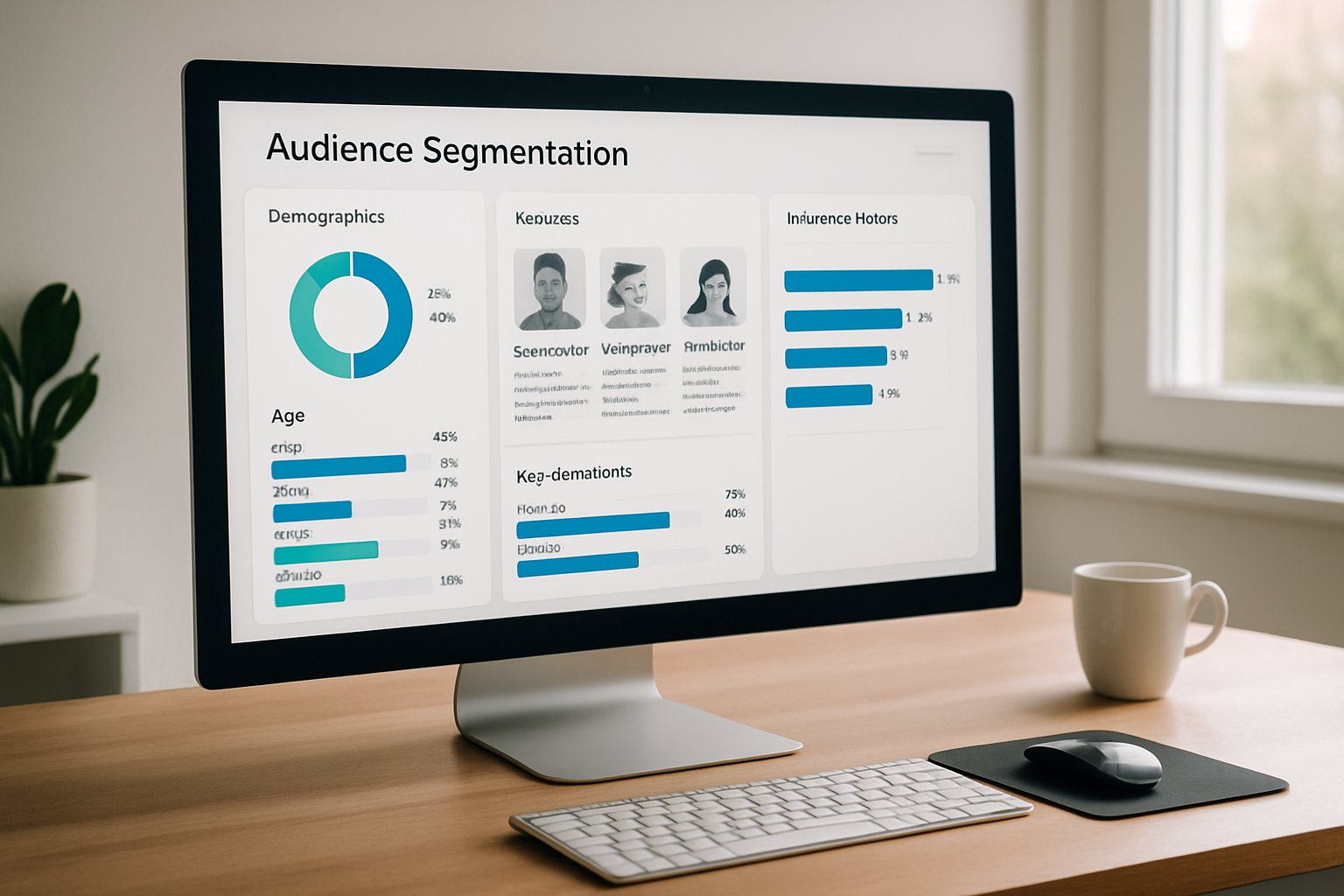
A Audience Persona Builders platform converts raw demographic, psychographic, and behavioral signals into named archetypes. Algorithms cluster patterns, then attach motivations, media habits, and purchase drivers. Vendors like Audiense surface eight or more personas per audience, each with suggested creative hooks.
Furthermore, lookalike modeling expands reach. Tools map persona traits to broader platform users, supporting scalable Audience Segmentation. Google’s new feature even translates free-text descriptions into programmatic lists within seconds.
LLM projects such as Proxona generate synthetic narratives from comment streams, giving creators empathy fuel. Nevertheless, researchers warn hallucinations require human oversight.
Persona definitions ground the discussion. Subsequently, we examine campaign gains enabled by this architecture.
Influencer Targeting Precision Gains
Historically, brands matched creators by follower counts. In contrast, persona alignment focuses on shared motivations, lifting relevance. Influencer Marketing Hub found 66 percent of marketers report AI improved discovery and optimization.
Additionally, persona outputs guide messaging. Creative teams receive tone, imagery, and channel suggestions tailored to each segment. Faster alignment reduces costly iteration rounds.
Key performance uplifts often follow. McKinsey studies show personalized experiences can raise revenue by double-digit percentages. Consequently, brands deploying persona-driven Influencer Targeting expect higher ROI.
- 66 % see improved results from AI workflows.
- Personalization delivers double-digit revenue lifts, according to McKinsey.
- Natural-language persona tools cut setup time dramatically.
These statistics illustrate tangible benefits. However, data depth fuels those gains, making segmentation engines critical.
Audience Segmentation Data Engines
Effective Audience Segmentation requires diverse signals. Platforms ingest demographics, affinities, purchase intent, and contextual engagement data. Moreover, psychographics increasingly outrank demographics for predicting actions.
HypeAuditor blends authenticity checks with motivation clustering. SparkToro scans podcasts and newsletters to enrich profiles. Meanwhile, Traackr and CreatorIQ integrate direct social APIs, offering near-real-time persona refreshes.
Algorithms then recommend compatible creators whose followers mirror the target archetypes. Therefore, planners avoid wasted impressions and overlapping reach.
Robust data pipelines strengthen persona validity. Yet ethical and legal hurdles still loom.
Risks And Ethical Questions
Privacy regulation tightens worldwide. GDPR and new U.S. state laws restrict personal signal usage. Consequently, persona builders must demonstrate consent, minimization, and transparent processing.
Bias presents another hazard. Algorithms may overrepresent vocal subgroups or infer sensitive attributes improperly. Michael Brito warns, “Your audience persona is probably a lie” when models go unchecked.
Moreover, LLM hallucinations can fabricate traits, undermining trust. Academic teams propose grounding outputs in verified data and mandating human review.
These concerns highlight compliance imperatives. Nevertheless, practical adoption frameworks can mitigate many issues.
Practical Adoption Playbook
Brands should pursue a structured workflow:
- Generate personas with selected tool.
- Validate segments using platform diagnostics.
- Run pilot campaigns with control audiences.
- Measure incremental lift and iterate.
Additionally, cross-functional reviews help spot bias or privacy gaps early. Creative teams use persona insights to brief influencers, reducing revisions.
Professionals can enhance their expertise with the AI Learning & Development™ certification, deepening data literacy.
This playbook balances speed and governance. Subsequently, we explore future trajectories influencing continued adoption.
Future Outlook And Actions
Industry consolidation will intensify. Publicis and rivals seek end-to-end stacks merging analytics, activation, and reporting. Furthermore, platform safeguards against prohibited descriptors will evolve alongside regulation.
Technically, persona accuracy should climb as multimodal models digest images, text, and commerce data. In contrast, privacy sandboxes may limit granular tracking, forcing probabilistic approaches.
Therefore, marketers must maintain agile validation loops and advocate for transparent methodologies. Continuous education ensures teams exploit opportunities responsibly.
Future shifts promise greater precision. Yet disciplined governance determines lasting success.
Conclusion
Audience Persona Builders now anchor data-driven influencer strategy. Moreover, they sharpen Influencer Targeting and enrich Audience Segmentation, driving measurable ROI. However, privacy, bias, and model fidelity require vigilant oversight. Consequently, brands should adopt structured testing and ongoing education. Explore certifications and deepen skills to lead the next wave of persona-powered marketing.


