

AI CERTS
3 months ago
AT&T CEO Champions Workforce Skills Evolution
The Self-Guided stance aligns with rising industry data on reskilling urgency. In contrast, many workers still rely on employers for structured Learning support. Therefore, Stankey’s remarks ignite fresh debate about responsibility, resources, and Transformation. This article unpacks the comments, contextual data, and practical moves leaders can consider.
Stankey's Chaptered Career Advice
Stankey outlined his advice during the “In Good Company” podcast on 3 December 2025. Furthermore, Business Insider captured the most quoted line. He said, “You have to think about your Career in chapters that are four or five years.” Subsequently, he stressed mastering a repeatable Learning process. “People who master that are going to come out on top over time,” he added. The CEO also reminded listeners that professional networks update faster than academic syllabi.
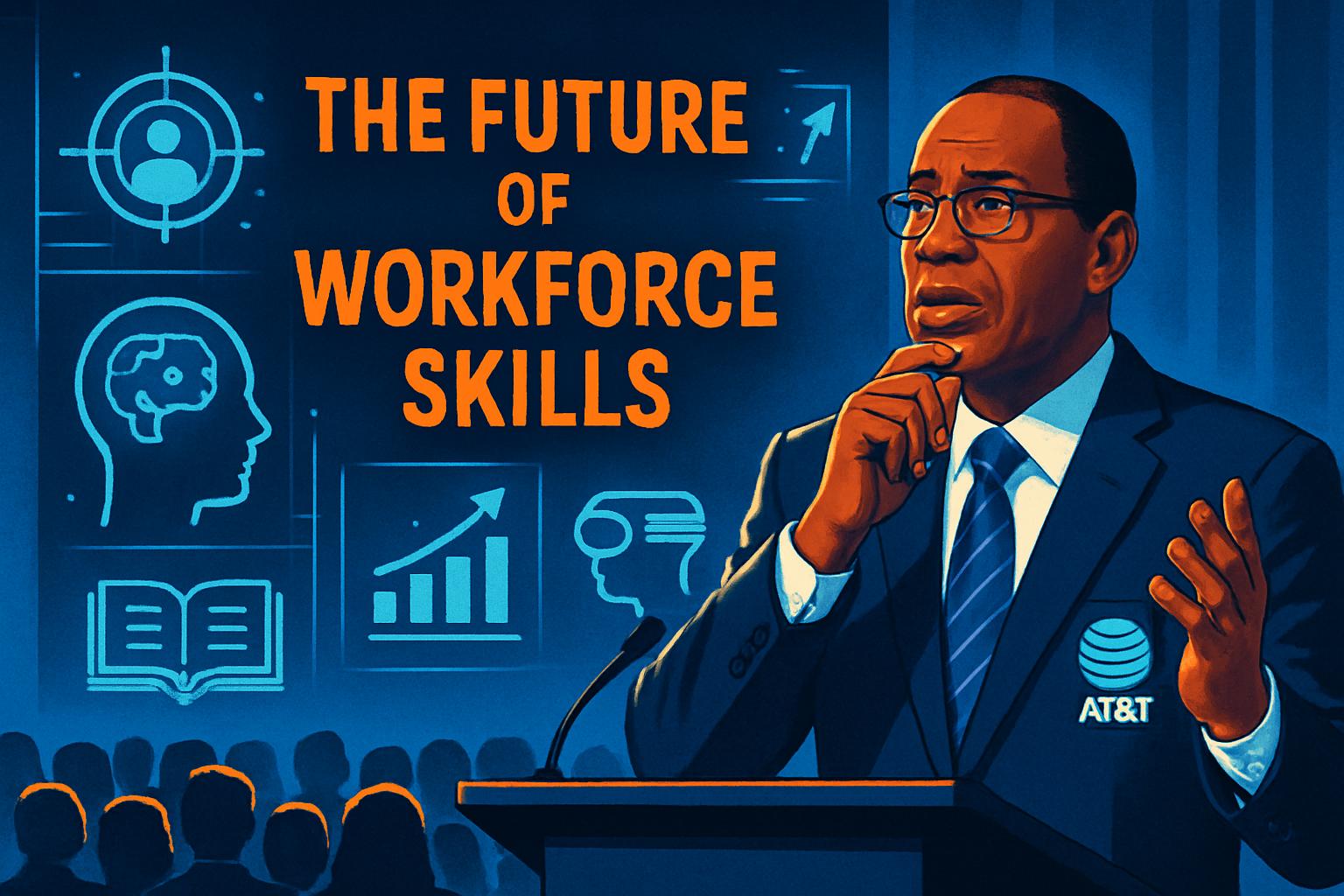
His framing reflects lessons from AT&T’s ongoing Transformation program. Additionally, he connects personal agility with corporate strategy. The telecom giant is pivoting toward fiber, 5G, and AI-enabled services. Consequently, employee adaptability becomes a strategic lever rather than a human-resources slogan.
This chaptered outlook reframes careers as iterative sprints. However, understanding AT&T’s own training record clarifies whether the rhetoric carries weight.
Telco Training Track Record
AT&T has experimented with corporate training infrastructure for more than a decade. For example, T University offered internal courses across technical and leadership domains. Moreover, partnerships with Udacity and Georgia Tech delivered Nanodegrees and an online master’s in computer science. These initiatives aimed to boost internal mobility while containing recruitment costs.
Form 10-K filings show the company employed about 140,990 people at the end of 2024. Meanwhile, wireless subscribers numbered roughly 141 million across North America. Such scale demands standardized yet flexible upskilling channels. Consequently, Stankey’s messaging must translate into tangible program accessibility for frontline and headquarters staff alike.
Historical investments indicate commitment, yet participation metrics remain opaque. Therefore, external data helps gauge broader pressure points on Workforce Skills.
Workforce Skills Data Pulse
The World Economic Forum’s Future of Jobs 2023 report quantifies the challenge. It states six in ten workers will need retraining before 2027. Moreover, employers expect 44% of existing capabilities to shift within that window. Consequently, Workforce Skills gaps could widen if Learning opportunities lag demand.
Other analysts echo similar alarms. McKinsey research indicates that digital Transformation accelerates role churn across telecom operations and field services. In contrast, budget constraints often limit course availability in unionized environments. Therefore, structured yet modular pathways become vital to bridge corporate and employee priorities.
Quantitative evidence underscores urgency and scale. However, responsibility for skilling remains contested inside and outside AT&T.
Balancing Self-Guided Responsibility
Stankey’s August 2025 memo sparked lively internal forums. Nevertheless, some employees questioned whether Self-Guided study time would be protected. Union representatives from CWA and IBEW requested clearer workload relief for credential pursuits. Additionally, critics noted that not every technician can afford personal course fees upfront.
Corporate leaders counter that employees must meet the market halfway. Consequently, AT&T highlights tuition assistance and virtual micro-courses available on demand. Furthermore, Stankey argues that democratized AI tools lower the cost of foundational training. Yet skeptics warn that unequal digital access still hampers equitable Transformation.
Both sides agree on urgency but debate support structures. Subsequently, attention shifts to concrete program features that close the Workforce Skills divide.
Upskilling Programs In Action
AT&T markets its internal badge system as a fast pathway toward new network roles. Moreover, managers can match completers with open requisitions through analytics dashboards. This model promotes measurable Career advancement while retaining institutional knowledge.
External credentials also matter. Professionals can enhance their expertise with the AI Educator™ certification. Additionally, AT&T’s legacy partnership with Udacity still offers Nanodegrees focused on data analytics and security. These options extend Self-Guided flexibility to diverse segments.
Executives cite early wins. For instance, fiber installation teams who completed advanced splicing modules cut job times by 12%. Consequently, customer satisfaction scores improved despite heavier service demand.
Program case studies show measurable impact on cost and speed. However, scaling benefits requires disciplined measurement and transparent Workforce Skills reporting.
Strategic Takeaways For Leaders
Business pressures will intensify as AI permeates core telecom functions. Therefore, senior teams should inventory critical Workforce Skills yearly. Next, they should align budget, tutor time, and promotion criteria to that inventory. Moreover, clear dashboards help unions and managers track progress objectively. The CEO should appoint a dedicated skills officer for governance.
Leaders must also reinforce a culture of continuous Learning without relying solely on motivational speeches. In contrast, written policies that protect study hours demonstrate authentic commitment. Additionally, incentive structures linking credential completion to raises accelerate Transformation momentum.
- Publish quarterly Workforce Skills gaps and closure rates.
- Offer tiered stipends for Self-Guided courses aligned with strategic roadmaps.
- Embed Career coaches inside major business units.
These measures drive alignment between rhetoric and reality. Consequently, AT&T and peers can turn skilling into a competitive shield.
Nevertheless, leaders should avoid metric overload. A concise dashboard focused on five priority Workforce Skills often suffices.
Subsequently, transparent progress builds trust with regulators and investors who increasingly question human-capital readiness.
Continuous disruption shows no sign of easing. Therefore, cultivating adaptive Workforce Skills is a strategic imperative, not optional training. Stankey’s chaptered Career model offers one provocative blueprint. Moreover, data from WEF confirms the necessity and scale of Transformation. However, only disciplined investment converts Self-Guided enthusiasm into measurable Learning gains. Leaders who act now can secure Workforce Skills advantages before the next technology wave arrives.


