

AI CERTs
3 hours ago
ASUS Pivot Reveals Bold Corporate Strategy Shift
ASUS shocked observers in January 2026 by hinting it may have shipped its last phone. During a Taipei gala, Chairman Jonney Shih declared an “all-in AI” future spanning servers, robotics, and glasses. Consequently, analysts immediately questioned how the move fits ASUS’s wider Corporate Strategy amid fierce mobile competition. Reports from The Verge and Android Authority quoted Shih stating, “We will no longer add new phone models.” However, ASUS has not issued a separate statement formally confirming a mobile exit. Meanwhile, the company’s press release highlights “Physical AI” hardware as the new growth engine. This article unpacks the strategic shift, evaluates financial signals, and outlines implications for technology professionals. Moreover, we analyze how Automation and enterprise demand could reshape product roadmaps over the next decade. Industry leaders will find lessons in allocation, margin management, and portfolio focus. Therefore, understanding ASUS’s evolving Corporate Strategy offers practical insight for navigating similar pivots.
Corporate Strategy Takes Center
Firstly, ASUS framed the pivot as a natural extension of its proven design heritage. Consequently, management is reallocating engineers and capital from smartphones to AI servers, robotics, and wearables. The choice aligns with its publicly stated Corporate Strategy of “Ubiquitous AI. Incredible Possibilities.” Moreover, executives highlighted that embodied AI devices can command higher margins than commodity handsets. Therefore, the pivot attempts to capture value where differentiation matters. This section shows ASUS leaning on brand heritage to justify the shift. However, margin assumptions require deeper financial scrutiny, which we examine next.
Pivot Toward Physical AI
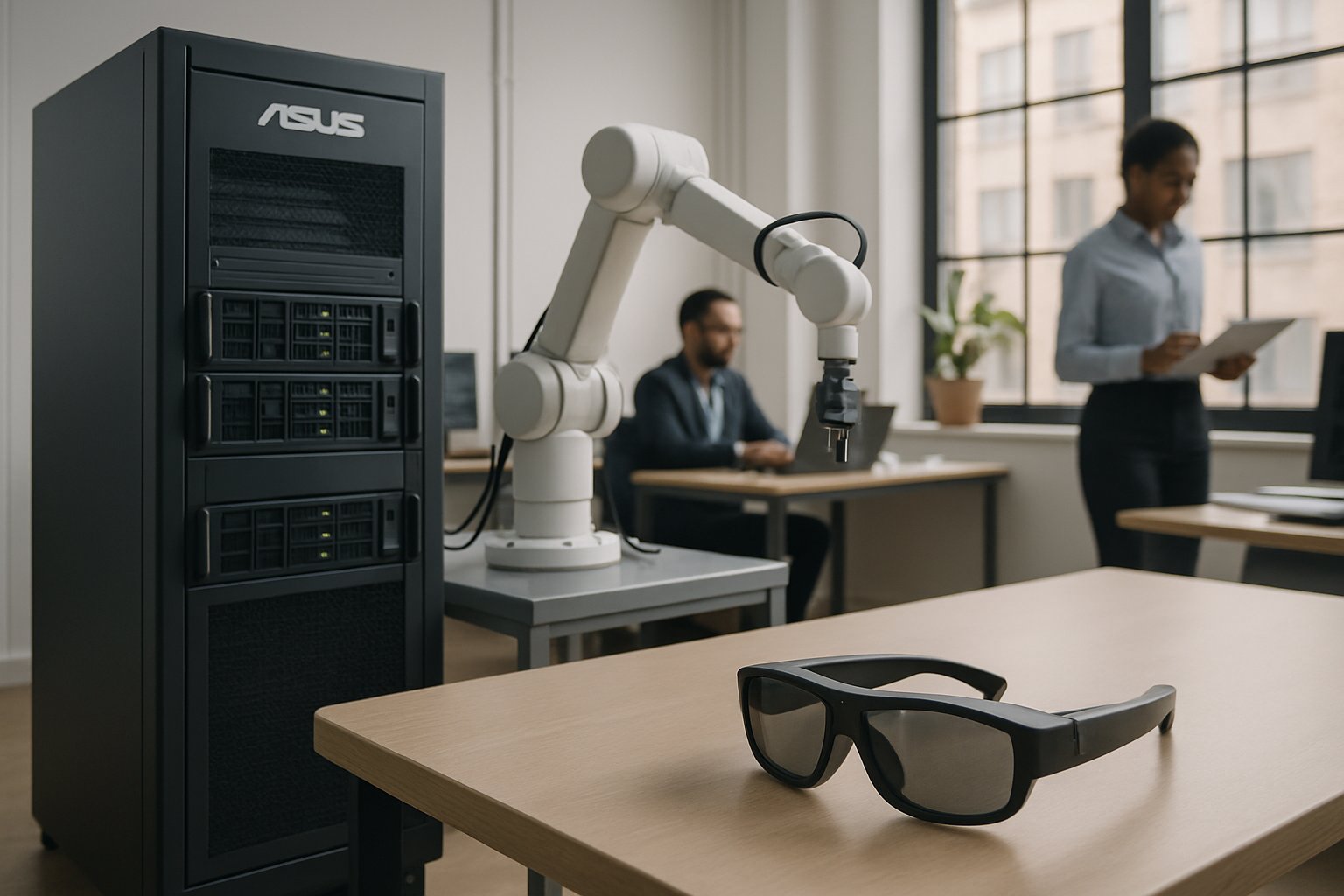
Physical AI, ASUS’s favored term, merges cloud intelligence with edge hardware. Subsequently, the firm spotlighted AI robots, AI glasses, and AI PCs during its Taipei gala. In contrast, handset mentions were minimal. Analysts note that these devices exploit ASUS’s board-level design strength and existing supply relationships. Consequently, the initiative dovetails with the overarching Corporate Strategy to prioritize differentiated hardware. Automation also plays a central role, enabling robots to adapt tasks in factories and retail. These product concepts illustrate ASUS’s tangible vision for AI deployment. Meanwhile, external market pressures pushed the company toward this hardware emphasis.
Market Forces Driving Shift
Global smartphone shipments grew only low single digits in 2025, according to IDC and Canalys. Meanwhile, Samsung, Apple, and Xiaomi controlled most volume, squeezing niche players. Therefore, ASUS faced scale disadvantages and rising component costs. Conversely, demand for AI servers surged as enterprises raced to deploy large models on-premises. Digitimes estimates AI server revenue reached 15-20 percent of ASUS turnover last year. Moreover, margins on these systems outstrip mainstream consumer electronics. Such economics reinforce the refreshed Corporate Strategy away from saturated handheld markets. Competitive pressure and profit calculus supplied a clear push toward server and robotics bets. Consequently, financial data warrants closer attention to understand sustainability.
Financial Metrics Underpin Decision
ASUS posted NT$135.19 billion revenue and NT$12.79 billion profit in Q1 2025. Server and enterprise hardware supplied the fastest growth, Interbrand noted. Furthermore, ASUS’s 2025 brand value reached US$2.595 billion, ranking among Taiwan’s strongest. Analysts expect AI infrastructure margins to exceed 25 percent, doubling typical smartphone returns. Therefore, the Corporate Strategy reallocates capital toward segments delivering superior return on invested resources. Automation investments in manufacturing are also slated to lower production overheads. Key 2025 highlights illustrate the pivot’s financial logic:
- AI server revenue share consistently exceeded 15 percent of total sales.
- Smartphone shipments contributed single-digit percentages with shrinking average selling prices.
- Operating margin on enterprise hardware approached twice the consumer device margin.
Collectively, these numbers validate management’s resource reallocation. However, moving capital is easier than delivering new categories.
Risks And Open Questions
Halting phone development risks alienating loyal Zenfone and ROG Phone fans. Nevertheless, ASUS promises continued support for existing devices, though durations remain unspecified. Meanwhile, robotics and smart glasses require new software ecosystems and channel partnerships. Execution risk heightens because consumer robotics remains unproven territory. In contrast, established rivals like Apple and Meta already invest heavily in wearables. Therefore, the success of ASUS’s Corporate Strategy depends on ecosystem orchestration and developer outreach. Automation rollouts inside ASUS factories could offset some risk by reducing cost per unit. Risks underline the importance of clear communication and incremental delivery. Subsequently, user impact deserves separate consideration.
Impact On End Users
Enthusiasts fear diminished firmware updates and accessory availability. However, ASUS asserts after-sales support will continue for currently shipping models. Consequently, resale values may remain stable short term. Gamers relying on ROG Phones may migrate to competitors offering active lineups. Moreover, enterprise customers could benefit as ASUS diverts resources toward AI server reliability. Such trade-offs illustrate the human element inside any Corporate Strategy realignment. Customers gain transparency when timelines and warranties are detailed. Therefore, ASUS should publish definitive support schedules soon.
Future Outlook And Roadmap
ASUS plans to debut new AI PCs at Computex 2026, according to insiders. Additionally, pilot warehouse robots are slated for deployment with logistics partners later that year. Meanwhile, early prototypes of AR glasses will reach selected developers for testing. Industry watchers believe initial revenue impact from the Corporate Strategy will surface in fiscal 2027. Moreover, ASUS continues to expand its AI server portfolio with NVIDIA and AMD accelerators. Professionals can enhance their expertise with the AI Network Security™ certification. Consequently, talent familiar with Automation frameworks and edge deployment will be in high demand. Roadmap milestones suggest tangible progress toward embodied AI leadership. Nevertheless, consistent execution must back the aspirational messaging.
ASUS’s phone hiatus reflects bold portfolio prioritization. However, profitability upside hinges on delivering compelling robots, servers, and wearables within tight timelines. Moreover, fan loyalty will be tested until replacement products prove value. Financial indicators support the decision, yet execution risk remains significant. Consequently, stakeholders should monitor supply-chain partnerships, ecosystem announcements, and regulatory filings throughout 2026. Meanwhile, professionals can future-proof careers by embracing AI infrastructure skills and security specializations. Consider elevating your knowledge through the linked certification and stay prepared for hardware’s AI-driven future. Ultimately, strategic clarity, transparent communication, and disciplined delivery will determine ASUS’s next chapter.


