

AI CERTs
2 hours ago
ASML shares rally on AI-fueled chipmaker spending
Global equity screens lit up when ASML shares spiked to fresh records on 28 January 2026. Investors reacted to record fourth-quarter revenue, an enlarged backlog, and upbeat 2026 guidance. Moreover, the mood improved further after Taiwan Semiconductor Manufacturing Co. boosted capital expenditure plans. Consequently, many analysts now frame the equipment cycle as an expansion, not a recovery. The rally underscores how chipmaker spending and the broader AI market surge intertwine. Nevertheless, questions on geopolitical limits and valuation persist.
Earnings Beat Lifts Sentiment
ASML delivered €9.7 billion in Q4 2025 sales and €13.2 billion in net bookings. Furthermore, the company recognized revenue on two High-NA EUV systems, marking an industry first. Therefore, management now forecasts €34-39 billion in 2026 revenue with 51-53 percent gross margin.
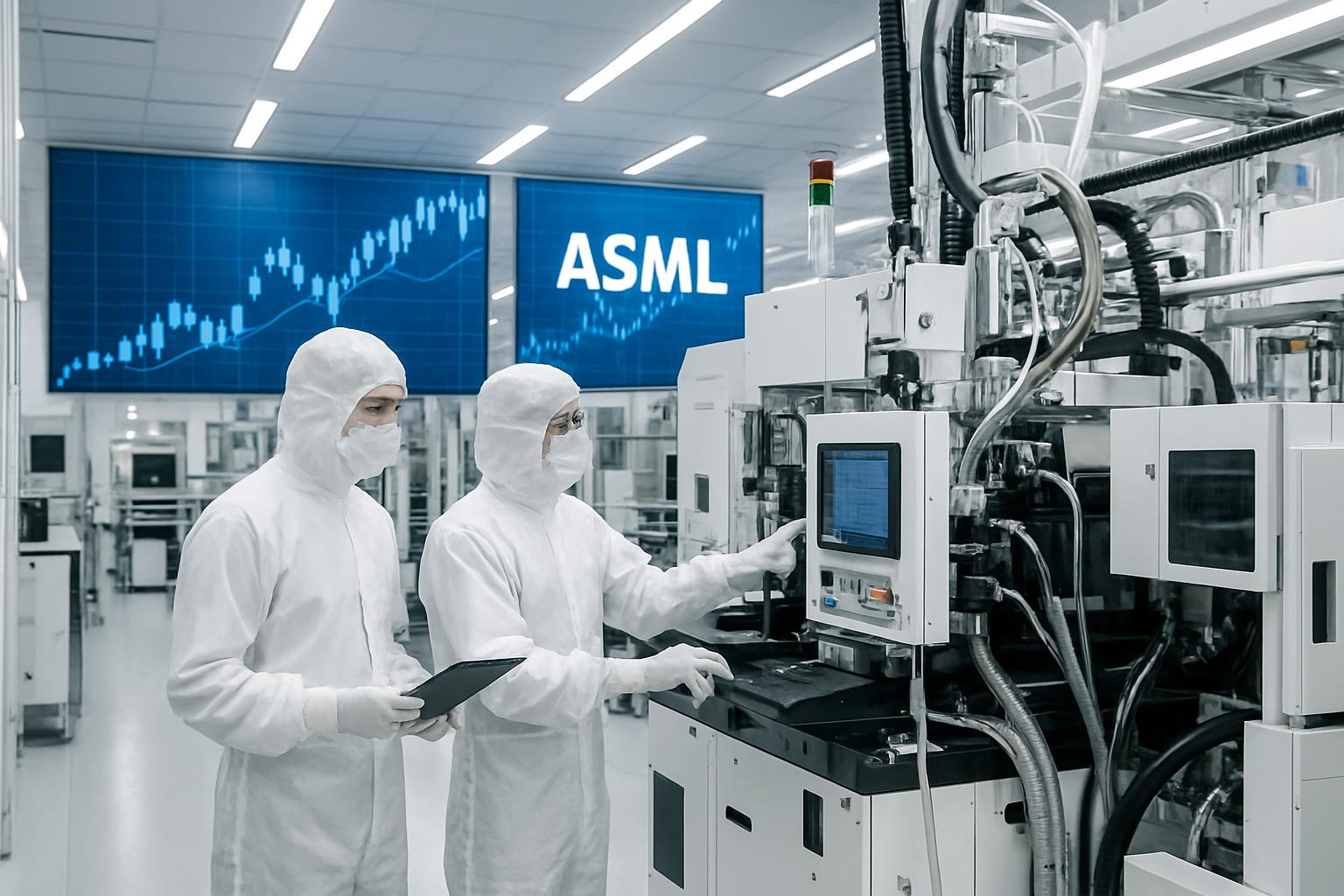
Market participants responded quickly. ASML shares jumped about seven percent intraday and lifted the firm’s market capitalization near €500 billion. Additionally, Morgan Stanley published a glowing note describing a 70 percent bull-case scenario, citing sustained demand from AI data centers.
Key Financial Highlights 2025
- Full-year sales: €32.67 billion
- Full-year net income: €9.61 billion
- Year-end backlog: €38.8 billion
- Share buyback authorization: up to €12 billion
- 2025 dividend proposal: €7.50 per share
These numbers illustrate robust operating leverage. However, timing between bookings and shipments still matters. Investors now watch quarterly execution closely before extrapolating growth.
Record orders strengthened confidence. In contrast, geopolitical risks continue to shadow the outlook.
Capex Signals Sustain Cycle
Chipmakers sharpened their budgets in January. Notably, TSMC guided 2026 capital expenditure toward US$52-56 billion. Moreover, analysts expect a significant slice dedicated to 2-nanometer capacity that heavily relies on EUV lithography. Consequently, suppliers anticipate elevated tool demand well into 2027.
Samsung and SK Hynix also outlined multi-year facilities focused on high-bandwidth memory. Such moves reinforce the narrative that chipmaker spending accelerates because of the AI market surge. Therefore, visibility on tool shipments improves for at least six quarters.
Research firm SEMI projects wafer-fab equipment outlays to climb double digits in 2026. Additionally, capacity for logic and advanced memory leads the uptrend. That backdrop amplifies pricing power for ASML.
Strong customer budgets underpin enthusiasm. Nevertheless, supply-chain constraints could elongate delivery cycles.
EUV Technology Advantage Explained
Extreme Ultraviolet systems remain the gatekeeper for sub-3 nanometer production. ASML commands a virtual monopoly in that niche. Meanwhile, High-NA EUV promises even finer line widths, unlocking further transistor density. Such differentiation means customers have minimal substitution options.
Moreover, every High-NA system carries a reported selling price above €350 million. Consequently, each shipment meaningfully lifts revenue and margins. Competitors in etch and deposition enjoy demand too, yet none match this pricing profile.
ASML shares benefit from the technology moat. However, export controls restrict certain EUV configurations from reaching mainland China.
Proprietary optics sustain the lead. Nonetheless, policymakers could adjust rules abruptly, challenging growth corridors.
Risks Temper Investor Euphoria
Valuation has stretched after the latest rally. Moreover, geopolitical frictions introduce potential order volatility, particularly from Chinese foundries. In contrast, deferred fab ramps could emerge if macroeconomic conditions weaken. Therefore, some strategists urge caution despite the AI market surge.
Regulatory uncertainty also surrounds U.S. and Dutch export regimes. Additionally, concentrated revenue exposure to TSMC magnifies single-customer dependency. Consequently, investors balance stellar growth prospects against non-trivial downside scenarios.
Risk factors remind markets that cycles remain cyclical. However, current fundamentals still favor continued equipment demand.
Strategic Capital Allocation Moves
Management paired guidance with shareholder rewards. The new €12 billion buyback complements a higher dividend. Furthermore, leadership plans streamlined layers that would remove roughly 1,700 managerial roles. Consequently, operating efficiency may improve as volumes scale.
Cash returns draw praise because interest rates stay elevated. Moreover, predictable buybacks can cushion volatility if sector multiples compress. Professionals seeking deeper insight can enhance their expertise with the AI Writer™ certification.
Capital strategy supports valuation. Nevertheless, sustained free-cash flow depends on flawless supply execution.
Outlook For 2026 Momentum
Consensus models now center on the top end of management guidance. Moreover, Morgan Stanley forecasts upside if High-NA adoption accelerates. ASML shares could therefore test new highs should shipment cadence stay intact. Meanwhile, continued chipmaker spending signals a robust pipeline.
Industry bodies expect the AI market surge to keep servers and accelerators on allocation through 2027. Consequently, foundries require additional capacity at cutting-edge nodes. That dynamic underpins lithography intensity, directly benefiting ASML shares once again.
Nevertheless, investors should monitor lead times, export license developments, and macro shifts. Additionally, watch secondary equipment suppliers because relative performance could signal broader cycle inflection.
Momentum appears durable today. However, vigilance will determine sustained alpha tomorrow.
Conclusion
ASML shares have soared on record results, robust backlog, and unprecedented chipmaker spending. Moreover, the AI market surge promises multi-year demand for EUV and High-NA platforms. Nevertheless, export controls, execution lags, and valuation froth introduce caution. Professionals should track capex trends, policy developments, and shipment metrics. Consequently, informed stakeholders can position portfolios and careers for the next semiconductor wave. Explore the linked certification to deepen analysis skills and stay ahead in this evolving landscape.


