

AI CERTS
2 hours ago
ASM–Myelin deal brings Edge Intelligence to factory floor
Rather, it reflects a market shift toward real-time, on-machine decision making. Moreover, the strategic Partnership promises rapid gains in uptime, safety, and efficiency. This article unpacks the investment numbers, technology foundations, and competitive implications. Readers will also learn how certified skills can accelerate adoption on the shop floor. Ultimately, leaders need clear guidance as Edge Intelligence reshapes manufacturing economics.
Deal Signals Manufacturing Shift
Industry watchers anticipated consolidation, yet the timing surprised many observers. ASM Technologies confirmed the deal through multiple media outlets and investor briefings. Meanwhile, Myelin executives highlighted the commercial scope extending beyond capital injection. The Partnership establishes a joint go-to-market plan covering semiconductor, electronics, solar, and engineered products.
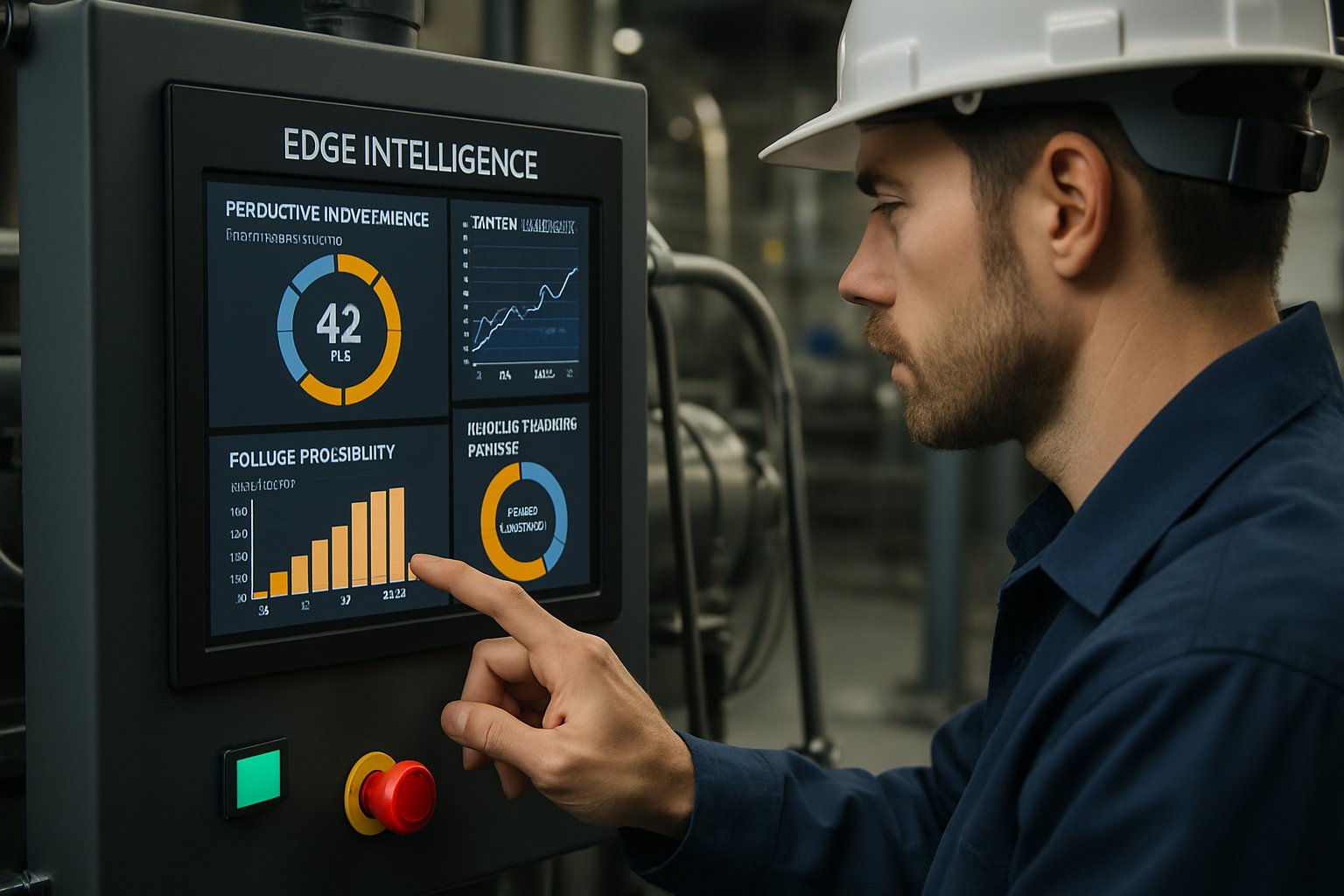
Under the agreement, Myelin will integrate its edge-first AI runtime inside ASM designed equipment. Consequently, customers receive packaged solutions rather than fragmented pilot toolkits. Grand View Research estimates the global edge AI market reached USD 24.9 billion in 2025. Therefore, investors view this move as a bid to secure early share in that expansion.
The transaction cements collaboration instead of loose vendor alliances. However, capital alone cannot guarantee successful Edge Intelligence deployment at scale.
Investment Numbers And Valuation
Financial disclosures peg the consideration at approximately Rs.48 crore for roughly one-fifth ownership. That math implies a valuation near Rs.240 crore for early-stage Myelin Foundry. Nevertheless, revenue for FY25 reportedly sat near Rs.5.6 crore, underscoring start-up scale.
Consequently, ASM paid nearly forty-three times trailing sales, a premium typical for deep-tech assets. Investors often justify such multiples when intellectual property and product stickiness appear strong. Edge Intelligence platforms usually command higher margins than traditional engineering services.
Moreover, the Partnership includes commercial commitments, not just equity. Both parties plan pilot deployments that convert directly into hardware orders. Subsequently, valuation ratios should normalise as revenue scales inside ASM’s existing channels.
The capital structure therefore aligns incentives over a multi-year horizon. Next, we examine strategic motives behind those incentives.
Strategic Rationale Explained Clearly
Manufacturers crave real-time visibility, yet cloud round-trips hinder split-second actions. Edge Intelligence removes latency by processing sensor, video, and acoustic data at source. Consequently, predictive maintenance and quality optimisation improve simultaneously.
ASM brings domain expertise in equipment design, control software, and field service. In contrast, Myelin contributes patented multimodal inference models able to run on compact GPUs. Together, the stack promises a turnkey pathway from raw signals to operator alerts.
Additionally, the Partnership tackles bottlenecks around integration with legacy PLC protocols. Myelin engineers will embed protocol adapters inside edge gateways, simplifying deployment. Therefore, plant teams avoid expensive rip-and-replace scenarios.
Strategic alignment therefore spans technology, channels, and customer outcomes. The next section dives into technical underpinnings enabling that promise.
Edge Technology Underlying Partnership
Myelin’s core runtime executes convolutional and transformer models on low-power NVIDIA Jetson modules. Meanwhile, an orchestration layer handles model updates and device health monitoring over secure links. Edge Intelligence here means inference stays local while insights sync upstream only when required.
Developers can fuse vibration, thermal, and acoustic streams within one analytic graph. Consequently, false positives fall because multiple modalities corroborate each anomaly signature. Moreover, data sovereignty laws remain respected since raw media never leaves the plant.
Key technical highlights include:
- Approximate inference latency below 50 milliseconds on 1080p video streams.
- Bandwidth reduction up to 90% versus cloud-centric architectures.
- Modular SDK supporting OPC UA, Modbus, and proprietary fieldbus adapters.
- Offline fall-back mode sustaining predictions during network outages.
These specifications illustrate readiness for harsh industrial environments.
Technical credibility attracts pilots, yet business value determines sustained adoption. Thus, we turn to emerging use cases and performance metrics.
Industrial Use Cases Emerging
Initial pilots focus on high-value rotating assets within semiconductor and solar toolsets. Predictive maintenance models watch bearing vibration, spindle acoustics, and thermal drift. Therefore, unplanned downtime could drop by 20-50% according to industry benchmarks.
Another scenario involves AI-assisted operator guidance during complex equipment setups. Visual prompts appear on local HMIs, reducing changeover errors and scrap. Moreover, multimodal energy optimisation routines adjust process parameters to trim kilowatt hours.
The companies will measure success using metrics such as mean-time-between-failure and yield percentage. In contrast, traditional dashboards lag minutes behind, limiting corrective actions. Edge Intelligence ensures actions trigger before faults escalate.
Pilot results will dictate scaling schedules across ASM’s installed base. However, competition looms in a crowded industrial AI arena.
Risks Outlook Next Steps
Every innovation carries risk despite compelling upside. Integration complexity across heterogeneous PLCs may slow rollouts. Nevertheless, ASM’s long experience with factory automation reduces that barrier.
Cybersecurity also matters because thousands of edge nodes expand attack surfaces. Consequently, zero-trust device management and encrypted update pipelines remain mandatory. Moreover, model drift can erode accuracy if maintenance teams ignore retraining schedules. Edge Intelligence platforms must also withstand hostile network conditions and temperature extremes.
To mitigate skills gaps, professionals can validate competencies through the AI+ Human Resources™ certification. Such credentials ensure governance, change management, and data ethics stay robust.
Furthermore, leadership should request transparent KPIs, deployment roadmaps, and support arrangements from Myelin. Subsequently, quarterly reviews can compare promised ROI with actual savings.
Managed correctly, these risks become controllable instead of existential. Finally, we assess broader market signals guiding future decisions.
ASM’s minority investment marks an inflection point for on-machine analytics. Edge Intelligence now shifts from isolated pilots to packaged offerings riding ASM’s global channels. Moreover, Myelin gains manufacturing scale, customer credibility, and the capital required to harden its product roadmap. Consequently, plant managers can expect faster maintenance cycles, tighter quality control, and reduced energy waste.
Nevertheless, disciplined governance, cybersecurity, and workforce training will decide ultimate success. Leaders eager to lead the Edge Intelligence curve should commission pilots, demand transparent KPIs, and pursue relevant certifications today. Start by reviewing the linked credential and engage your teams in data-driven transformation.


