

AI CERTs
1 hour ago
Apple’s Visual Intelligence Bet Reshapes AR Hardware
Apple is quietly reshaping AR Hardware through a renewed focus on visual intelligence. The strategy links iPhone camera features to forthcoming wearables. Consequently, Siri will soon see and interpret the world around users. Bloomberg reports multiple prototypes: smart glasses, camera AirPods, and an AI pendant. Moreover, Tim Cook praises visual intelligence as a cornerstone for next-generation devices. Market forces are pushing this shift. AR headsets stumbled, yet global wearables demand keeps rising. Grand View Research predicts high double-digit growth for augmented reality markets this decade. Meanwhile, competitors like Qualcomm unveil silicon dedicated to on-device vision. This article unpacks Apple’s pivot, its privacy promise, and the technical hurdles ahead. Additionally, we examine how developers and enterprises can prepare for the coming platform shift. Readers will gain data, context, and practical next steps.
Wearables Market Pressures Mount
Global demand for immersive technology is uneven. In contrast, IDC logged 136.5 million wearables shipped during Q2 2025, a 9.6% rise. However, Apple Vision Pro shipments crashed to an estimated 45,000 units in late 2025. Analysts blame price, ergonomics, and limited app libraries for the downturn. Consequently, Apple is steering investment toward lighter AR Hardware that feels familiar. Smaller devices promise faster adoption and lower risks. Moreover, earwear already dominates by unit share, giving Apple a comfortable entry channel. These dynamics explain why executives now call visual intelligence “one of our most popular features.” Sales gaps make change urgent. Therefore, Apple must rethink form factors before attention drifts to rivals. Let’s examine how that rethink is unfolding.
Visual Intelligence Product Pivot
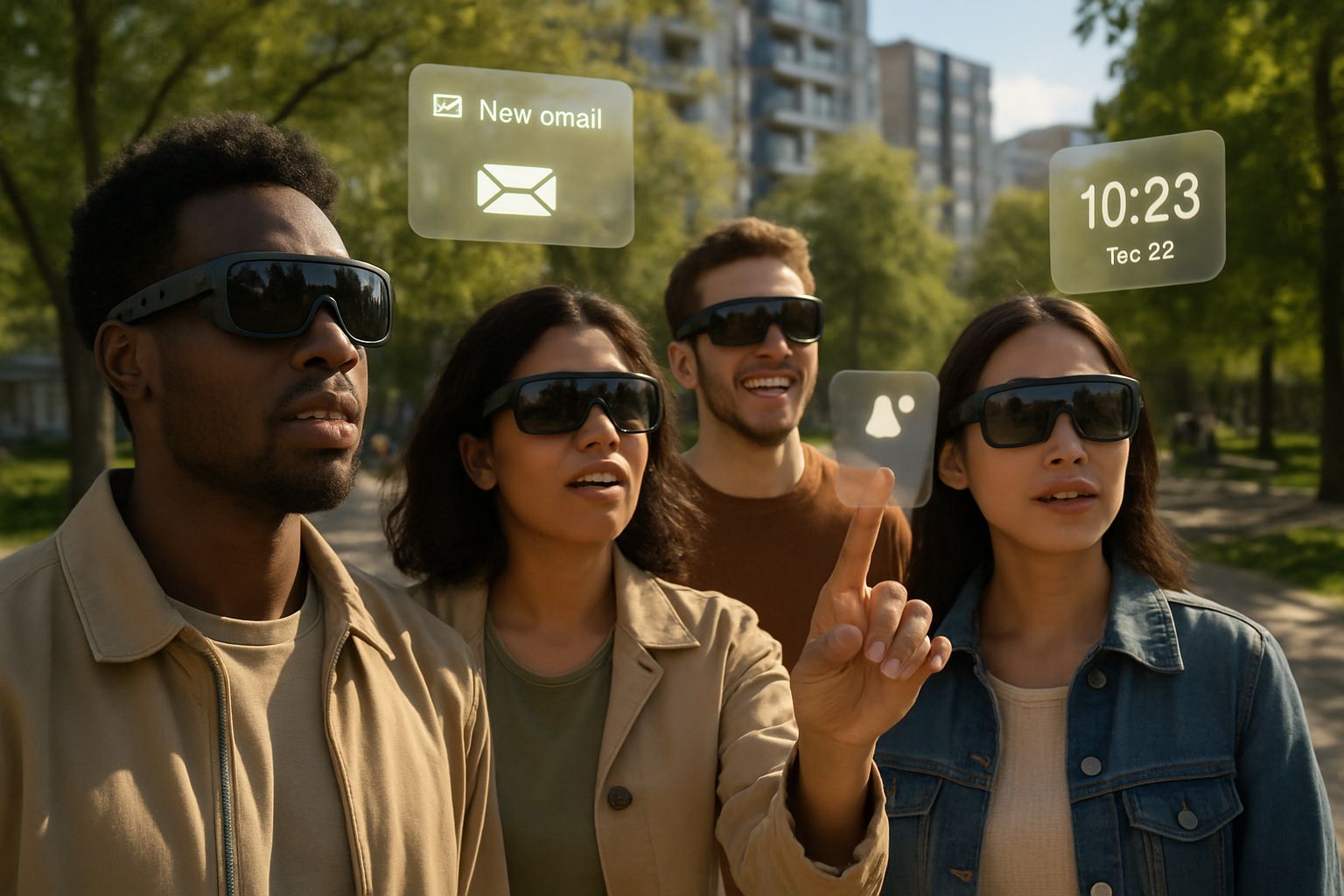
Visual intelligence began as an iPhone camera aid that reads menus, signage, and documents. Subsequently, iOS 26 let developers access the same models through a streamlined Interface. Apple now plans to transplant that stack into glasses, AirPods, and a pendant pin. Mark Gurman reports prototypes scheduled between 2026 and 2027. Furthermore, Apple merged parts of the Vision Pro team into Siri engineering to accelerate progress. Tim Cook describes the shift as a move from immersive rooms to pocketable AR Hardware that works everywhere. Moreover, Apple’s on-device neural engines already infer objects in milliseconds, solving latency headaches. Sensors in each wearable will synchronize with the iPhone for heavier tasks. Consequently, the company can leverage existing developer ecosystems rather than building anew.
- Smart glasses targeting everyday navigation and capture.
- Camera AirPods enabling glance-free photo queries.
- Pendant pin offering quick, voice-first assistance.
Apple is repackaging proven code into new shells. Next, we explore how privacy messaging underpins this plan.
Privacy Architecture Claims Scrutinized
Apple positions Private Cloud Compute as the linchpin of trustworthy vision processing. Craig Federighi insists PCC never stores user data, stating it only fulfills each request. Nevertheless, independent reports suggest Apple sometimes offloads traffic to Google servers during peak loads. That discrepancy fuels regulatory and consumer questions. Moreover, always-on cameras and Sensors heighten surveillance fears, especially within the European Union. Apple argues that most inference happens on the device’s neural Interface, shrinking exposure windows. In contrast, rivals like Meta collect cloud video continuously for model training. Professionals can upskill through the AI Cloud Architect™ certification. Consequently, understanding PCC internals will prove essential for future AR Hardware audits. Apple’s privacy story remains powerful yet incomplete. Therefore, technical scrutiny will shape consumer trust moving forward. Transparency gaps could slow adoption. However, chip advances might offset worry by reducing cloud reliance, as our next section shows.
Competitive Wearable Silicon Race
Chipmakers are scrambling to supply tiny yet powerful neural engines. At MWC 2026, Qualcomm launched Snapdragon Wear Elite for watches, glasses, and pins. Moreover, the platform offers 15 TOPS within a sub-one-watt envelope. Consequently, on-device Vision tasks like translation and scene segmentation run without cloud latency. Apple’s custom silicon group must match or exceed that bar. Past iterations of the A-series neural engines already deliver similar performance inside phones. However, cramming equivalent power into eyewear demands breakthroughs in thermal dissipation and battery density. Sensors also need continual calibration to maintain accuracy as frames flex. Therefore, material science could become as important as software for next-generation AR Hardware. Silicon competition sets aggressive performance expectations. Next, we consider non-technical risks that could derail progress.
Roadblocks And Market Risks
History offers cautionary tales. Humane’s AI Pin hyped similar promises yet folded within months. Reviewers cited unclear Interface cues, sluggish performance, and awkward ergonomics. Consequently, consumer patience for half-baked AR Hardware is thin. Social acceptance of always-recording glasses remains unproven despite Meta’s Ray-Ban push. Additionally, regulators may classify computer vision outputs as biometric data, intensifying compliance obligations. Battery limitations restrict continual processing by onboard Sensors, reducing feature reliability. Price could pose another hurdle if Apple repeats Vision Pro’s $3,499 debut. Nevertheless, Apple’s ecosystem lock-in and marketing prowess could smooth many obstacles. Teams must still deliver delightful experiences at launch. User trust and clear value will decide winners. Therefore, strategic execution becomes paramount as final plans crystalize. Our final section maps Apple’s likely path forward.
Strategic Outlook For Apple
Apple rarely discloses product timelines until manufacturing lines activate. Mark Gurman pegs early glasses prototypes for late 2026, with public release a year later. Meanwhile, AirPods with cameras could ship sooner because they reuse existing supply chains. Subsequently, the pendant may arrive as an affordable gateway device. Furthermore, Apple can bundle services, from Fitness+ overlays to enterprise maintenance tools, enhancing Interface cohesion across devices. Developers are already experimenting with visual intelligence APIs inside TestFlight builds. Consequently, the transition from phone screens to ambient AR Hardware may feel gradual rather than jarring. Investors will watch for clues in component orders and WWDC sessions. Therefore, transparent metrics around active users, not units shipped, should gauge success. Apple holds structural advantages yet faces execution risks. Next fiscal calls will reveal how firmly the company backs its vision.
Apple’s pivot underscores a hard lesson learned from the Vision Pro stumble. Smaller, camera-first AR Hardware promises familiar utility without isolating users. However, market success hinges on silicon efficiency, ironclad privacy, and vibrant developer ecosystems. Consequently, regulators, enterprises, and consumers will scrutinize each sensor and algorithm. Developers should prototype now, because Interface patterns forged today will lock in reputational advantages. Professionals aiming to architect secure AR Hardware backends can validate skills through the linked certification above. Moreover, investors should watch Apple’s supply chain for concrete launch signals. Take action now: study the standards, master tools, and prepare for the coming wave of AR Hardware innovation.


